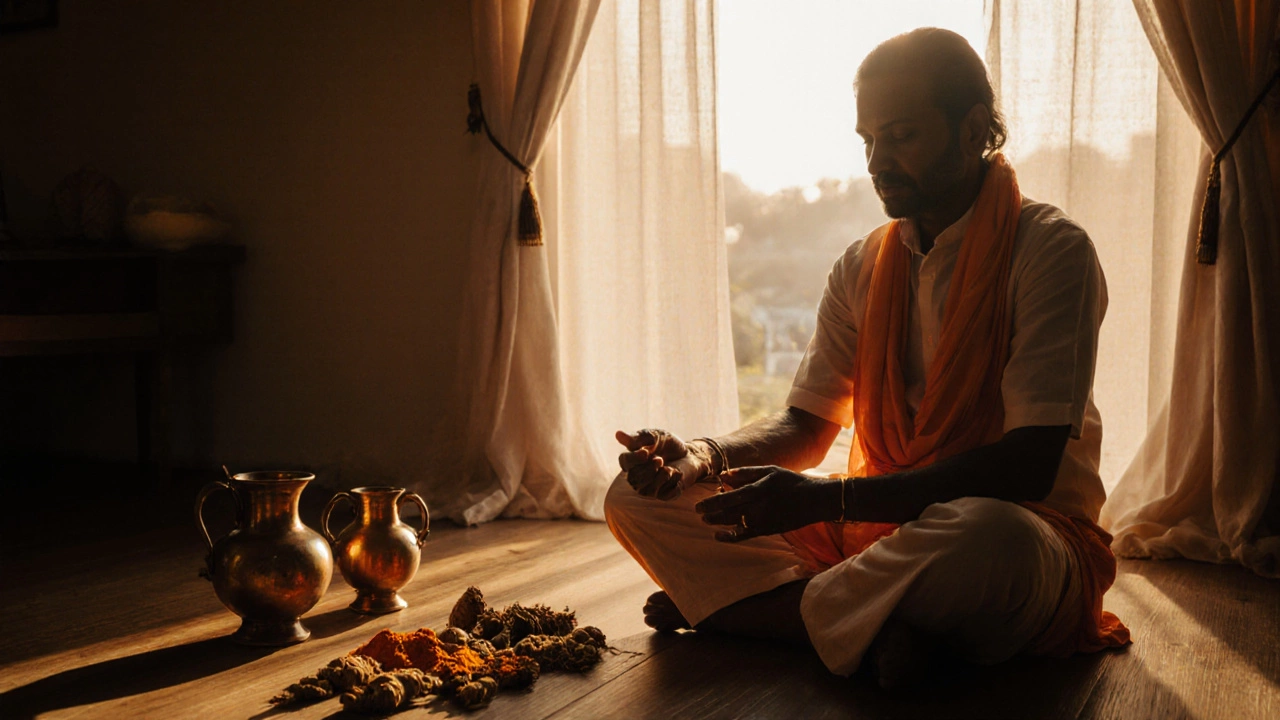
Ayurveda Dosha Quiz
This quiz helps you identify your dominant Ayurvedic dosha based on your physical traits, digestion patterns, and emotional tendencies. The results will help you understand your unique body-mind constitution and how to maintain balance.
Your Dosha Profile
Ayurveda isn’t just about herbs or massage. It’s a complete system of life that’s been practiced for over 5,000 years in India. If you’ve ever heard someone say they’re a ‘Pitta type’ or that their digestion is ‘Vata imbalance,’ they’re talking about the four basics of Ayurveda. These aren’t vague wellness trends-they’re foundational truths that shape how your body works, how it gets sick, and how it heals.
The Three Doshas: Your Body’s Energy Types
The first and most important basic of Ayurveda is the doshas. These are three biological energies that run everything in your body: Vata, Pitta, and Kapha. Think of them like the three main flavors in a recipe-too much of one, and the whole dish goes off.
Vata is air and space. It controls movement-your breath, your heartbeat, your thoughts, your digestion. When Vata is balanced, you’re creative, energetic, and flexible. When it’s out of balance, you feel anxious, dry, constipated, or have trouble sleeping. People with dominant Vata tend to be thin, have cold hands, and skip meals without noticing.
Pitta is fire and water. It’s your metabolism, your digestion, your body temperature, and your mental sharpness. Balanced Pitta means you’re focused, confident, and have strong digestion. Out of balance? You get angry easily, burn out fast, suffer from acid reflux, or get skin rashes. Pitta types usually have a medium build, run warm, and crave cool foods.
Kapha is earth and water. It’s structure, stability, and lubrication. It holds your joints together, keeps your skin moist, and gives you endurance. Balanced Kapha means you’re calm, loyal, and steady. Imbalanced? You feel sluggish, gain weight easily, feel congested, or struggle to get moving in the morning. Kapha types often have a larger frame, thick hair, and sleep deeply.
Everyone has all three doshas, but one or two usually dominate. This is your prakriti-your unique constitutional type. Knowing yours helps you eat right, choose the right exercise, and avoid the illnesses you’re most prone to.
Prakriti: Your Unique Body-Mind Blueprint
Prakriti is your natural state-the way you were born. It doesn’t change. It’s not affected by stress, diet, or age. It’s your baseline. You might feel tired and bloated right now, but if your prakriti is Vata-Pitta, then those symptoms are temporary imbalances, not who you are.
Most people have one dominant dosha (like Vata), two (like Kapha-Pitta), or rarely, all three equally balanced. Ayurvedic practitioners determine prakriti by asking about your physical traits, digestion, sleep patterns, emotional reactions, and even your childhood habits. A Vata-dominant child might have been the one who couldn’t sit still, loved spicy snacks, and woke up at 4 a.m. for no reason. That’s not ‘hyperactivity’-that’s Vata.
Knowing your prakriti is like having a personal health manual. If you’re Kapha-dominant, you don’t need a low-fat diet because you’re ‘overweight.’ You need to move more, eat lighter, and avoid heavy, sweet foods that make your Kapha worse. If you’re Pitta-dominant, you don’t need ‘stress relief’-you need cooling foods, less caffeine, and fewer competitive environments.
Dhatu: The Seven Tissues That Build Your Body
The third basic is dhatu-the seven bodily tissues that transform food into physical structure. Ayurveda doesn’t just look at organs. It tracks how nutrients move through layers of your body, from the most basic to the most refined.
Here’s the sequence:
- Rasa (plasma/lymph)-nutrients from digested food
- Rakta (blood)-carries oxygen and life force
- Mamsa (muscle)-gives strength and movement
- Meda (fat)-insulates, cushions, stores energy
- Asthi (bone)-structure and support
- Majja (bone marrow and nerves)-fills bones and supports brain function
- Shukra (reproductive tissue)-not just sperm or eggs, but vitality and fertility
Each tissue is formed from the one before it. If your digestion is weak (poor rasa), your blood won’t be clean, your muscles won’t build, and your bones will become brittle. That’s why Ayurveda starts with digestion. No herb will fix your joints if your rasa is clogged with toxins.
Modern medicine looks at blood sugar or cholesterol. Ayurveda looks at whether rasa is flowing properly. One affects the other. You can’t treat the last tissue (shukra) without fixing the first (rasa).
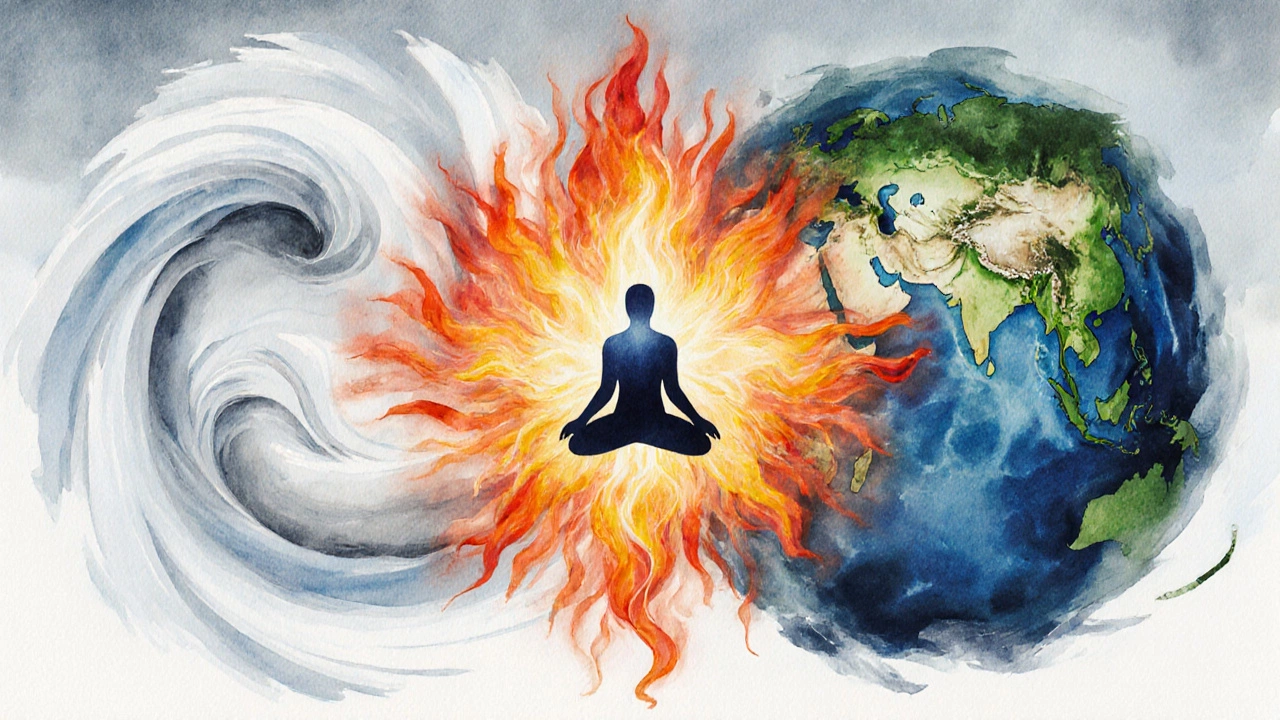
Agni: The Fire That Keeps You Alive
The fourth basic is agni-your digestive fire. This isn’t just about stomach acid. Agni is the metabolic energy that turns food into energy, thoughts into understanding, and experiences into wisdom.
There are 13 types of agni in the body, but the most important is jatharagni, the main digestive fire in your stomach and intestines. If it’s too weak, you get bloating, gas, and fatigue. If it’s too strong, you’re always hungry, irritable, or burning up with acid.
Agni is directly tied to your dosha. Vata types have irregular agni-sometimes too strong, sometimes gone. Pitta types have strong agni but burn out fast. Kapha types have slow agni and feel heavy after eating.
Ayurveda doesn’t recommend ‘eat less.’ It says: eat what matches your agni. A Vata person needs warm, cooked, oily food to stabilize digestion. A Pitta person needs cool, sweet, bitter foods to calm the fire. A Kapha person needs spicy, light, dry food to wake up the sluggish fire.
Most people try to fix digestion with probiotics or fiber. Ayurveda fixes it by balancing agni through timing, temperature, and taste. Eat your biggest meal at noon when the sun is strongest-that’s when your agni is highest. Skip late-night snacks. They don’t digest. They sit. They ferment. They become ama.
Ama: The Toxin That Causes Disease
Ama isn’t a chemical. It’s undigested food, unprocessed emotions, and stagnant energy. It’s the sludge that builds up when your agni is weak. Ama clogs your channels, slows your metabolism, and leads to everything from acne to arthritis.
It doesn’t show up in blood tests. But you know it’s there if you wake up tired, have a white coating on your tongue, feel mentally foggy, or get sick easily. Ama is why two people eat the same thing-one stays healthy, the other gets sick.
The cure isn’t detox teas or juice cleanses. It’s strengthening agni. Eat at regular times. Chew slowly. Avoid cold drinks with meals. Use spices like ginger, cumin, and black pepper to kindle digestion. Walk after eating. Sleep early. These aren’t ‘Ayurvedic rituals.’ They’re simple ways to keep your fire burning clean.

How the Four Basics Work Together
These four basics aren’t separate. They’re a chain. Your prakriti determines your dosha balance. Your doshas influence your agni. Weak agni creates ama. Ama blocks the dhatu. Blocked dhatu leads to disease.
For example: A Kapha-dominant person (prakriti) has slow agni. They eat heavy, sweet food (common in modern diets). Their digestion turns slow. Ama builds up. It clogs the meda tissue (fat). They gain weight. Then ama moves into the asthi (bones), causing joint pain. That’s not ‘arthritis.’ That’s ama in the bones.
Modern medicine treats the joint pain with anti-inflammatories. Ayurveda treats the ama, the slow agni, and the Kapha imbalance. The pain goes away because the root is gone.
This is why Ayurveda works for chronic conditions. It doesn’t mask symptoms. It rewires the system.
What to Do Next
You don’t need to become an Ayurvedic doctor to use this. Start simple:
- Notice how you feel after eating. Do you feel light or heavy? Alert or tired?
- Track your sleep, digestion, and mood for a week. Do you have patterns?
- Ask yourself: Do I feel better with warmth or coolness? With movement or stillness? With spice or sweetness?
- Try eating your main meal at noon. Skip late-night snacks for three days.
- Chew your food 20 times before swallowing.
These aren’t ‘rules.’ They’re observations. Ayurveda isn’t about perfection. It’s about awareness.
If you want to know your prakriti, look for a certified Ayurvedic practitioner. Don’t trust online quizzes. They’re oversimplified. A real assessment takes 30-45 minutes and includes pulse reading, tongue check, and detailed questioning.
The four basics of Ayurveda aren’t ancient myths. They’re biology you can feel. Once you start noticing them, your body starts talking. And you finally learn how to listen.
What are the four basics of Ayurveda?
The four basics of Ayurveda are: the three doshas (Vata, Pitta, Kapha), prakriti (your unique body-mind constitution), dhatu (the seven bodily tissues), and agni (digestive fire). These work together to determine health, digestion, and disease patterns.
Can I determine my dosha on my own?
You can get a general idea by observing your physical traits, digestion, sleep, and emotional patterns. But for accuracy, a certified Ayurvedic practitioner uses pulse diagnosis, tongue examination, and detailed questioning. Online quizzes often oversimplify and mislead.
Is Ayurveda scientific?
Ayurveda is based on thousands of years of observation and clinical experience. Modern studies have confirmed links between dosha types and metabolic markers, stress responses, and genetic expression. While it doesn’t use lab machines, its principles align with systems biology and personalized medicine.
What’s the difference between agni and digestion?
Digestion is the physical process of breaking down food. Agni is the metabolic fire that drives digestion, transforms nutrients into energy, and even processes emotions and thoughts. Weak agni means poor digestion, but also mental fog, low energy, and toxin buildup.
Does Ayurveda work for weight loss?
Yes, but not by calorie counting. Ayurveda treats weight gain as an imbalance of Kapha and weak agni. The solution is eating light, warm, spicy foods, moving daily, and avoiding late meals-not starvation. Weight loss happens naturally when digestion improves and ama clears.