
Ayurveda Dosha Quiz
Answer 5 simple questions to discover your dominant Ayurvedic dosha type. Each question has three options (Vata, Pitta, or Kapha). Your answers will reveal which energy pattern most influences your body and mind.
Ayurveda isn’t just another wellness trend. It’s a 5,000-year-old system of medicine from India that’s still used by millions today. Unlike modern medicine that often treats symptoms, Ayurveda looks at the whole person-body, mind, and spirit. At its core are four simple but powerful principles that guide everything from diet to daily routines. These aren’t vague spiritual ideas. They’re practical, observable patterns that explain how health works in your body.
Principle One: The Three Doshas
Every person is made up of three biological energies called doshas: Vata, Pitta, and Kapha. These aren’t abstract concepts-they’re physical forces you can see in action. Vata controls movement: your breath, circulation, nerve signals, and even thoughts. Pitta manages transformation: digestion, metabolism, body temperature, and even how you process emotions. Kapha provides structure and stability: your bones, muscles, joints, and immune system.
Everyone has all three doshas, but one or two usually dominate. If you’re thin, energetic, and get cold easily, you’re likely Vata-dominant. If you have a strong appetite, sharp mind, and tend to get angry or overheated, Pitta is probably your main dosha. If you’re steady, calm, and gain weight easily, Kapha is likely your foundation. When these doshas are in balance, you feel vibrant. When they’re out of sync, illness follows. A Vata imbalance might mean insomnia or anxiety. Pitta imbalance could mean acid reflux or skin rashes. Kapha imbalance often shows up as sluggishness or weight gain.
Principle Two: Agni-The Digestive Fire
Agni means fire. In Ayurveda, it’s not just about stomach acid. Agni is your body’s ability to break down food, absorb nutrients, and eliminate waste-including emotional and mental clutter. Weak agni is the root of most chronic health problems in Ayurveda. You can have the healthiest diet in the world, but if your agni is low, your body can’t use it. That’s why two people eating the same meal can have completely different results.
Signs of low agni? Bloating after meals, fatigue after eating, frequent colds, or feeling mentally foggy. High agni? Heartburn, irritability, or skin breakouts. The goal isn’t to boost agni all the time-it’s to keep it steady. Ayurveda recommends eating warm, cooked meals, avoiding ice water with food, and not eating when stressed. A simple rule: wait at least three hours between meals. This gives your digestive fire time to fully burn through the last meal before starting the next.
Principle Three: Ama-Toxic Buildup
Ama is the sticky, toxic residue left behind when digestion fails. Think of it like burnt food stuck to a pan. In your body, ama clogs channels, slows metabolism, and weakens immunity. It doesn’t come from junk food alone-it comes from poor digestion, eating when you’re not hungry, or eating too quickly. Even healthy foods turn into ama if your agni is weak.
Ama doesn’t cause immediate illness. It builds up slowly. Over time, it can lead to joint pain, skin issues, chronic fatigue, or even more serious conditions. Ayurveda sees ama as the root of most diseases. The solution isn’t detox teas or fasting. It’s fixing digestion. Start by eating light, warm meals. Drink ginger tea before meals. Avoid cold, heavy, or processed foods. Walk for 10-15 minutes after eating. These small habits help your body burn through ama before it sticks.
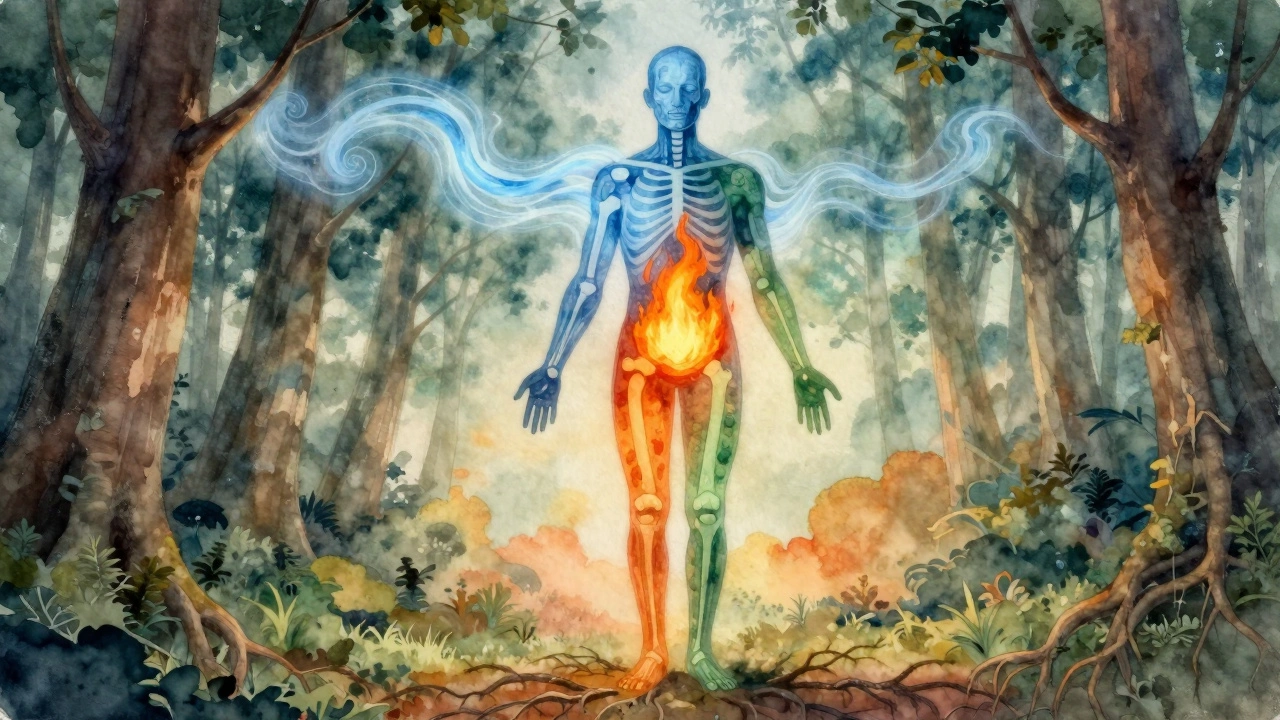
Principle Four: Dhatu and Mala-Tissues and Waste
Ayurveda doesn’t just talk about digestion. It tracks how food becomes your body. Food turns into seven layers of tissue, called dhatus: plasma, blood, muscle, fat, bone, nerve, and reproductive tissue. Each layer is built from the one before it, like stacking bricks. If digestion is weak, the first layer (plasma) is poor, and everything else suffers. That’s why skin, hair, and energy levels often reflect digestive health.
Then there’s mala-waste. This isn’t just poop. It includes urine, sweat, and even emotional release. Healthy mala means your body is efficiently eliminating what it doesn’t need. If waste builds up, toxins return to your bloodstream. That’s why regular bowel movements, clear urine, and healthy sweating matter. Ayurveda recommends drinking warm water in the morning, eating fiber-rich foods like cooked apples and lentils, and never ignoring the urge to go to the bathroom.
How These Principles Work Together
These four principles aren’t separate. They’re a chain. If your doshas are out of balance, agni slows down. Slow agni creates ama. Ama clogs the channels that feed your dhatus. Weak dhatus mean poor tissue repair. Buildup of mala adds more toxins. It’s a cycle.
Fixing one part helps the whole system. If you’re tired and bloated, you might think you need more sleep or a supplement. Ayurveda says: check your digestion first. Eat dinner early. Skip late-night snacks. Drink warm water. Walk after meals. These steps reset agni, burn ama, and let your body rebuild tissue naturally. No pills needed.
Real-Life Example: Morning Routine
Take a common morning: someone wakes up groggy, skips breakfast, drinks coffee on the go, eats lunch at their desk, and snacks late at night. Their doshas are chaotic. Agni is buried under stress and cold food. Ama builds up. Dhatus don’t get clean fuel. Mala backs up.
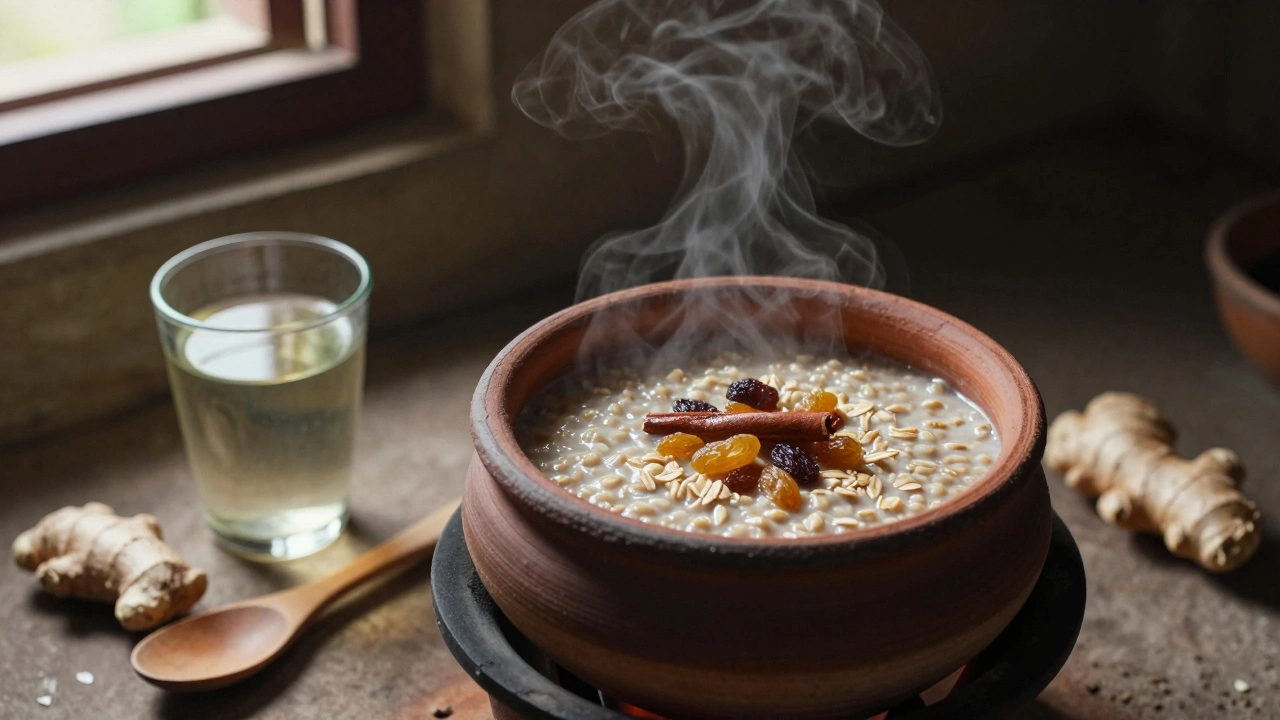
Ayurveda’s answer? Wake up before sunrise. Drink a glass of warm water with lemon. Scrape your tongue. Massage your skin with warm oil. Eat a warm, cooked breakfast-like oatmeal with cinnamon and raisins. Eat lunch at noon, when agni is strongest. Have a light dinner before 7 p.m. This routine doesn’t require a diet change. It just realigns your rhythm with nature’s cycles.
What Ayurveda Doesn’t Do
Ayurveda isn’t about strict rules or eliminating entire food groups. It doesn’t say sugar is evil or carbs are bad. It says: your digestion matters more than the food itself. Two people can eat the same chocolate bar. One feels energized. The other gets a headache and bloating. The difference isn’t the chocolate-it’s their agni.
Ayurveda also doesn’t promise quick fixes. Healing isn’t a 14-day cleanse. It’s a daily practice. You won’t feel better overnight. But after a few weeks of simple habits-eating at regular times, avoiding cold drinks, sleeping early-you’ll notice real changes: better sleep, clearer skin, more energy, fewer cravings.
Where to Start Today
You don’t need to become an Ayurvedic expert to benefit. Start with one principle:
- Drink warm water first thing in the morning.
- Eat your biggest meal at noon.
- Don’t eat dessert after dinner.
- Go to bed by 10 p.m.
Do these for two weeks. Track how you feel. Your body will tell you what it needs. Ayurveda isn’t about following someone else’s plan. It’s about listening to your own.