Ayurveda Basics: Simple Rules for Daily Health in India
When you hear Ayurveda, a 5,000-year-old system of health from India that balances body, mind, and environment through diet, lifestyle, and natural remedies. Also known as Indian herbal medicine, it’s not just about herbs—it’s about matching your daily habits to your body’s natural rhythm. Most people think Ayurveda is about turmeric tea and yoga, but the real power lies in understanding your doshas, the three biological energies—Vata, Pitta, and Kapha—that control everything from digestion to sleep patterns. Your dominant dosha isn’t just a label; it tells you when to wake up, what to eat for dinner, and even which emotions might throw you off balance.
If you’ve ever felt tired after eating heavy food at night, or had trouble sleeping because your mind won’t shut off, Ayurveda basics explain why. Ayurvedic digestion, called agni, is the core of health in this system—weak digestion leads to toxins, fatigue, and disease. Most Indians know this intuitively: eat your biggest meal at noon, when the sun is strongest, and keep dinner light before sunset. That’s not tradition—it’s biology. Skipping this window messes with your metabolism, even if you’re eating healthy food. And if you’re someone who eats late because of work or stress, Ayurveda doesn’t judge—it gives you a fix: warm water with ginger before bed, or a 10-minute walk after dinner to rekindle your agni.
It’s not magic. It’s observation. For centuries, Indian families watched how their bodies reacted to seasons, meals, and routines. They noticed that cold, dry weather made people restless (Vata imbalance), spicy food caused heartburn (Pitta flare-up), and heavy meals made them sluggish (Kapha buildup). These aren’t guesses—they’re patterns backed by daily experience. You don’t need to become an expert to use Ayurveda basics. Start with one thing: notice when you feel best. Do you have more energy after eating rice and lentils at noon? Do you sleep better if you’re off your phone by 9 p.m.? That’s your dosha talking.
What you’ll find below are real stories from people who used Ayurveda basics to fix sleep issues, reduce joint pain, or stop bloating after meals—not with pills, but with timing, food choices, and small daily shifts. Some of these tips come from doctors in Bangalore, others from grandmothers in Kerala. They’re not fancy. But they work.

What Are the 4 Principles of Ayurveda? A Simple Guide to Ancient Healing
Learn the four core principles of Ayurveda-doshas, agni, ama, and dhatus-that form the foundation of this ancient healing system. Understand how digestion, waste, and body tissues affect your health.
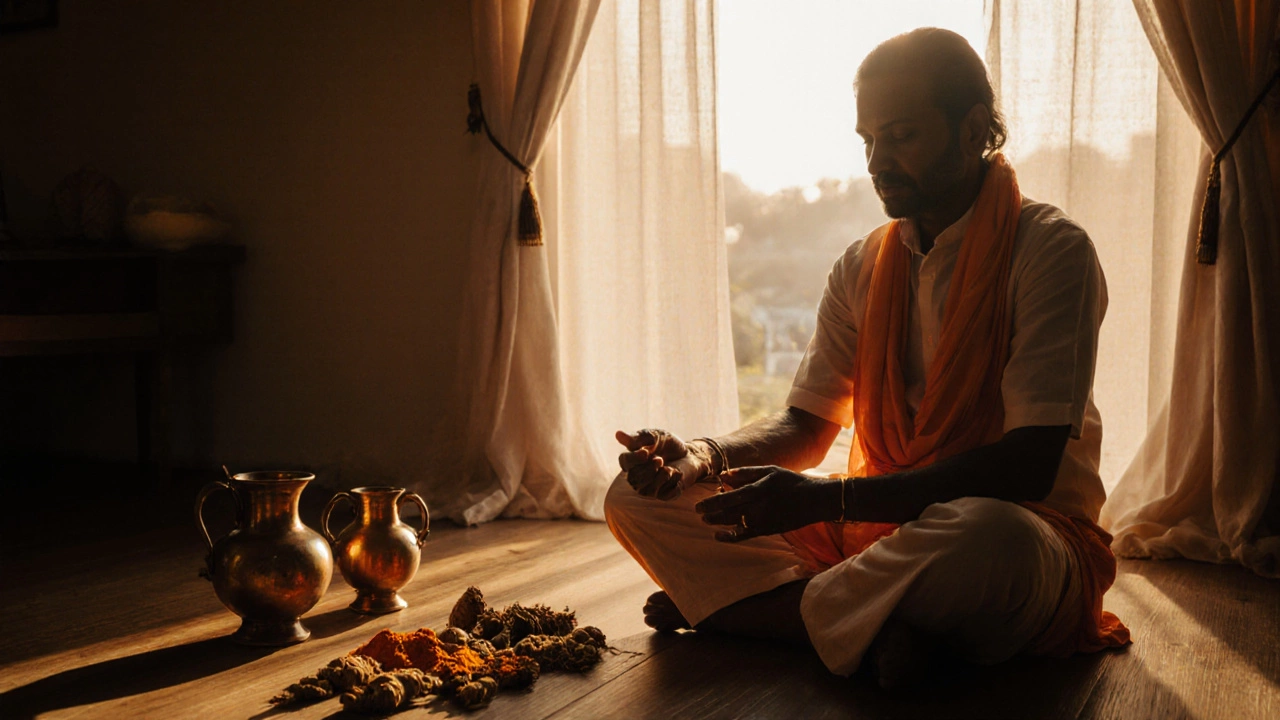
What Are the Four Basics of Ayurveda? A Simple Guide to Its Core Principles
Learn the four core principles of Ayurveda-doshas, prakriti, dhatu, and agni-and how they shape your health. No fluff, just clear, practical insights rooted in 5,000 years of tradition.