
Anxiety Relief Finder
Select the option that best describes your current situation to find a suitable natural alternative discussed in the article.
General Daily Stress
Feeling constantly overwhelmed or stressed by daily life?
Performance Anxiety
Need calm focus before exams, meetings, or presentations?
Sleep Onset Issues
Racing thoughts preventing you from falling asleep?
Social Tension
Feel tense or anxious in social gatherings?
Disclaimer: This tool is for informational purposes only and does not constitute medical advice. Always consult with a healthcare provider before starting new supplements, especially if you are currently taking prescription medications like SSRIs or benzodiazepines.
You’ve probably felt it: that tightness in your chest before a big presentation, or the racing thoughts at 2 AM that won’t let you sleep. For many people, Xanax is the first name that comes to mind when they need immediate calm. But Xanax (alprazolam) is a prescription benzodiazepine, which means it’s not exactly something you can grab off a shelf at your local chemist in Bangalore without a doctor’s note. Plus, the fear of dependency and side effects keeps plenty of people looking for safer, accessible options.
So, what actually works like Xanax but doesn’t require a script? The honest answer is that no over-the-counter (OTC) supplement hits with the same immediate, heavy sedative force as a benzodiazepine. However, several herbal and natural compounds can significantly reduce anxiety symptoms, improve sleep quality, and stabilize mood-often with fewer risks than prescription meds. If you’re tired of feeling wired or are looking to wean off stronger medications, understanding these alternatives is your best first step.
Understanding the Gap Between OTC and Prescription Relief
To choose the right alternative, you need to understand why Xanax works so well-and why it’s tricky. Xanax boosts the activity of GABA (gamma-aminobutyric acid), a neurotransmitter that acts as the brain’s primary inhibitory signal. Think of GABA as the brake pedal for your nervous system. When you press it hard with a drug like alprazolam, your brain slows down fast.
OTC supplements don’t usually slam that brake pedal. Instead, they tend to tune the engine. They might help your body produce more GABA naturally, lower cortisol (the stress hormone), or balance other neurotransmitters like serotonin and dopamine. This means the effect is often subtler and takes longer to build up, but it’s generally sustainable and less likely to cause withdrawal issues.
| Feature | Xanax (Alprazolam) | Ashwagandha | L-Theanine | Valerian Root |
|---|---|---|---|---|
| Type | Benzodiazepine (Prescription) | Adaptogenic Herb | Amino Acid | Herbal Sedative |
| Onset of Action | 15-30 minutes | 2-4 weeks (cumulative) | 30-60 minutes | 30-90 minutes |
| Primary Mechanism | Enhances GABA binding | Lowers cortisol levels | Increases alpha brain waves | Inhibits GABA breakdown |
| Sedation Level | High | Low to Moderate | Low (Calming, not sleepy) | Moderate to High |
| Dependency Risk | High | Negligible | Negligible | Low |
Ashwagandha: The Stress-Balancing Powerhouse
If you live in India, you already know about Ashwagandha. It’s one of the most revered herbs in Ayurveda, traditionally used to combat fatigue and stress. In modern science, it’s classified as an adaptogen, meaning it helps your body resist physical and mental stressors.
Why does it work like a mild anxiolytic? Studies suggest Ashwagandha extracts (specifically KSM-66 or Sensoril) significantly lower serum cortisol levels. High cortisol is the biological signature of chronic stress. By lowering this hormone, Ashwagandha reduces the physical symptoms of anxiety-like heart palpitations and jitteriness-over time. It’s not a quick fix for a panic attack, but if you take it daily for a few weeks, many users report feeling "unbothered" by things that used to spike their blood pressure.
Pro Tip: Look for standardized root extracts. Raw powder is less potent and inconsistent. Start with 300-600 mg daily, preferably split into two doses. Note that some people find it slightly stimulating, so taking it earlier in the day might be better unless you’re using it specifically for sleep support.
L-Theanine: Calm Focus Without the Fog
Ever notice how drinking green tea feels different from drinking coffee? That’s largely due to L-Theanine, an amino acid found almost exclusively in tea leaves. Unlike sedatives that knock you out, L-Theanine promotes relaxation while keeping your mind sharp.
It works by increasing alpha brain wave activity-the state associated with relaxed alertness, similar to meditation. It also modulates glutamate receptors, preventing over-excitation in the brain. This makes it an excellent choice for performance anxiety, such as before an exam or a client meeting. You won’t feel drowsy, but the edge of nervous energy gets smoothed out.
Most studies use doses between 100 mg and 200 mg. It has a high safety profile and minimal side effects. Some people pair it with caffeine to offset jitters, but for pure anxiety relief, taking it alone on an empty stomach can yield faster results.
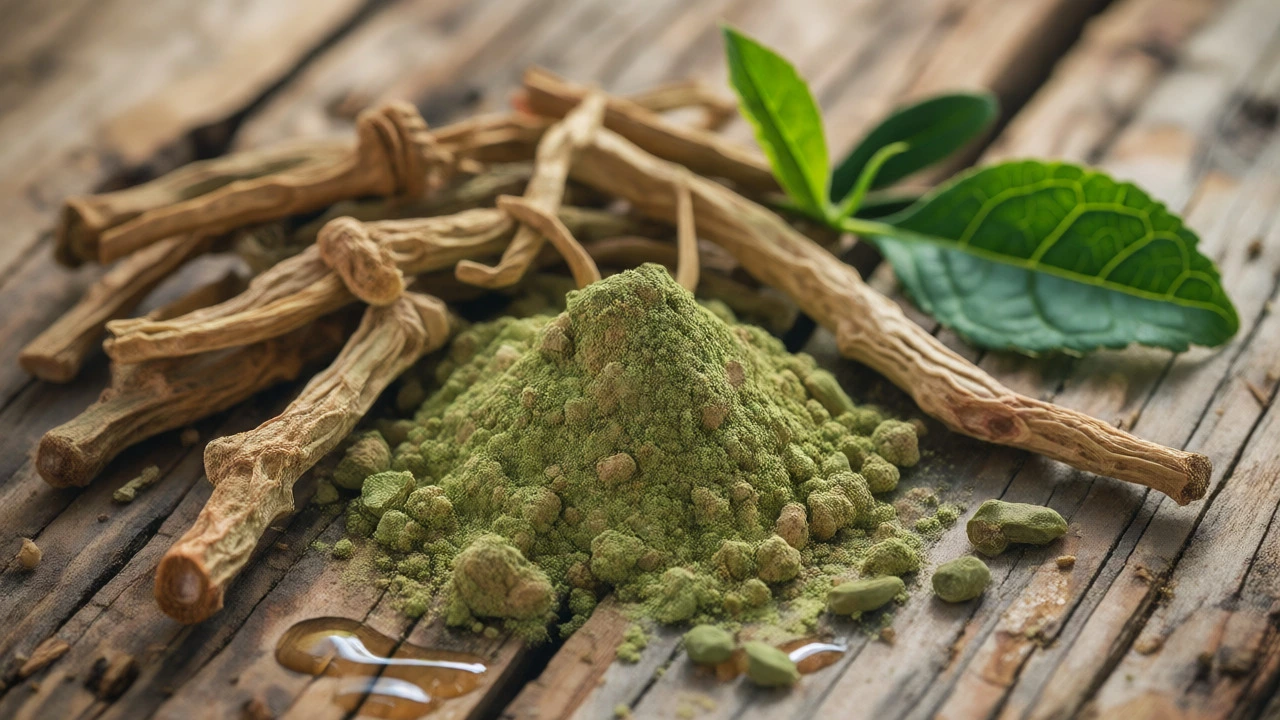
Valerian Root: Nature’s Sleep Aid
When anxiety disrupts your sleep, Valerian Root is often the go-to OTC solution. It has been used since ancient Greek times for insomnia and nervous agitation. Valerian contains valerenic acid, which interacts with GABA receptors in the brain, much like benzodiazepines do, though far more gently.
The catch? Valerian smells awful-some describe it as sweaty socks or old cheese. Don’t let that deter you; the smell indicates potency. It’s particularly effective for nighttime anxiety where the inability to shut off your brain prevents sleep. While it doesn’t have the instant "knockout" punch of Xanax, it helps shorten the time it takes to fall asleep and improves sleep quality.
Timing matters here. Take it 30 to 60 minutes before bed. Consistency is key; some research suggests it becomes more effective after a few weeks of regular use. Avoid mixing it with alcohol or other sedatives, as it can amplify their effects unexpectedly.
Kava Kava: The Social Lubricant
Originating from the South Pacific islands, Kava Kava is famous for its ability to induce a sense of well-being and sociability without impairing cognitive function. Historically, kava was brewed into a drink for ceremonial gatherings to ease social tensions.
Kava works by blocking certain sodium channels and interacting with GABA and endocannabinoid systems. It provides a tangible sense of muscle relaxation and mental calm. Many users describe it as "feeling good" rather than just "not feeling anxious." This makes it great for social anxiety or general tension.
However, there’s a caveat. In the early 2000s, concerns arose about liver toxicity associated with low-quality kava products, leading to bans in some countries (though regulations have since relaxed). To stay safe, only buy kava made from peeled roots (not stems or leaves) and avoid synthetic extracts. Stick to reputable brands that test for purity. Do not use kava if you have pre-existing liver conditions or drink heavily.

Magnesium Glycinate: The Forgotten Mineral
We often overlook minerals, but Magnesium plays a critical role in regulating the HPA axis (your body’s central stress response system). Most people are deficient in magnesium due to soil depletion and processed diets.
Not all magnesium is created equal. Magnesium oxide is poorly absorbed and mostly acts as a laxative. For anxiety, you want Magnesium Glycinate or Magnesium Threonate. Glycinate is bound to glycine, an amino acid that itself has calming properties. This combination allows for high absorption without digestive upset. It helps relax muscles and calms the nervous system by regulating NMDA receptors.
Taking 200-400 mg of elemental magnesium glycinate in the evening can help ease physical tension and prepare your body for rest. It’s subtle, but for those with deficiency-related anxiety, the difference can be profound.
How to Build Your Stack
You don’t need to take everything at once. Start with one supplement and see how your body reacts. Here’s a simple framework based on your specific needs:
- For General Daily Stress: Start with Ashwagandha. Give it 4 weeks to work.
- For Acute Performance Anxiety: Try L-Theanine 1 hour before the event.
- For Insomnia/Sleep-Onset Issues: Use Valerian Root or Magnesium Glycinate at night.
- For Social Tension: Consider Kava Kava, but monitor your liver health and dosage carefully.
Remember, supplements are tools, not magic pills. Lifestyle factors like exercise, sunlight exposure, and reducing caffeine intake play massive roles in anxiety management. If you’re currently taking prescription medication, especially SSRIs or benzodiazepines, talk to your doctor before adding these. Interactions can happen-for example, combining Valerian with other sedatives can cause excessive drowsiness.
Can I take these supplements with my current antidepressants?
Generally, yes, but caution is required. St. John’s Wort is known to interact negatively with SSRIs, but Ashwagandha, L-Theanine, and Magnesium are typically safe. However, always consult your psychiatrist or GP, especially if you are on MAO inhibitors or strong sedatives, to rule out serotonin syndrome or excessive sedation.
How long does it take for Ashwagandha to start working?
Unlike fast-acting drugs, Ashwagandha is cumulative. Most clinical trials show significant reductions in cortisol and perceived stress after 8 to 12 weeks of consistent daily use. Some people feel minor changes within a week, but patience is key.
Is Kava Kava legal and safe in India?
Kava is available in India, primarily through online wellness retailers. It is not banned, but availability varies. Safety depends on quality; ensure you purchase noble kava varieties extracted with water or ethanol, avoiding acetone extractions which may contain harmful residues. Always check with a healthcare provider if you have liver issues.
Will L-Theanine make me sleepy?
No, L-Theanine promotes relaxation without sedation. It increases alpha brain waves, which are associated with a calm, focused state. It is ideal for daytime use because it does not impair cognitive function or motor skills, unlike Valerian or Benzodiazepines.
Can I stop taking Xanax and switch to these immediately?
Never stop benzodiazepines abruptly. Withdrawal can be severe and dangerous. These OTC alternatives are not direct replacements for acute withdrawal management. Work with your doctor to taper off Xanax slowly while introducing these supplements to support your transition.