Inflammation Supplement Selector
This tool helps you find the most appropriate herbal supplement for your specific inflammation symptoms based on science-backed recommendations. Answer the questions below to get personalized suggestions.
If you’ve been dealing with joint pain, swollen knees, or constant stiffness that won’t go away, you’re not alone. Chronic inflammation is quietly affecting millions - and many are turning to herbal supplements instead of relying solely on pills. But with so many options out there, which one actually works? Not the ones you see on flashy Instagram ads. The real ones, backed by studies, used in clinics, and trusted for centuries in traditional systems like Ayurveda.
Turmeric (Curcumin) is still the gold standard
When it comes to herbal anti-inflammatories, turmeric stands out - not because it’s trendy, but because it’s been tested over and over. The active compound, curcumin, blocks NF-kB, a molecule that turns on inflammation genes in your body. A 2023 meta-analysis of 18 clinical trials found that curcumin reduced C-reactive protein (CRP), a key marker of inflammation, as effectively as ibuprofen in people with osteoarthritis - without the stomach upset.
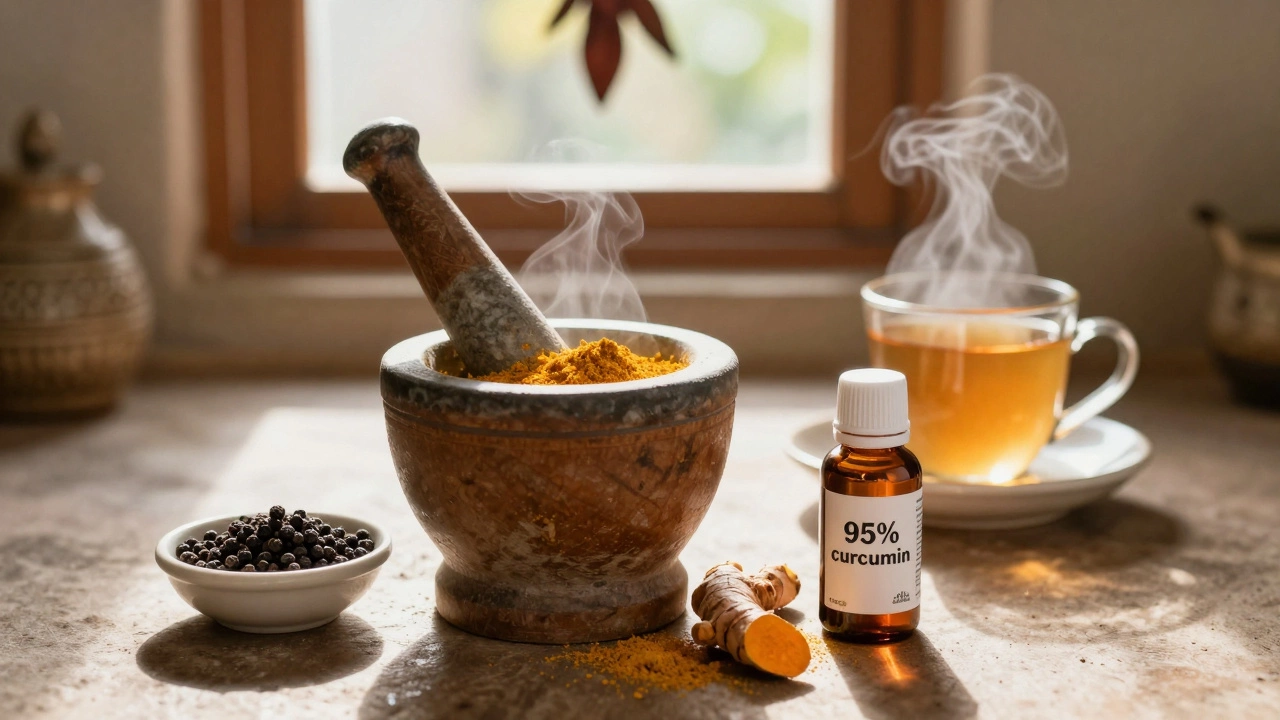
But here’s the catch: regular turmeric powder won’t cut it. Curcumin makes up only 2-5% of raw turmeric root. You need a concentrated extract - at least 500 mg per dose - and it must be paired with black pepper (piperine) to boost absorption by 2,000%. Most quality supplements now include piperine or use liposomal delivery for better results. Look for products labeled “95% curcuminoids” and check the label for piperine or phospholipid complexes.
Ginger: More than just a tea
Ginger isn’t just for nausea. Its active compounds, gingerols and shogaols, inhibit COX-2 enzymes - the same ones targeted by NSAIDs like aspirin. A 2022 study in the Journal of Medicinal Food showed that 1,000 mg of powdered ginger daily reduced knee pain and stiffness in osteoarthritis patients as well as acetaminophen, but with fewer side effects.
In Bangalore, where many people walk long distances or stand for hours, ginger supplements are common in home medicine cabinets. One woman I spoke with, a 58-year-old yoga teacher, started taking 500 mg of ginger extract twice a day after her doctor told her to stop NSAIDs. Within six weeks, her morning stiffness dropped by 70%. She still takes it every day - not because she’s addicted, but because she notices the difference.
Boswellia serrata: The Indian frankincense that works
Boswellia, also called Indian frankincense, comes from the resin of trees found in dry regions of India. Its active ingredient, AKBA (acetyl-11-keto-beta-boswellic acid), stops 5-LOX, another enzyme involved in inflammation. Unlike curcumin, boswellia doesn’t rely on black pepper for absorption - it’s fat-soluble, so take it with food.
A 2021 randomized trial with 120 participants suffering from chronic knee pain found that those taking 300 mg of standardized boswellia extract (with 30% AKBA) three times a day improved mobility and reduced pain scores by 65% over 90 days. No liver damage. No ulcers. Just steady relief. Many Ayurvedic practitioners here combine it with turmeric for synergistic effects.
Omega-3s from flaxseed and fish oil
Omega-3 fatty acids - especially EPA and DHA - don’t just help your heart. They turn off the body’s inflammatory cascade by producing resolvins and protectins, molecules that actively calm inflammation. If you’re vegetarian, flaxseed oil gives you ALA, but your body converts less than 10% of it to EPA/DHA. For real impact, go for fish oil.
Studies show that 2,000-3,000 mg of combined EPA/DHA daily reduces CRP and interleukin-6 levels. A 2024 review in Arthritis Research & Therapy concluded that omega-3s were among the most consistent herbal and nutritional interventions for reducing systemic inflammation. Look for third-party tested brands that guarantee purity and potency. Avoid cheap fish oils that smell fishy - that’s a sign of oxidation.

Green tea extract: The quiet powerhouse
Green tea isn’t just a calming drink. Its catechin, EGCG (epigallocatechin gallate), suppresses inflammatory cytokines and protects cartilage from breakdown. A 2023 study in Phytomedicine found that 400 mg of green tea extract daily reduced joint swelling in rheumatoid arthritis patients after 12 weeks.
But here’s what most people miss: you need the extract, not the tea. Drinking five cups of green tea won’t give you enough EGCG. The supplement form delivers 50-100 mg per capsule. Avoid extracts with caffeine if you’re sensitive - look for decaf versions. And don’t take it on an empty stomach; it can upset your liver if taken without food.
What doesn’t work - and why
Not all herbal supplements are created equal. Many products are filled with fillers, low-dose extracts, or just powdered herbs with no active compounds measured. Don’t waste money on:
- Raw cinnamon powder - it’s mostly coumarin, which can damage your liver.
- Low-dose turmeric capsules (under 300 mg curcumin) - you’re just eating spice.
- “Anti-inflammatory blends” with 10 herbs at 50 mg each - if none are dosed properly, they’re useless.
- Products without third-party testing (USP, NSF, or ConsumerLab seals).
One woman in Mysore bought a “miracle inflammation blend” off a Facebook ad. It had turmeric, ginger, and garlic - all at 100 mg per capsule. She took it for two months. Nothing changed. Her doctor told her: “You’d need 500 mg of just turmeric to see a difference. This is just flavoring.”
How to choose the right one for you
There’s no single “best” supplement for everyone. It depends on your type of inflammation:
- Joint pain, osteoarthritis? Start with turmeric + boswellia. Take both together.
- Autoimmune flare-ups? Omega-3s + green tea extract. Reduce systemic triggers.
- Chronic digestive inflammation? Ginger + turmeric. Soothes the gut lining.
- General tiredness and swelling? Fish oil + green tea. Targets multiple pathways.
Always start with one supplement at a time. Wait four to six weeks. Track your symptoms: pain level, stiffness, sleep quality, energy. Keep a simple journal. If nothing changes, switch. Don’t stack five supplements at once - you won’t know what’s working.

When to see a doctor
Herbal supplements help manage symptoms - but they don’t cure the root cause. If you have:
- Unexplained weight loss with swelling
- Fever along with joint pain
- Red, hot, swollen joints that feel warm to the touch
- Numbness or tingling in hands or feet
- then see a doctor. These could be signs of rheumatoid arthritis, gout, or lupus. Supplements can support treatment, but they shouldn’t delay diagnosis.
What to look for on the label
Not all supplements are trustworthy. Here’s what to check:
- Active ingredient amount - not just “turmeric extract,” but “500 mg curcuminoids (95%)”
- Standardized extract - means the key compound is measured and consistent
- Third-party tested - USP, NSF, or ConsumerLab logo
- No fillers - avoid magnesium stearate, titanium dioxide, artificial colors
- Country of origin - Indian-grown turmeric and boswellia tend to be more potent
Brands like Himalaya, Organic India, and NutriBiotic (available in Bangalore pharmacies) are commonly trusted here. You don’t need to buy expensive imports - local brands with good sourcing work just as well.
How long until you feel results?
Don’t expect overnight relief. Herbal supplements work slowly because they’re not drugs - they’re signals. Most people notice subtle changes after 2-4 weeks: less morning stiffness, better sleep, fewer aches after walking. Full effects take 6-12 weeks. Be patient. Consistency beats intensity.
One man in Hebbal, 62, started taking turmeric + boswellia after his knee replacement surgery. He didn’t take painkillers. After three months, his physiotherapist said, “Your range of motion improved more than most patients on meds.” He still takes it daily - not because he’s scared of pain, but because he feels like himself again.
Can I take herbal supplements with my prescription meds?
Some can interact. Turmeric and ginger may thin your blood, so avoid them if you’re on warfarin or aspirin. Omega-3s can also increase bleeding risk. Always tell your doctor what supplements you’re taking - even if they seem “natural.”
Is it better to take supplements or eat the whole herb?
Eating turmeric in curry or ginger in tea helps, but you won’t get enough active compounds to reduce chronic inflammation. A teaspoon of turmeric powder has about 200 mg curcumin - you need 500 mg daily for effect. Supplements give you a concentrated, reliable dose.
Are there side effects to herbal anti-inflammatories?
Generally, yes - but mild. Turmeric can cause stomach upset if taken on an empty stomach. Ginger may cause heartburn in some. High doses of green tea extract can affect liver enzymes. Stick to recommended doses and take with food. Stop if you get nausea, rash, or dark urine.
Which is stronger: turmeric or boswellia?
They work differently. Turmeric blocks NF-kB (broad inflammation), while boswellia targets 5-LOX (more specific to joint and tissue damage). Neither is “stronger.” Together, they cover more pathways than either alone. Many clinical studies use them in combination.
Should I cycle off these supplements?
No need. Unlike NSAIDs, herbal supplements don’t cause tolerance or rebound inflammation. You can take them long-term if they help. Many people in India take turmeric daily for years without issues. Just make sure your liver is healthy - get a basic blood test once a year if you’re on multiple supplements.
Chronic inflammation doesn’t vanish overnight. But with the right herbal support - chosen wisely and taken consistently - you can reclaim your mobility, your energy, and your peace of mind. Start with one. Track your progress. Listen to your body. And don’t let marketing tricks distract you from what actually works.