Implant Healing Time: What to Expect and How to Speed It Up
When you get a implant, a surgical replacement for a missing tooth root, usually made of titanium. Also known as a dental implant, it’s designed to fuse with your jawbone and act like a natural tooth root. But the real question isn’t just whether it works—it’s how long it takes to heal. Implant healing time isn’t the same for everyone. For some, it’s 3 months. For others, it’s 6 or even longer. The difference? Bone health, age, whether you smoke, and how well you follow aftercare steps.
The process isn’t just about waiting. It’s about bone integration, the biological process where your jawbone grows around and bonds with the implant surface. This is called osseointegration, and it’s the make-or-break stage. If your bone doesn’t fuse properly, the implant fails. That’s why doctors check your bone density before surgery. If you’ve had gum disease or lost bone over time, you might need a bone graft first—adding weeks to your timeline. And if you’re over 65 or have diabetes, healing naturally slows down. It’s not a setback—it’s just a different path.
What you do after surgery matters just as much as the surgery itself. Swelling? Ice it. Pain? Take what your doctor prescribes—not what your neighbor swears by. Avoid chewing on that side. Don’t smoke. Smoking cuts blood flow, and without good blood flow, your bone can’t heal. Alcohol? Skip it for at least a week. Even a single cigar can double your risk of implant failure. And don’t brush too hard near the site—gentle rinses with salt water are better than aggressive brushing in the first few days.
Some people think the crown goes on right after the implant. It doesn’t. The implant needs time to settle, like a tree root growing into soil. Rushing this step is the #1 reason implants fail. Your dentist will take an X-ray or scan around the 3-month mark to confirm the bone has locked in. Only then do they attach the abutment and crown. Some newer techniques claim faster healing—like same-day implants—but those are only for patients with perfect bone quality. Most people still need the full healing window.
What’s the average? In healthy adults with no major health issues, implant healing time usually runs between 3 to 6 months. But that’s just the bone. Add in the crown placement, adjustments, and final checkups, and you’re looking at 4 to 8 months total. It’s not fast, but it’s reliable. And when it works? It lasts decades. You’ll forget it’s not your real tooth.
Below, you’ll find real stories and expert advice from people who’ve been through it. From how to manage pain without opioids, to what foods to eat when your mouth is still sore, to why some people heal faster than others—everything you need to know is here. No fluff. Just what works.
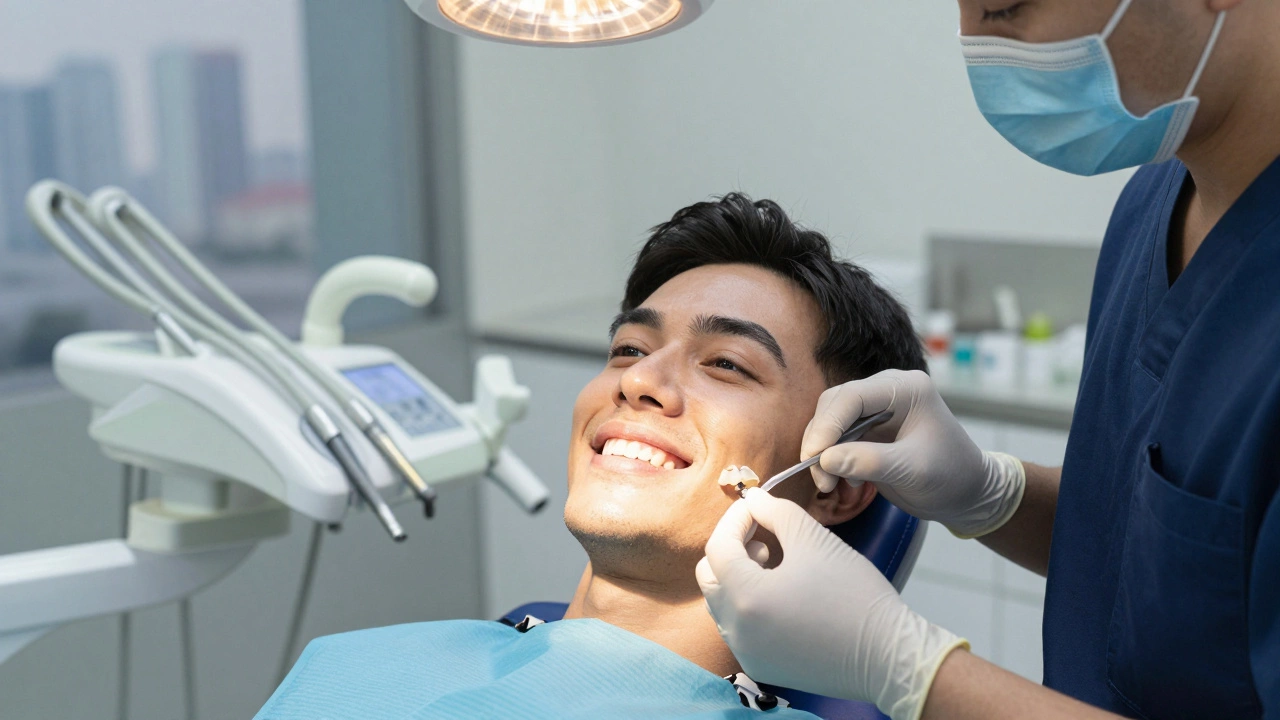
How Long Do You Go Without Teeth When Getting Dental Implants?
You don't have to go without teeth during dental implant treatment. Most patients get temporary teeth the same day or within days. Learn how long you'll actually wait and what options are available.