
When you’re getting dental implants, the biggest fear isn’t the surgery-it’s the gap in your smile. You’ve probably heard stories of people going weeks without teeth, or maybe you’ve seen someone with a flipper denture and wondered, how long do you go without teeth when getting implants? The truth? It’s not as long as you think, and you don’t have to live with a visible gap.
You Don’t Have to Be Toothless
Many people assume that once a tooth is pulled, they’re stuck with a hole until the implant heals. That’s not true. In modern dental practice, you almost always get a temporary replacement the same day or within a few days. Even if you’re having multiple teeth removed, your dentist will give you something to wear right away. These aren’t just placeholders-they’re designed to look natural, let you eat soft foods, and keep your confidence intact.In Bangalore, where many patients travel from nearby towns for implant procedures, clinics have standardized the use of temporary teeth. Whether it’s a removable partial denture, a snap-on bridge, or a fixed temporary crown, you’ll leave the office with a full smile. The only exception? If your jawbone is too thin or infected, your dentist might delay the temporary for a few weeks to let the area heal first. But even then, they’ll still give you a removable option.
What Happens During the Healing Process?
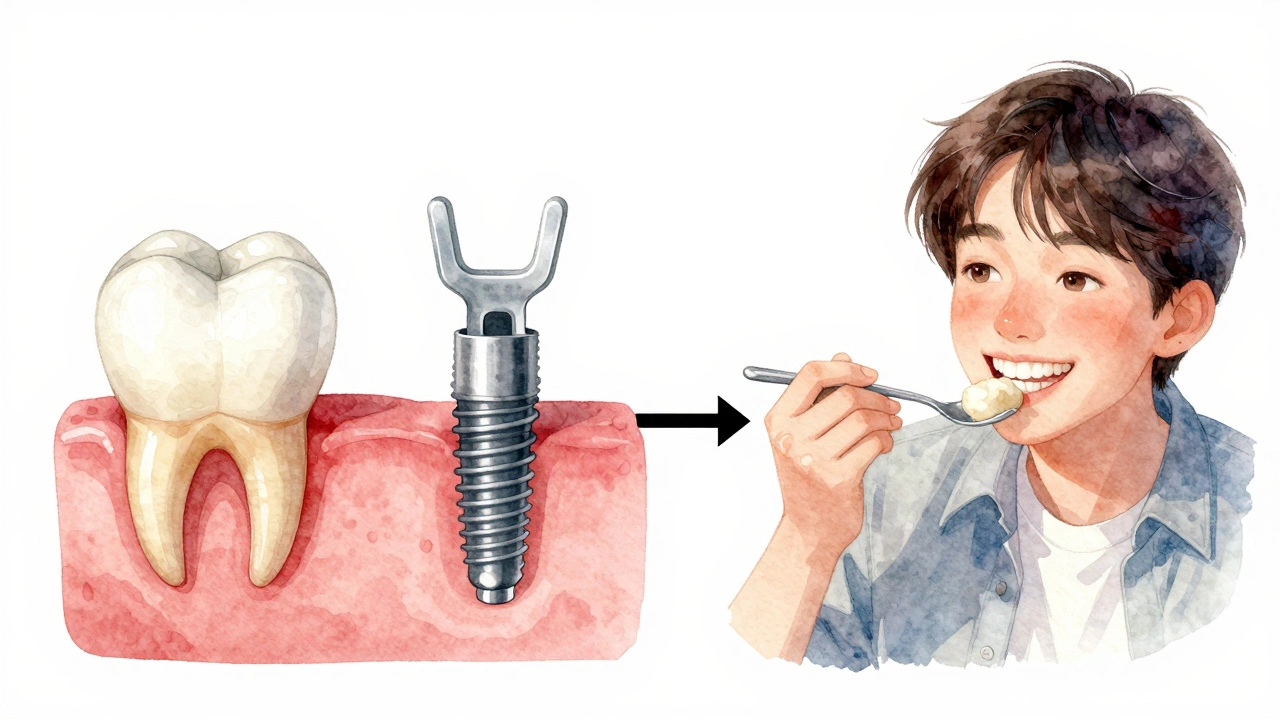
Dental implants need time to fuse with your jawbone. This process is called osseointegration, and it usually takes 3 to 6 months. But here’s the key: the implant is placed under the gum, and the temporary tooth goes on top of it. You’re not waiting for the implant to heal before getting a tooth-you’re getting both at once.Here’s how it typically works:
- You have a damaged or loose tooth removed.
- Within 24 hours, your dentist places the titanium implant into the jawbone.
- Right after, they attach a temporary crown or bridge-either fixed or removable.
- You wear the temporary for 3 to 6 months while the bone grows around the implant.
- Once healing is complete, you return for the final crown, which looks and feels just like a real tooth.
Some clinics even use same-day implants where the temporary is screwed directly onto the implant the same day as surgery. This is called All-on-4 or All-on-6, and it’s common for people replacing an entire arch. You walk out with a full set of temporary teeth in one visit.
Types of Temporary Teeth You Might Get
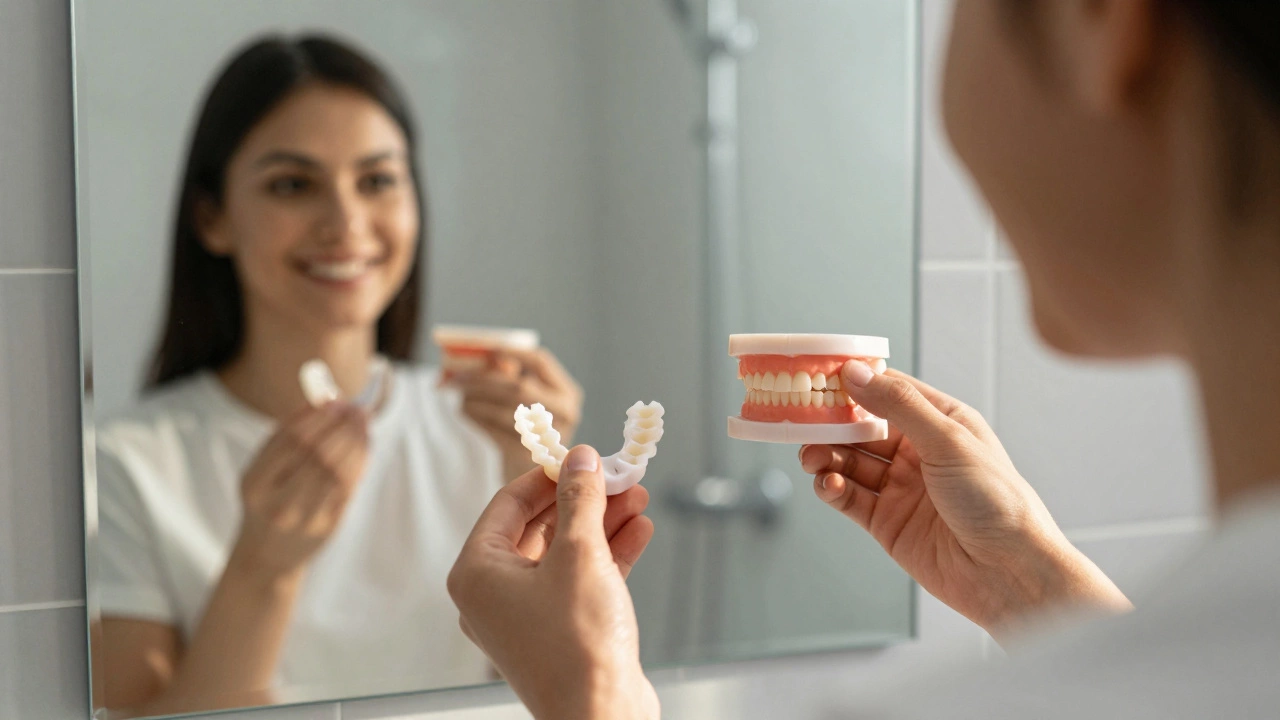
Not all temporary teeth are the same. What you get depends on your case, budget, and how many teeth are being replaced.- Removable Flipper Denture: A lightweight acrylic piece with one or two artificial teeth attached. It snaps in place and is easy to clean. Best for front teeth and short-term use.
- Temporary Bridge: A fixed acrylic bridge bonded to adjacent teeth or implants. More stable than a flipper and looks natural. Often used when replacing 2-4 teeth in a row.
- Screwed-in Temporary Crown: A single crown made of acrylic or composite, attached directly to the implant. Used for single-tooth replacements. Feels closest to a real tooth.
- Immediate Load Prosthesis (All-on-4): A full arch of temporary teeth attached to 4-6 implants. Used when replacing all teeth in the upper or lower jaw. Patients can eat soft foods the same day.
Most patients in India prefer removable options because they’re affordable and easy to adjust. Fixed options cost more but feel better and don’t come out while eating. Your dentist will recommend based on your bone density, gum health, and how many teeth you’re replacing.
How Long Until You Get the Final Teeth?
The final crown is usually placed after 3 to 6 months. Why so long? Because the implant needs to fully integrate with the bone. If you rush it, the implant can fail. In rare cases-like if you have excellent bone quality and no infections-the dentist might place the final crown in as little as 8 weeks. But that’s not the norm.Here’s what most people experience:
- Week 1-2: Swelling and soreness. Stick to soft foods. The temporary tooth is fine for talking and light eating.
- Week 3-6: Healing progresses. You can eat more normally, but avoid hard nuts or sticky candies.
- Month 2-3: Bone is starting to grow around the implant. Your dentist may take an X-ray to check progress.
- Month 4-6: Final impression is taken. The permanent crown is made in a lab and placed in one visit.
Some clinics offer expedited timelines using advanced imaging and 3D printing. In those cases, the final crown can be ready in 4 weeks. But these are exceptions, not the rule. Don’t be tempted by clinics promising results in 2 weeks-unless your bone is perfect, it’s risky.
What If You Can’t Wear a Temporary?
Sometimes, patients can’t wear a temporary. This happens if:- You have severe gum disease that needs to heal first.
- Your jawbone is too thin and needs a bone graft.
- You’re diabetic or on blood thinners, and your dentist wants to minimize infection risk.
In these cases, you might go without a temporary for 2 to 8 weeks. But even then, your dentist will likely give you a removable partial denture to wear during the day. You won’t be left with a visible gap unless you choose to go without.
One patient I worked with in Indiranagar, Bangalore, had to wait 6 weeks because of a bone graft. She used a flipper for meals and took it out at night. She said it felt awkward at first, but she got used to it. “I’d rather have a plastic tooth than a hole in my smile,” she told me.
Common Myths About Implants and Missing Teeth
There are a lot of myths floating around. Let’s clear up the biggest ones:- Myth: You have to wait months before getting any tooth. Truth: You get a temporary the same day or within days.
- Myth: Temporary teeth look fake and obvious. Truth: Modern materials match your natural teeth perfectly. Most people won’t notice.
- Myth: You can’t eat with a temporary. Truth: You can eat soft foods, and many people eat normally with fixed temporaries.
- Myth: The longer you wait, the better the implant. Truth: Waiting longer doesn’t improve success. It just means more time without a functional tooth.
One thing to remember: the temporary tooth isn’t just cosmetic. It helps maintain your jawbone shape, prevents shifting of other teeth, and keeps your speech clear. Skipping it can lead to more problems down the line.
What to Expect After the Final Crown
Once your permanent crown is placed, you’re done with the process. It’s made of porcelain or zirconia, looks like a real tooth, and lasts 15-20 years with good care. You’ll brush and floss it just like your natural teeth.Most patients say the final result feels better than their original tooth. No sensitivity, no decay risk, and no need to rely on adjacent teeth for support. The temporary was just a bridge to get you there.
Bottom Line: You Won’t Be Toothless for Long
The answer to how long do you go without teeth when getting implants? is simple: usually less than 24 hours. Even in complex cases, you’ll rarely go more than a few weeks without a replacement. Modern dentistry doesn’t leave you with gaps. It gives you a solution right away.If you’re considering implants, ask your dentist: “What temporary option will I get on the same day?” If they say you’ll be without teeth for weeks, find another clinic. That’s outdated practice.
With the right planning, your smile stays intact-not just in appearance, but in your confidence, your ability to eat, and your daily life.
Can I eat normally with temporary teeth after dental implants?
Yes, but with limits. Removable flippers are best for soft foods like mashed potatoes, yogurt, and soups. Fixed temporary bridges or crowns let you eat most foods, but avoid hard nuts, sticky candy, or chewing on ice. Your dentist will give you a list of safe foods based on your temporary type.
Do temporary teeth fall out easily?
Fixed temporaries (cemented or screwed in) rarely come loose. Removable ones like flippers can shift if you bite down hard or don’t fit well. If your temporary feels loose, don’t force it-call your dentist. Most can be adjusted in under 15 minutes.
Are temporary teeth covered by insurance?
Most dental insurance plans in India don’t cover temporary teeth unless they’re part of a major procedure like full-arch reconstruction. Some private plans may offer partial coverage. Always check your policy before treatment. Many clinics offer affordable temporary options starting at ₹2,000-₹8,000.
Can I get implants without removing my tooth first?
Yes, in some cases. If your tooth is loose or damaged but still in place, your dentist may extract it and place the implant in the same socket right away. This is called immediate implant placement. It reduces healing time and avoids a gap entirely. But it only works if the bone and gum are healthy.
What happens if the implant fails?
Implant failure is rare-less than 5% of cases. If it happens, the implant is removed, the area heals for 2-3 months, and a new one is placed. Your temporary tooth stays in place during this time. Most failures are due to smoking, poor oral hygiene, or uncontrolled diabetes. Following your dentist’s aftercare instructions cuts the risk significantly.