ADHD without treatment: What happens when it’s ignored
When ADHD without treatment, a neurodevelopmental condition marked by persistent inattention, hyperactivity, or impulsivity that disrupts daily life. Also known as attention deficit disorder, it doesn’t just mean someone is easily distracted—it rewires how the brain handles tasks, time, and emotions. In India, where awareness is still growing, many adults and children live with undiagnosed or untreated ADHD for years. The result? Not laziness. Not poor discipline. A brain struggling to keep up with demands it wasn’t built to handle.
Left alone, untreated ADHD, a condition where core symptoms persist without medication, therapy, or behavioral support doesn’t fade with age. It evolves. A child who can’t sit still in class becomes an adult who misses deadlines, forgets bills, or loses jobs. A teenager who zones out during lectures grows into someone who cancels plans last minute, struggles with relationships, or turns to substances to self-soothe. Studies tracking adults with undiagnosed ADHD show higher rates of anxiety, depression, and even substance use—not because they’re weak, but because their brains are constantly fighting an invisible battle.
The brain’s executive function—its ability to plan, focus, and control impulses—is underdeveloped in ADHD. Without support, that gap widens. You start doubting yourself. Why can’t I just get it together? The answer isn’t willpower. It’s neurology. And while medication like stimulants helps some, others find relief through structure, routines, coaching, or even simple tools like timers and checklists. What matters isn’t the label—it’s the action. Even small changes, like writing down tasks or setting alarms for meals and sleep, can reduce chaos.
Many in India still think ADHD is a Western fad or something kids outgrow. But the signs are everywhere: the student who fails despite studying hard, the employee who’s labeled "unreliable," the parent who feels guilty for yelling at their child for not finishing homework. These aren’t character flaws. They’re symptoms. And ignoring them doesn’t make them disappear—it makes life harder.
Below, you’ll find real stories and facts from people who’ve lived through this. You’ll see how untreated ADHD connects to anxiety, how it affects sleep and relationships, and what steps—even small ones—can make a difference. No hype. No jargon. Just what happens when ADHD is left in the dark, and how to start bringing light to it.
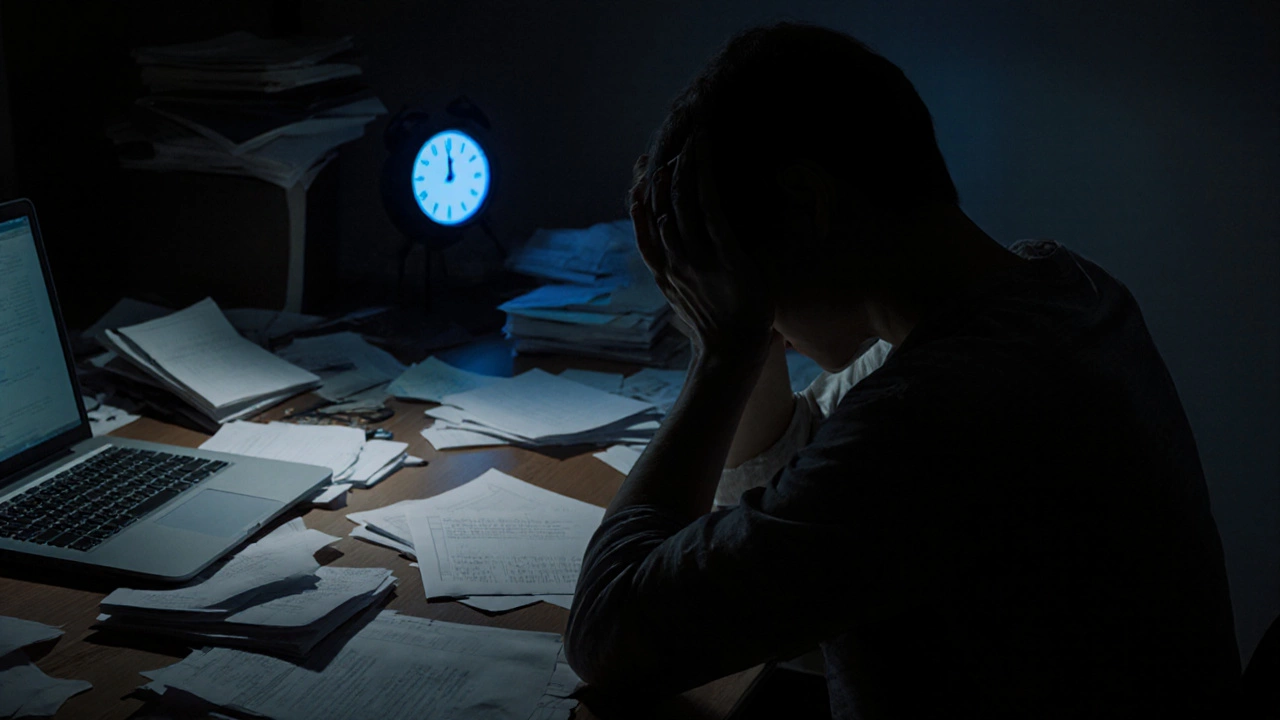
What Can Untreated ADHD Lead To? Real Risks and Long-Term Effects
Untreated ADHD can lead to chronic stress, relationship breakdowns, job underperformance, substance abuse, depression, obesity, and financial trouble. Learn the real long-term risks and why early support makes all the difference.