
Full Body Checkup Recommender
Not all checkups are created equal. Select your profile below to see which tests are essential for you, avoiding unnecessary costs while catching early warnings.
Select your details and click "Get My Test Plan" to see customized recommendations.
You walk into a lab or browse online, and suddenly you're drowning in acronyms: CBC, LFT, KFT, HbA1c. There are "Basic," "Advanced," "Executive," and "Premium" packages, each promising to tell you everything about your body. But here is the uncomfortable truth: there is no single "best" test that fits everyone. A 25-year-old fitness enthusiast needs different insights than a 50-year-old with a family history of heart disease.
Choosing the right full body checkup isn't about picking the most expensive box; it's about matching the diagnostics to your age, gender, lifestyle, and risk factors. If you pick wrong, you either waste money on irrelevant data or miss critical early warnings. Let's break down what actually matters so you can stop guessing and start screening smartly.
The Core Components Every Adult Needs
No matter who you are, certain baseline metrics give you a snapshot of your general health. These aren't optional extras; they are the foundation of any decent screening. Think of them as the dashboard lights in your car. If these are off, you need to pay attention immediately.
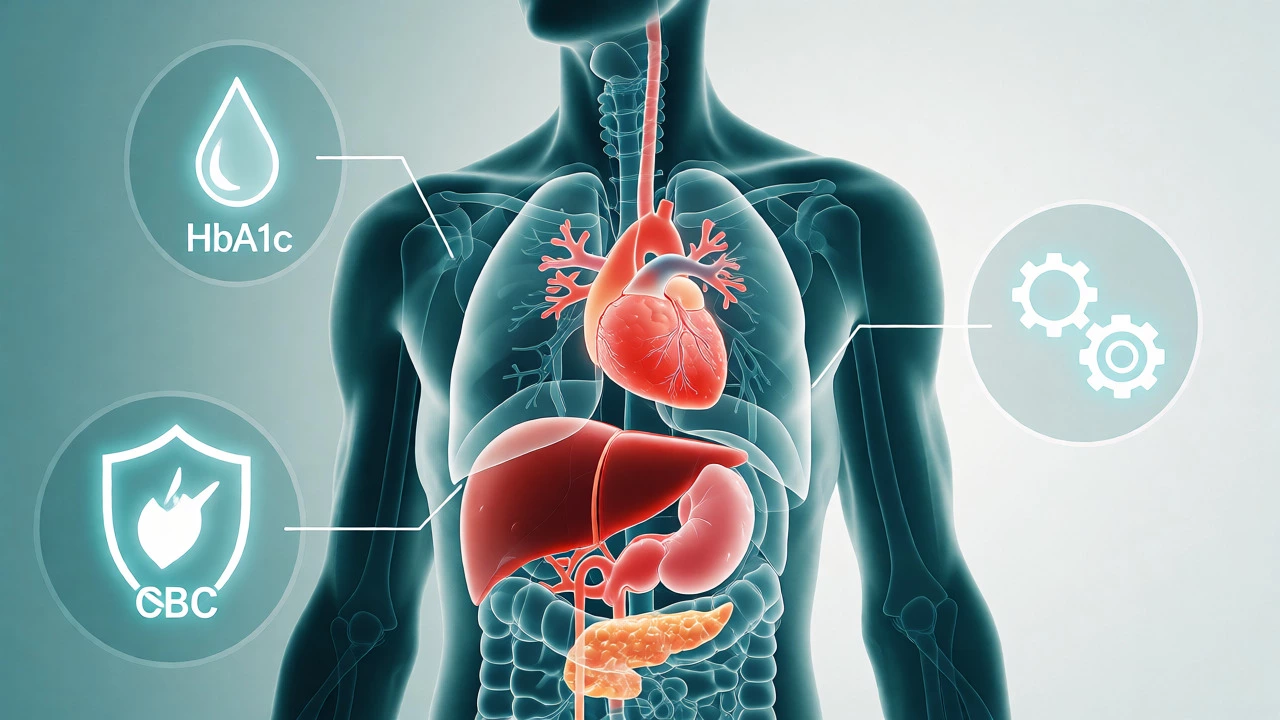
First up is the Complete Blood Count (CBC). This simple blood test counts your red cells, white cells, and platelets. It flags anemia, infections, and immune system issues before you even feel sick. Next, look at your metabolic markers. You need a Fasting Blood Sugar or better yet, an HbA1c test. Fasting sugar gives you a snapshot of today, but HbA1c reveals your average blood sugar over the last three months. In India, where diabetes prevalence is rising rapidly among younger adults, HbA1c is far more reliable for early detection.
Then there are the organ function panels. Your liver processes everything you eat, drink, and take as medication. An Liver Function Test (LFT) checks enzymes like ALT and AST. High levels often signal fatty liver, which is increasingly common due to sedentary lifestyles and high-carb diets. Similarly, a Kidney Function Test (KFT) measures creatinine and urea. Kidneys filter waste; if these numbers creep up, your filtration system is struggling.
- CBC: Checks for anemia, infection, and clotting issues.
- HbA1c: Tracks long-term blood sugar control.
- Lipid Profile: Measures cholesterol types (LDL, HDL, Triglycerides).
- LFT & KFT: Assess liver and kidney health.
- Vitamin D & B12: Critical deficiencies in urban populations.
Age-Specific Screening: Why One Size Doesn't Fit All
Your body changes significantly every decade. A standard package bought online might skip tests that are crucial for your specific life stage. Here is how you should tailor your approach based on age groups.
| Age Group | Primary Risks | Must-Add Tests |
|---|---|---|
| 20s - 30s | Anemia, Vitamin Deficiencies, Thyroid Issues | TSH, Vitamin D, B12, Ferritin |
| 40s - 50s | Heart Disease, Diabetes, Hypertension | Lipid Profile, ECG, BP Monitoring, HbA1c |
| 60+ | Osteoporosis, Prostate/Cervical Cancer, Cognitive Decline | Bone Density Scan, PSA (Men), Pap Smear (Women), Vision/Hearing |
If you are in your 20s or 30s, don't obsess over cardiac stress tests unless you have symptoms. Instead, focus on nutritional deficiencies. In cities like Bangalore, many young professionals work indoors under artificial light, leading to widespread Vitamin D deficiency. Low Vitamin D affects bone health, mood, and immunity. Pair this with a Thyroid Stimulating Hormone (TSH) test. Thyroid disorders are silent but common, causing fatigue and weight fluctuations that people often blame on stress.
Once you hit 40, cardiovascular risk climbs. Now, a basic lipid profile isn't enough. Ask for an ECG (Electrocardiogram) and possibly an Echocardiogram if you have high blood pressure or a family history of heart attacks. For men, prostate health becomes relevant after 50, requiring a PSA (Prostate-Specific Antigen) test. Women need to prioritize breast and cervical cancer screenings, such as mammograms and Pap smears, which are rarely included in standard blood-only packages.
Gender-Specific Considerations
Male and female bodies have distinct vulnerabilities. Ignoring these differences leads to incomplete pictures. The term "full body" often implies a generic set of blood tests, but true comprehensive care requires gender-specific additions.
For women, hormonal balance is key. Beyond thyroid checks, consider testing for Polycystic Ovary Syndrome (PCOS) markers if you experience irregular periods or acne. Iron levels are also critical because menstruation depletes iron stores, making anemia a persistent issue. A Ferritin test is more accurate than hemoglobin alone for detecting early iron depletion.
Men, on the other hand, often neglect mental health and prostate issues until late stages. While not a blood test, a discussion on mental well-being during the consultation is vital. Physically, watch out for abdominal obesity. Men tend to store fat around the belly, which is metabolically active and increases heart disease risk. Measuring waist circumference alongside BMI provides a clearer picture of metabolic health than weight alone.
Decoding Lab Packages: What Are You Actually Buying?
Labs market packages aggressively. You'll see names like "Silver," "Gold," and "Platinum." Don't let the name fool you. Look at the number of parameters. A "basic" package usually has 40-50 tests. An "advanced" one might have 70-80. But does adding 20 obscure hormone tests help you if you already know your thyroid is fine?
Here is a rule of thumb: avoid packages that include dozens of allergy tests or heavy metal screens unless you have specific exposure risks. They inflate the cost without adding clinical value for the average person. Conversely, ensure the package includes a physical examination component. A doctor’s review of your vitals-blood pressure, pulse, BMI-is just as important as the blood work. Many cheap online kits only offer lab collection, leaving you to interpret complex reports alone.
Check if the report includes reference ranges adjusted for your age and gender. Generic ranges can be misleading. For instance, normal testosterone levels vary widely between a 25-year-old and a 60-year-old. Good labs provide context in their reports, not just raw numbers.

Frequency: How Often Should You Go?
There is no hard-and-fast rule that says "every year." It depends on your health status. If you are healthy, under 40, and have no family history of chronic diseases, a comprehensive checkup every two years might suffice. Annual visits can lead to over-testing and unnecessary anxiety over minor fluctuations.
However, if you have pre-existing conditions like hypertension, diabetes, or high cholesterol, quarterly or biannual monitoring is essential. Also, consider your lifestyle. If you smoke, drink heavily, or work night shifts, annual screenings are non-negotiable. Remember, a checkup is not a cure. It is a map. If the map shows a hill, you need to plan how to climb it.
Preparing for Your Test: Avoiding False Alarms
Even the best test can give wrong results if you prepare poorly. Most metabolic tests require fasting for 10-12 hours. Water is allowed, but coffee, tea, and chewing gum are not. Caffeine can spike cortisol and affect glucose readings. Sleep deprivation before the test can also skew hormone levels like cortisol and thyroid hormones.
Inform the lab about any medications or supplements you take. Biotin supplements, popular for hair growth, can interfere with thyroid test results, making them appear abnormal when they are not. If you are on blood thinners, mention it before any procedure involving needles to manage bruising.
Is a full body checkup necessary if I feel healthy?
Yes, especially after age 30. Many conditions like high cholesterol, early-stage diabetes, and hypertension are "silent killers" with no obvious symptoms until significant damage occurs. Early detection through routine screening allows for lifestyle modifications that can prevent progression to serious disease.
What is the difference between HbA1c and fasting blood sugar?
Fasting blood sugar measures your glucose level at the exact moment of the test, which can fluctuate due to recent meals or stress. HbA1c reflects your average blood sugar levels over the past 2-3 months. HbA1c is considered more reliable for diagnosing prediabetes and diabetes because it provides a longer-term view of your glycemic control.
Should I do a CT scan or MRI as part of a routine checkup?
Generally, no. Routine imaging like CT scans involves radiation exposure and is expensive. Unless you have specific symptoms, a family history of cancer, or a doctor's recommendation, advanced imaging is not recommended for asymptomatic individuals. Stick to ultrasound or X-ray if needed, but avoid unnecessary radiation from routine CT/MRI scans.
How much does a good full body checkup cost in India?
Costs vary by city and lab chain. A basic package (40-50 tests) typically ranges from ₹1,500 to ₹2,500. Comprehensive packages (70+ tests) with physical exams can cost between ₹3,000 and ₹6,000. Premium executive health checks with cardiologist consultations may exceed ₹8,000. Always compare what is included rather than just the price tag.
Can I rely on home collection services for accuracy?
Reputable chains maintain high standards for home collection. However, sample integrity is crucial. Ensure the phlebotomist uses fresh kits and transports samples quickly to the lab. Temperature-sensitive tests (like some hormone assays) require careful handling. If possible, visit the lab center for complex tests to ensure immediate processing, but for standard blood work, trusted home collection is generally safe and convenient.