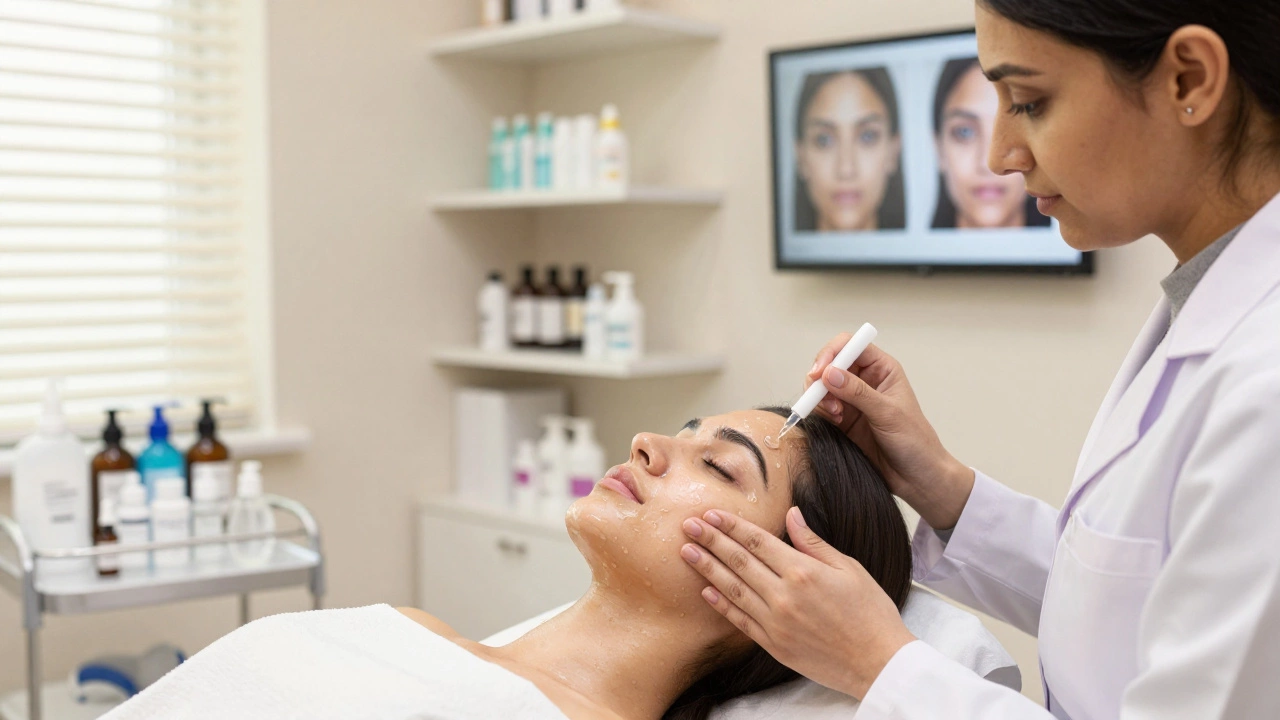
If you’ve scrolled through social media or walked past a dermatology clinic lately, you’ve probably seen ads for glowing skin, wrinkle-free faces, and instant results. But what’s actually the most popular skin treatment right now? It’s not one single thing. The answer depends on who you ask - a 25-year-old with acne scars, a 45-year-old fighting fine lines, or a 60-year-old looking to restore volume. But if you look at global clinic data, patient surveys, and dermatology journals from 2025, one treatment stands out: chemical peels.
Why Chemical Peels Lead the Pack
Chemical peels aren’t new, but they’ve evolved. Modern peels use precise combinations of acids - glycolic, salicylic, lactic, and trichloroacetic acid - to target specific skin concerns. Unlike lasers or surgery, they don’t require downtime for most people. A light peel takes 20 minutes. You can do it during a lunch break and be back at work with slightly brighter skin.In 2025, over 3.2 million chemical peels were performed worldwide, according to the International Society of Dermatology. That’s more than Botox, microneedling, or laser treatments combined. Why? Because they work for multiple problems at once: acne, sun damage, uneven tone, fine lines, and clogged pores. They’re also affordable. A single session costs between $100 and $300 in most urban clinics, including in cities like Bangalore, Delhi, and Mumbai.
What makes chemical peels different from other treatments is their flexibility. A dermatologist can adjust the strength and type of acid based on your skin type. For Indian skin, which is often more prone to post-inflammatory hyperpigmentation, mild peels with lactic or mandelic acid are preferred. These reduce dark spots without triggering melasma or scarring.
What About Botox and Fillers?
Botox and dermal fillers are still huge - especially among people in their 30s to 50s. Botox relaxes muscles to smooth forehead lines and crow’s feet. Fillers like hyaluronic acid restore volume in cheeks, lips, and under the eyes. Together, they accounted for about 2.8 million procedures in 2025.But here’s the catch: Botox and fillers don’t fix texture or tone. They’re great for structure, not surface. If your skin looks dull, patchy, or rough, no amount of filler will fix that. That’s why many people combine them with peels. In fact, 68% of patients who get fillers also get a peel within the same month, according to a 2025 survey of 5,000 clinic patients across Asia.
Microneedling and Lasers: The Power Players
Microneedling with radiofrequency (RF) and fractional laser resurfacing are growing fast. They’re ideal for deep acne scars, enlarged pores, and skin tightening. A single RF microneedling session can stimulate collagen for up to six months. Lasers like Fraxel and CO2 deliver dramatic results - but they come with risks.In India, where many people have darker skin tones, lasers can cause burns or permanent darkening if not done right. That’s why clinics now recommend microneedling as a safer alternative. It has fewer side effects, works on all skin types, and costs about the same as a peel - around $150 to $250 per session.
But again, microneedling doesn’t improve pigmentation or surface texture like a chemical peel does. It’s better for scarring and firmness. So if you’re choosing between the two, ask yourself: Do I need smoother skin? Go for a peel. Do I need tighter skin? Try microneedling.

The Real Winner: Combination Treatments
The most popular skin treatment isn’t just one thing anymore. It’s a sequence. Dermatologists now design personalized routines. For example:- Start with a light chemical peel to brighten and exfoliate.
- Follow up with microneedling two weeks later to boost collagen.
- Use Botox for dynamic wrinkles, and fillers for volume loss.
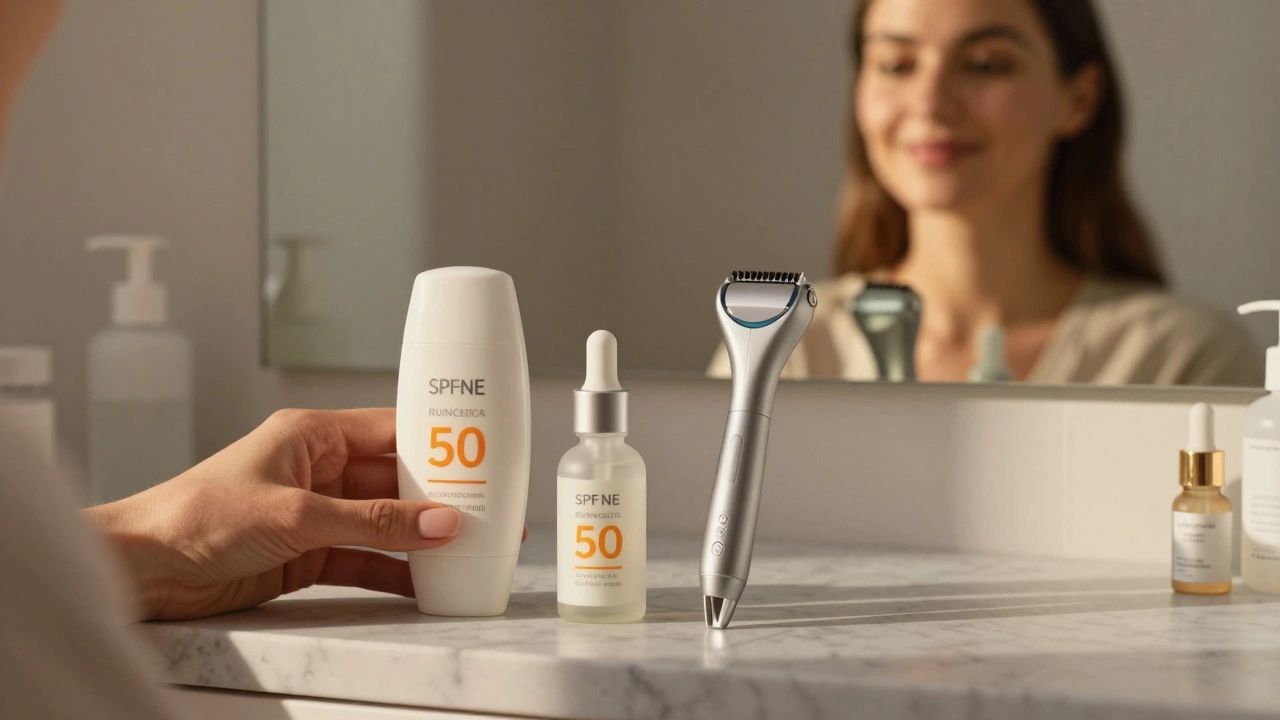
- Maintain with at-home retinoids and daily SPF 50.
This combo approach is now the gold standard. A 2025 study in the Journal of Clinical and Aesthetic Dermatology showed patients who followed this sequence saw 40% better results after six months than those who did just one treatment.
People are moving away from quick fixes. They want lasting, natural-looking skin. That means treating the whole skin - not just one layer. Peels handle the surface, microneedling rebuilds the middle, and fillers/Botox support the structure. Together, they create skin that doesn’t just look good - it functions better.
What’s Not Working Anymore
Some treatments are fading out. DIY at-home peels with lemon juice or baking soda? Dangerous. They cause burns and long-term sensitivity. Over-the-counter serums promising "miracle" results? Most are just fancy water with a few antioxidants.Also, traditional facials with steam and extraction? They’re relaxing, sure - but they don’t change skin structure. If you’re looking for real improvement, skip the spa and go to a dermatologist.
And don’t fall for "zero downtime" laser promises. If a treatment claims to fix deep wrinkles in 10 minutes with no redness, it’s either a scam or it’s not working on the deeper layers where aging happens.
How to Choose the Right Treatment for You
Here’s a simple guide based on your main concern:- Dull, uneven skin or dark spots? Start with a chemical peel.
- Deep acne scars or large pores? Try microneedling with RF.
- Wrinkles when you smile or frown? Botox is still the go-to.
- Sunken cheeks or thin lips? Hyaluronic acid fillers.
- Loose skin under the chin or jawline? Ultrasound or radiofrequency devices like Ultherapy.
Always get a skin analysis first. A good dermatologist will check your skin type, sun damage, and medical history before recommending anything. In India, where pollution and humidity affect skin, a personalized plan matters more than following trends.
What You Should Do Next
If you’re thinking about a skin treatment, here’s what to do:- Write down your top 3 skin concerns.
- Find a board-certified dermatologist - not just a beauty clinic.
- Ask for before-and-after photos of real patients with your skin tone.
- Get a patch test if you have sensitive skin or a history of reactions.
- Start with one treatment. Don’t rush into a full package.
Results take time. Even the best peels need 3-6 sessions spaced 2-4 weeks apart. Patience beats quick fixes every time.
Skincare Is a Long Game
The most popular skin treatment today isn’t about looking younger overnight. It’s about building healthier skin that lasts. Chemical peels lead because they’re safe, effective, and adaptable. But they work best as part of a bigger plan - one that includes sunscreen, hydration, and professional guidance.There’s no magic wand. But there is a science-backed path. And for millions of people, that path starts with a simple, well-timed peel.
Is chemical peeling safe for Indian skin?
Yes, when done correctly. Indian skin types (Fitzpatrick III-V) respond well to mild peels using lactic, mandelic, or low-concentration glycolic acid. These acids reduce pigmentation without triggering melasma or scarring. Avoid strong peels like high-dose TCA unless supervised by a dermatologist experienced with darker skin tones.
How often should I get a chemical peel?
For light peels, every 4-6 weeks is ideal. You’ll need 3-6 sessions for noticeable results. Medium peels are done once every 6-12 months. Deep peels are rare and only recommended for severe sun damage - and even then, once in a lifetime is enough. Never do peels more than once a month unless your dermatologist says so.
Can I do a chemical peel at home?
Over-the-counter peels with low acid concentrations (under 10%) are generally safe for occasional use. But avoid DIY recipes with lemon, vinegar, or baking soda. They’re unregulated, can burn your skin, and cause long-term damage. Stick to products with clear ingredient lists and dermatologist approval.
Which is better: microneedling or chemical peel?
It depends on your goal. Chemical peels improve skin tone, texture, and surface issues like acne and dark spots. Microneedling rebuilds collagen and helps with scars and skin laxity. Many people do both - peels first to clear the surface, then microneedling to tighten and renew deeper layers.
Do I need to avoid the sun after a peel?
Absolutely. Your skin is more sensitive after a peel. Use SPF 50+ every day, even indoors. Avoid direct sunlight for at least 7 days. Skipping sunscreen can lead to permanent dark spots, especially in Indian skin tones.
How long do results from a chemical peel last?
Light peels last 1-2 months. Medium peels can last 3-6 months. But results depend on how well you protect your skin afterward. With daily sunscreen, proper hydration, and a retinoid routine, your glow can last longer - and your skin will keep improving over time.