Orthopedic Surgery Duration Calculator
When you’re scheduled for orthopedic surgery, one of the first questions on your mind isn’t about the implant or the scar-it’s how long will this take? Not just the time in the operating room, but the whole process: prep, surgery, recovery in the hospital, and when you can walk again. The answer isn’t one-size-fits-all. A simple arthroscopy might wrap up in under an hour. A full hip replacement can stretch to three hours or more. And spinal fusion? That’s often a half-day affair.
What Factors Influence Surgery Time?
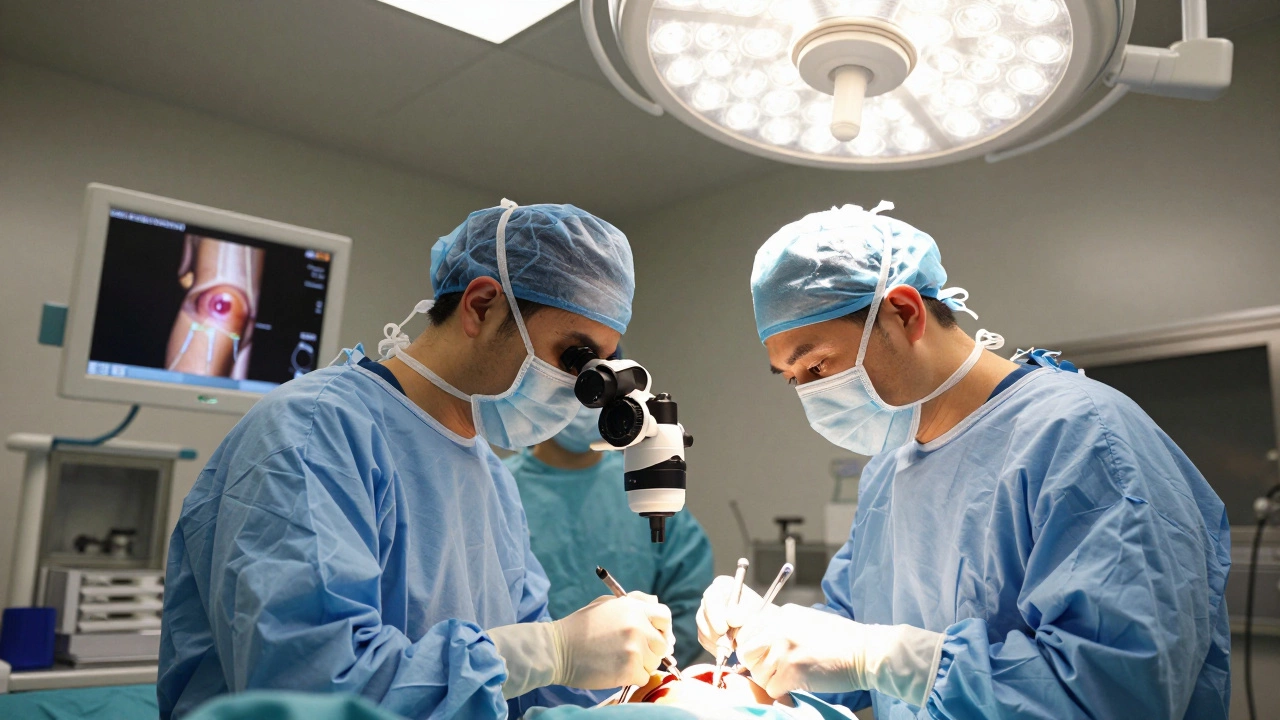
It’s not just about the type of surgery. Your body’s condition, the surgeon’s approach, and even hospital logistics play a role. For example, a patient with severe osteoarthritis and bone spurs will take longer to operate on than someone with early-stage joint damage. If you’ve had prior surgeries in the same area, scar tissue can slow things down. Surgeons using robotic assistance may take slightly longer to set up but often complete the actual procedure faster and with more precision.
Hospital workflow matters too. In busy orthopedic centers like those in Bangalore, the OR team has refined their routines. Pre-op checks, anesthesia induction, and post-op handoffs are timed to the minute. That doesn’t mean the surgery itself is rushed-it means less waiting between steps.
Typical Surgery Durations for Common Procedures
Here’s what you can realistically expect based on recent data from major orthopedic hospitals in India and the U.S. These times reflect the actual cutting and reconstructing phase-not counting anesthesia prep or recovery room stay.
| Procedure | Average Duration | Typical Recovery in Hospital |
|---|---|---|
| Knee Arthroscopy (meniscus repair) | 30-60 minutes | Same day |
| Knee Replacement (Total) | 1.5-3 hours | 2-4 days |
| Hip Replacement (Total) | 1.5-3 hours | 2-4 days |
| Shoulder Rotator Cuff Repair | 1-2.5 hours | Same day or 1 night |
| Spinal Fusion (single level) | 2-4 hours | 3-5 days |
| Spinal Fusion (multi-level) | 4-7 hours | 5-7 days |
| Fracture Repair (femur or tibia) | 2-4 hours | 3-6 days |
| Elbow Replacement | 2-3 hours | 2-4 days |
These numbers come from hospital records in India’s top orthopedic centers, including Apollo Hospitals and Fortis, as well as peer-reviewed studies from the Journal of Bone and Joint Surgery. Times can vary by ±30 minutes depending on complexity.
Why Do Some Surgeries Take Longer Than Others?
Let’s break down two extremes: a simple knee arthroscopy and a multi-level spinal fusion.
Knee arthroscopy is minimally invasive. The surgeon makes two or three small cuts, inserts a camera and tools, cleans out damaged cartilage, and repairs the meniscus. No bones are cut. The whole thing is like fixing a leaky pipe inside a tight space. That’s why it’s often done as a day case.
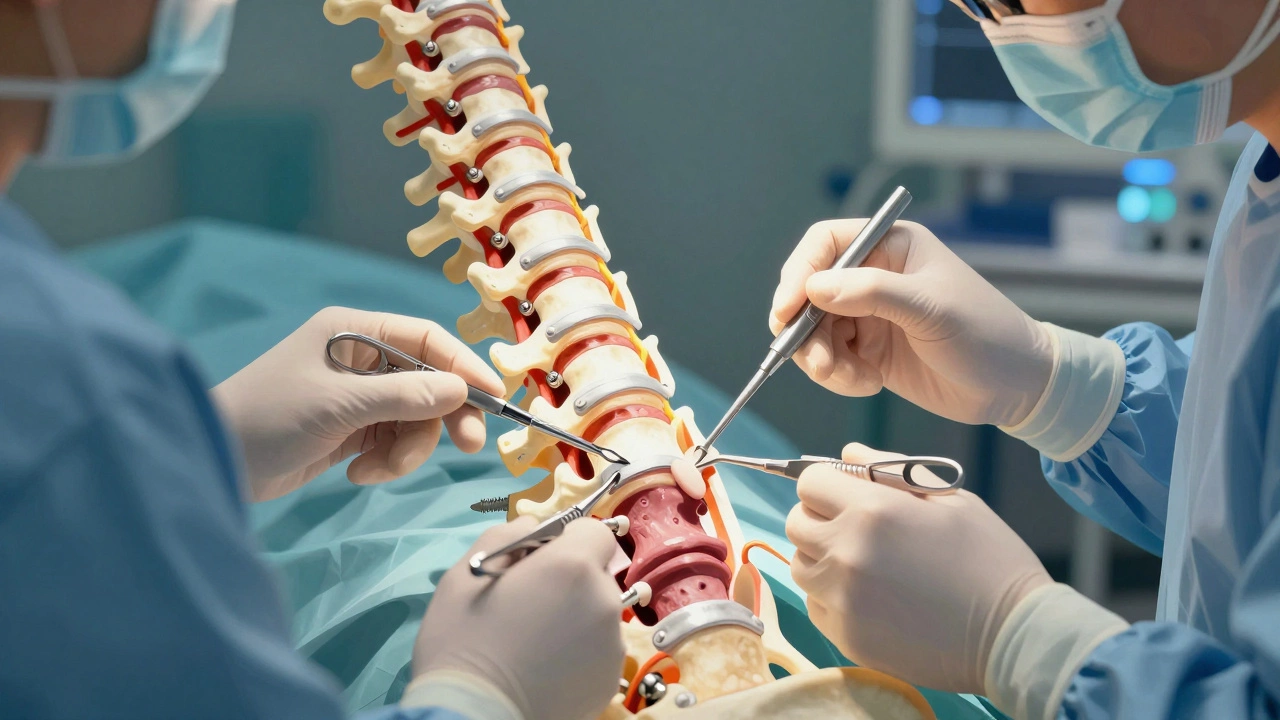
Now, a spinal fusion for degenerative disc disease? That’s a major operation. You’re dealing with nerves, multiple vertebrae, bone grafts, screws, rods, and sometimes muscle retraction. Each level fused adds 45-60 minutes. If there’s scoliosis or previous failed surgery, the surgeon has to navigate scar tissue and misaligned anatomy. That’s why a three-level fusion can take six hours or more.
Even within the same procedure, technique matters. A surgeon using a minimally invasive approach for hip replacement might take longer than one using a traditional open cut-but the patient often recovers faster. Time in the OR isn’t always the best measure of difficulty.
What Happens Before and After the Cut?
The clock doesn’t start when the surgeon picks up the scalpel. You’ll be in the pre-op area for 1-2 hours before surgery. That’s where you meet the anesthesiologist, get IV lines placed, have your skin cleaned and marked, and sign final consent forms. In some hospitals, you’ll even meet the surgical team who’ll be doing the operation.
After surgery, you’ll go to the recovery room. That’s usually 45-90 minutes. Nurses monitor your vital signs, manage pain, and make sure you’re waking up safely. Once stable, you’re moved to your hospital room. That’s when the real recovery begins.
Don’t confuse surgery time with total hospital stay. A knee replacement might take two hours to perform, but you’ll likely stay in the hospital for three days. That’s because you need physical therapy, pain control, and monitoring for blood clots or infection.
Can You Speed Up the Process?
Yes-but only in small ways. Being in good physical shape before surgery helps. If you’re overweight, have uncontrolled diabetes, or smoke, your surgery may take longer because healing is slower and bleeding is harder to control. Surgeons often delay procedures until these issues are managed.
Some hospitals now offer “fast-track” orthopedic programs. These include pre-op education, optimized anesthesia, early mobility, and standardized pain protocols. Patients in these programs often leave the hospital a day earlier and report less pain. It’s not about rushing the surgery-it’s about streamlining everything around it.
Don’t expect your surgery to be shorter just because you’re in a hurry. A good surgeon won’t cut corners. Safety and precision always come before speed.

What to Expect on Surgery Day
Here’s a realistic timeline if you’re having a total knee replacement at a major hospital in Bangalore:
- 7:00 AM: Arrive at the hospital, check-in, change into gown
- 8:00 AM: Meet anesthesiologist, review medical history
- 9:00 AM: IV placed, pre-op antibiotics given
- 9:45 AM: Taken to OR, anesthesia administered
- 10:15 AM: Surgery begins
- 12:15 PM: Surgery ends
- 1:00 PM: Wake up in recovery room
- 2:30 PM: Moved to hospital room
- 3:30 PM: First physical therapy session-standing and taking a few steps
By evening, you’ll be walking with a walker, eating light meals, and sleeping through the night with pain under control. That’s the new standard.
When Should You Be Concerned About Length?
Most orthopedic surgeries are routine. But if your procedure runs more than 30-45 minutes beyond the expected time, ask why. It’s not always bad-sometimes it’s because the surgeon found an unexpected issue, like hidden infection or a bone fracture they didn’t see on the X-ray. But if the delay is due to equipment failure, poor planning, or repeated attempts, that’s a red flag.
Ask your surgeon: “What’s the typical time for this surgery? What would make it take longer?” A confident surgeon will give you a clear range and explain what could change it.
Final Thoughts
Orthopedic surgery isn’t a race. The goal isn’t to finish fast-it’s to fix it right. A knee replacement that takes 2.5 hours and lets you walk the next day is better than one done in 90 minutes that leaves you in pain or needing revision surgery later.
Knowing how long your surgery will take helps you plan: arrange for help at home, take time off work, pack your hospital bag. But don’t let the clock stress you out. Trust your team. They’ve done this hundreds of times. Your job is to show up prepared, ask questions, and let them do their work.
How long does a knee replacement surgery usually take?
A total knee replacement typically takes between 1.5 and 3 hours. The exact time depends on the complexity of your joint damage, your body type, and whether you’ve had prior surgeries in the area. Most patients are up and walking with assistance within 24 hours after surgery.
Is a 4-hour spinal surgery normal?
Yes, a 4-hour spinal fusion is common, especially if multiple vertebrae are involved or if there’s significant degeneration, deformity, or scar tissue from previous surgery. Single-level fusions may take 2-3 hours, but three or more levels often require 4-7 hours. Surgeons take extra care around nerves and blood vessels, which adds time but improves safety.
Can orthopedic surgery be done in less than an hour?
Yes, simple procedures like arthroscopic meniscus repair, carpal tunnel release, or removal of a small bone spur can be completed in under an hour. These are minimally invasive and don’t involve major bone or joint reconstruction. Most are outpatient procedures-you go home the same day.
Why does hip surgery take longer than knee surgery sometimes?
Hip surgery often takes longer because the joint is deeper and surrounded by more muscle and ligament. Accessing it requires more dissection. Also, hip replacements involve precise alignment of the ball and socket to prevent dislocation later. This precision takes time. Knee replacements, while complex, have a more straightforward mechanical structure.
Does robotic surgery make orthopedic procedures faster?
Robotic-assisted surgery usually adds 15-30 minutes to setup time because the machine needs calibration and mapping. But once it’s running, the actual bone cutting and implant placement can be faster and more accurate. Overall, total OR time is often similar-but outcomes are better, with fewer complications and faster recovery.