Dental Implant Cost & Risk Estimator
Estimate the potential financial burden and assess risk factors based on your health profile.
Estimated Financial Impact
Note: Insurance typically covers only $1,000-$1,500 annually. Most patients finance the remainder.
Risk Assessment
Missing a tooth can feel like a small inconvenience at first. You cover it up when you laugh, or maybe you just avoid smiling altogether. But when you start looking into dental implants are titanium posts surgically placed into the jawbone to replace missing tooth roots, they are widely considered the gold standard for permanent tooth replacement. They look natural, feel real, and don’t require grinding down neighboring teeth like bridges do. But here’s the thing nobody tells you during the initial consultation: while success rates hover around 95-98%, that remaining percentage of failures comes with significant downsides. It’s not just about the price tag. There are physical risks, long-term maintenance realities, and biological factors that can turn a perfect solution into a costly headache. Before you book that surgery, let’s look at the actual drawbacks. We’ll break down the financial burden, the surgical risks, the hidden maintenance traps, and who might actually be better off avoiding implants altogether.
The Financial Reality: More Than Just the Surgery
The most immediate downside of getting an implant is the sticker shock. Unlike a simple filling or even a crown, this isn’t a one-step procedure. It’s a project that spans months and involves multiple specialists.
You’re paying for three distinct phases:
- The Surgical Placement: This covers the titanium post itself and the surgeon’s fee. Depending on your location and the complexity of the case, this alone can range from $1,500 to $3,000 per tooth.
- The Abutment: This is the connector piece that holds the crown. It often costs an additional $500 to $1,000.
- The Crown: The visible tooth part, usually made of porcelain or zirconia, adds another $1,000 to $3,000.
So, replacing a single molar can easily push past $4,000 to $6,000. And if you need bone grafting because your jaw has shrunk since losing the tooth? Add another $500 to $1,200. If you need a sinus lift for upper back teeth? That’s another $1,500 to $2,500.
Insurance rarely helps much here. Most dental plans classify implants as "cosmetic" or "major restorative" with low annual maximums (often capped at $1,000-$1,500). Many people end up financing these procedures through third-party lenders, meaning you’re paying interest on a tooth. For someone on a tight budget, this upfront capital requirement is a massive barrier compared to a removable partial denture, which might cost a fraction of the price.
Surgical Risks and Biological Complications
Even though oral surgeons perform these procedures daily, it is still surgery. And surgery carries inherent risks. While rare, these complications can have lasting effects on your health and comfort.
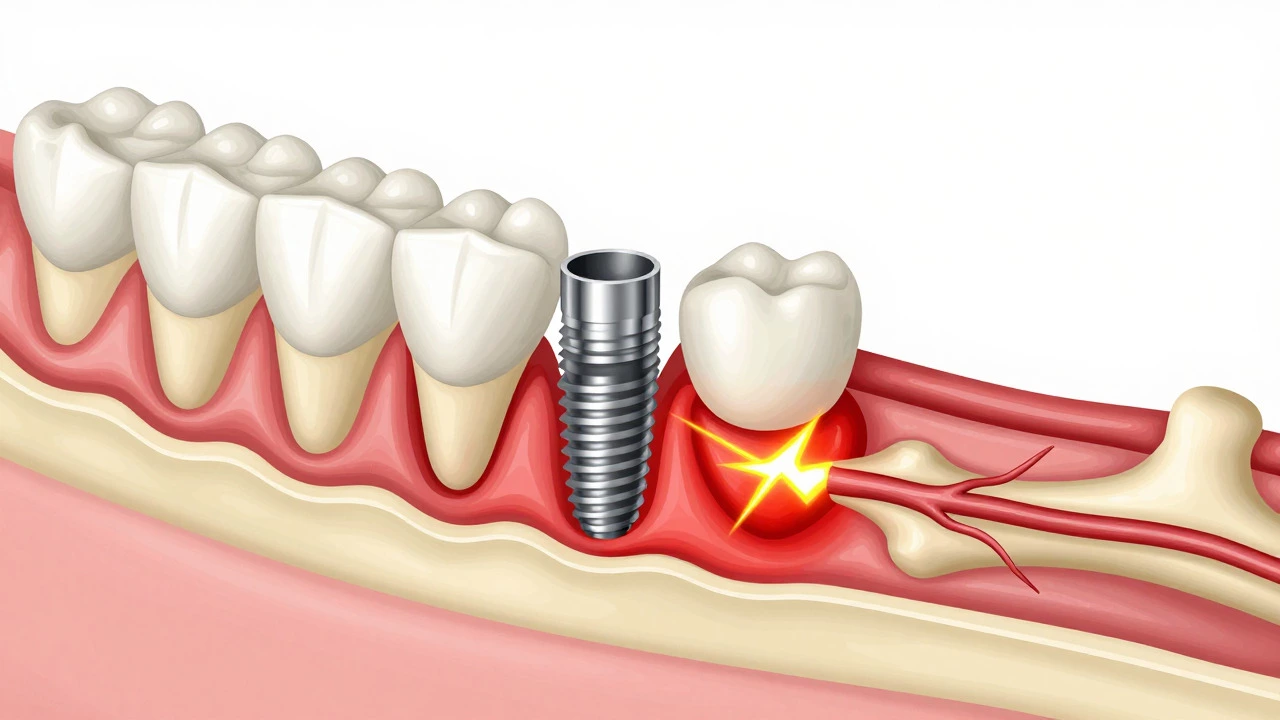
Nerve Damage If the implant is placed too close to the inferior alveolar nerve in the lower jaw, you could experience temporary or permanent numbness, tingling, or pain in your lip, chin, or gums. This is called paresthesia. In severe cases, it requires surgical removal of the implant to relieve pressure on the nerve.
Infection and Peri-Implantitis This is perhaps the most common long-term downside. Just like natural teeth, implants can get infected. However, unlike natural teeth, implants don’t have a periodontal ligament that acts as a shock absorber and immune barrier. When bacteria attack the gum tissue around an implant, it leads to peri-implantitis, a destructive inflammatory process affecting the soft and hard tissues around dental implants. It causes bone loss. If caught early, it can be treated with deep cleaning and antibiotics. If ignored, the implant loosens and fails. Studies suggest that peri-implantitis affects roughly 10-20% of patients within five years.
Sinus Issues For upper jaw implants, especially in the back molars, the root tips often sit right under the maxillary sinus. If the implant protrudes into the sinus cavity, it can cause chronic sinus infections, congestion, or pain. A sinus lift procedure mitigates this, but it adds time, cost, and complexity to the healing process.
The Time Commitment and Recovery Period
We live in a world where we want instant fixes. Dental implants are the opposite. They are a marathon, not a sprint.
The entire process typically takes 3 to 9 months. After the titanium post is screwed into your jaw, you must wait for osseointegration, the process where the bone fuses with the metal. This biological bonding cannot be rushed. During this healing phase, you’ll likely eat a soft-food diet. No steak, no apples, no crunchy bread. You might also deal with swelling, bruising, and discomfort for the first week.
If you need bone grafting first, add another 4 to 6 months before the implant can even be placed. For many working professionals, taking time off work for surgery, followed by weeks of dietary restrictions and follow-up appointments, is a significant logistical downside.
Maintenance and Long-Term Durability Myths
A common sales pitch is that implants are "permanent." This is misleading. The titanium screw itself may last a lifetime, but the components attached to it do not.
Crown Wear and Tear The ceramic crown on top of the implant is strong, but it’s not indestructible. Over 10 to 15 years, the glaze can wear off, the color can shift, or the crown can crack due to biting forces. Since the implant doesn’t have a nerve, you won’t feel sensitivity if the crown chips, but you will notice it visually or functionally. Replacing a crown costs money and time.
Screw Loosening The abutment screw that holds the crown in place can loosen over time due to the heavy chewing forces, especially if you grind your teeth (bruxism). This requires a quick visit to the dentist to tighten it, but if left unchecked, it can damage the internal threads of the implant, leading to total failure.
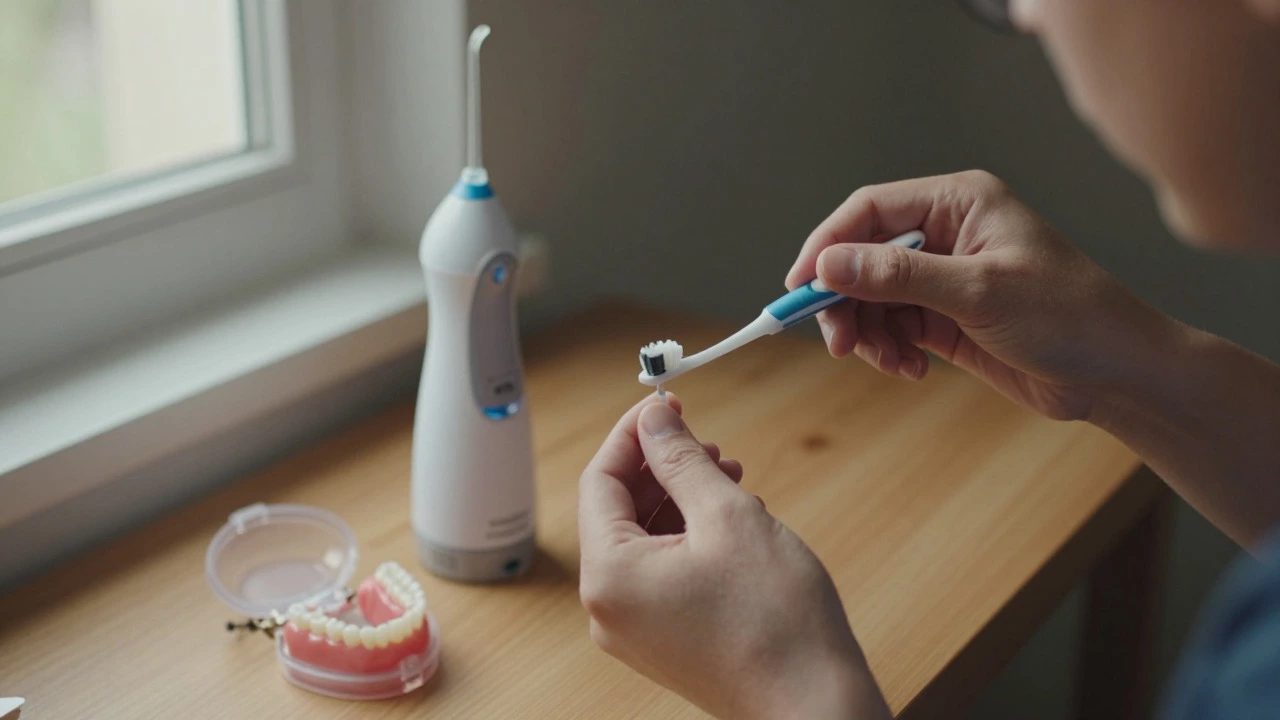
Hygiene Demands You can’t brush an implant like a natural tooth. Flossing is critical, but standard floss often slips out from under the gum line of an implant. You’ll likely need to use specialized tools like water flossers, interdental brushes, or super-floss every single day. Neglecting this specific hygiene routine is the fastest way to trigger peri-implantitis.
Who Should Avoid Implants?
Dental implants aren’t for everyone. Certain health conditions significantly increase the risk of failure, making the downsides outweigh the benefits.
| Health Factor | Why It Matters | Alternative Options |
|---|---|---|
| Uncontrolled Diabetes | High blood sugar impairs healing and increases infection risk. | Bridges or Dentures |
| Heavy Smoking | Nicotine constricts blood vessels, reducing blood flow needed for bone fusion. | Quit smoking 2 weeks prior, or choose a bridge. |
| Osteoporosis | Low bone density makes it hard for the implant to anchor securely. | Bone grafting required, or consider overdentures. |
| Radiation Therapy (Head/Neck) | Radiation damages blood supply to the jawbone, causing osteoradionecrosis. | Dentures are usually safer. |
| Titanium Allergy | Rare, but some patients react to the metal, causing inflammation. | Zirconia (ceramic) implants. |
If you fall into any of these categories, the "downside" isn't just a minor inconvenience-it's a high probability of losing the investment entirely. Always disclose your full medical history to your surgeon.
Alternatives to Consider
If the downsides of implants seem too steep, you have other options. Understanding them helps you make a balanced decision.
Dental Bridges A bridge uses the adjacent teeth as anchors for a false tooth in between. It’s faster (completed in two visits) and cheaper than an implant. However, it requires shaving down healthy neighboring teeth, which can weaken them over time. Bridges also trap food more easily, increasing decay risk under the crowns.
Removable Partial Dentures These are the most affordable option. They clip onto existing teeth. The downside is comfort-they can feel bulky, slip while talking, and accelerate bone loss in the empty socket because they don’t stimulate the jaw. They also require nightly removal and cleaning.
All-on-4 or Full Arch Implants If you’re missing all teeth in an arch, individual implants become prohibitively expensive. The All-on-4 technique uses four implants to support a full row of teeth. It reduces cost and surgery time but still carries the same biological risks and requires meticulous hygiene.
How to Mitigate the Downsides
If you decide to proceed with implants, you can minimize the risks. Here is a practical checklist:
- Choose the Right Specialist: Don’t just go to your general dentist unless they have extensive implant training. Look for a periodontist or oral surgeon who specializes in implants. Check their before-and-after portfolio.
- Get a CBCT Scan: Ensure your surgeon uses 3D Cone Beam CT scans, not just 2D X-rays. This allows precise measurement of bone volume and nerve location, drastically reducing surgical errors.
- Address Gum Disease First: Active periodontal disease must be treated before placing an implant. Otherwise, the infection will spread to the new implant.
- Invest in Night Guards: If you grind your teeth, a custom night guard is non-negotiable. It protects the crown and the screw from excessive force.
- Commit to Professional Cleanings: Visit your hygienist every 3-4 months instead of every 6. Ask them to use plastic or titanium scalers, not metal ones, which can scratch the implant surface and harbor bacteria.
Dental implants are a life-changing restoration for many, but they are not a magic bullet. They demand financial commitment, surgical precision, and lifelong hygiene discipline. By understanding the downsides upfront, you can weigh them against the benefits and decide if this is the right path for your smile and your wallet.
Do dental implants last forever?
The titanium implant post can last a lifetime if cared for properly. However, the crown attached to it typically lasts 10 to 15 years before needing replacement due to wear and tear. Additionally, surrounding bone and gum health must be maintained to prevent failure.
Is it painful to get a dental implant?
During the procedure, you are numbed, so you feel pressure but no pain. Post-surgery, most patients report mild to moderate discomfort manageable with over-the-counter painkillers for a few days. Swelling and bruising are common but subside within a week.
Can I get dental implants if I smoke?
Smokers can get implants, but their failure rate is significantly higher. Nicotine restricts blood flow, slowing healing and increasing infection risk. Surgeons often recommend quitting smoking for at least two weeks before and after surgery to improve outcomes.
What happens if a dental implant fails?
If an implant fails due to infection or lack of bone integration, it must be removed. The site is then cleaned and allowed to heal, which can take several months. Once healed, a new implant may be placed, or alternative treatments like a bridge or denture are considered.
Are there alternatives to titanium implants for allergies?
Yes, zirconia (ceramic) implants are a metal-free alternative. They are biocompatible and white, blending seamlessly with gums. However, they are newer technology, less widely available, and sometimes more brittle than titanium, requiring careful case selection.