
Specialist Finder for Joint & Muscle Pain
Find the right specialist for your pain
Answer a few quick questions about your symptoms to get a recommendation for the most appropriate medical specialist.
When your knees ache after walking, your shoulders lock up from typing, or your lower back feels like it’s been hit by a truck, you don’t just want relief-you want the right expert. Not every doctor who treats pain is the right one for joint and muscle issues. Choosing the wrong specialist can mean months of trial and error, unnecessary tests, or even treatments that don’t touch the real problem.
Orthopedic doctors are the first line of defense
If you’re dealing with joint pain from arthritis, a torn ligament, or a strained muscle from sports or injury, an orthopedic doctor is a medical specialist trained to diagnose and treat conditions of the musculoskeletal system, including bones, joints, ligaments, tendons, and muscles. Also known as orthopedic surgeon, they are the most common starting point for joint and muscle pain.
Orthopedic doctors see everything from a teenager with a sprained ankle to an older adult with severe osteoarthritis. They use physical exams, X-rays, MRIs, and sometimes ultrasound to find the source. If your pain came from a fall, a car accident, or overuse at the gym, they’re the ones who’ll tell you whether you need physical therapy, a brace, or surgery.
Many orthopedic specialists even focus further-some only treat knees, others only shoulders. In Bangalore, hospitals like Manipal and Apollo have orthopedic teams that specialize in sports injuries, joint replacements, and chronic pain management. If your pain is mechanical-worse with movement, better with rest-an orthopedic doctor is your best bet.
Rheumatologists handle systemic joint inflammation
But what if your joints hurt without any injury? What if your fingers swell in the morning, your hips ache even when you’re not moving, or you feel tired all the time? That’s not just wear and tear-that could be rheumatoid arthritis is an autoimmune disease where the immune system attacks the lining of the joints, causing inflammation, pain, and eventual joint damage. Also known as RA, it often affects multiple joints symmetrically.
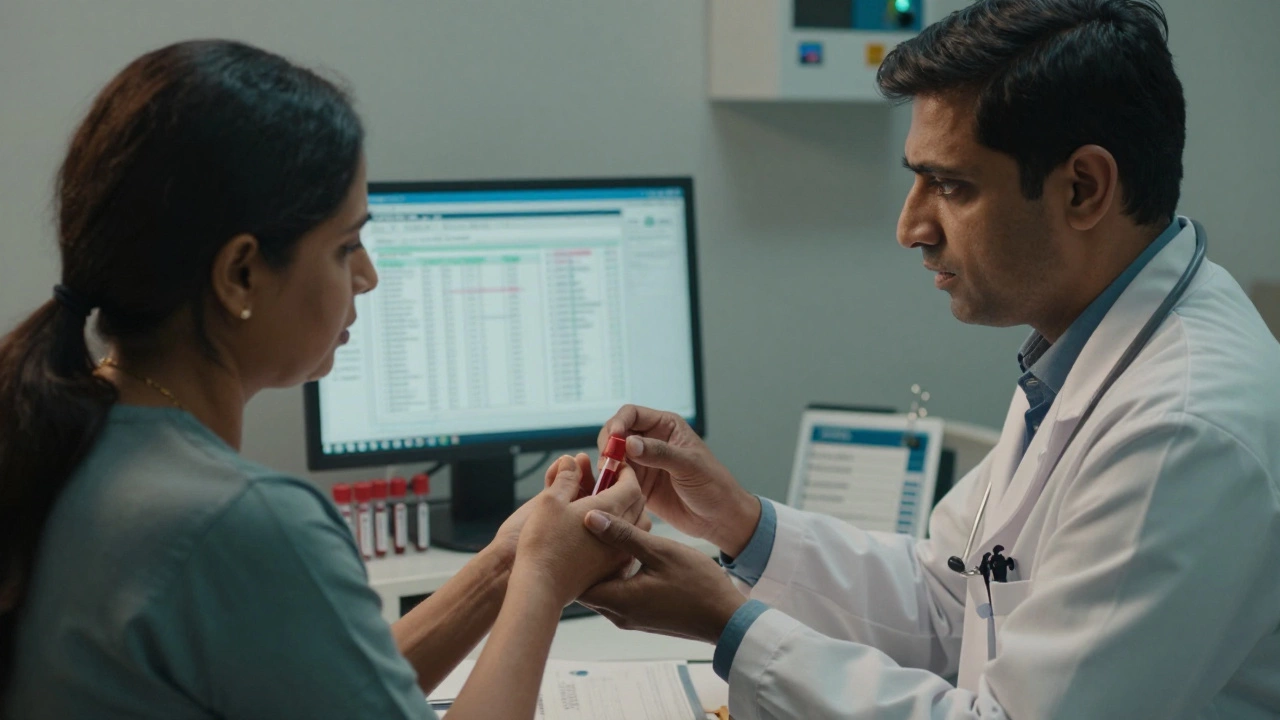
This is where a rheumatologist is a specialist who diagnoses and treats autoimmune and inflammatory diseases affecting the joints, muscles, and connective tissues. Rheumatologists don’t do surgery. Instead, they use blood tests (like RF and anti-CCP), imaging, and clinical patterns to spot diseases like lupus, psoriatic arthritis, or gout.
If you’ve been told your pain is "just aging" but you’re only 45 and your wrists are stiff for hours after waking up, see a rheumatologist. Early treatment can stop joint damage before it becomes permanent. In India, rheumatology services are growing fast, especially in cities like Bangalore, where hospitals have dedicated autoimmune clinics.
Physical therapists help you move again
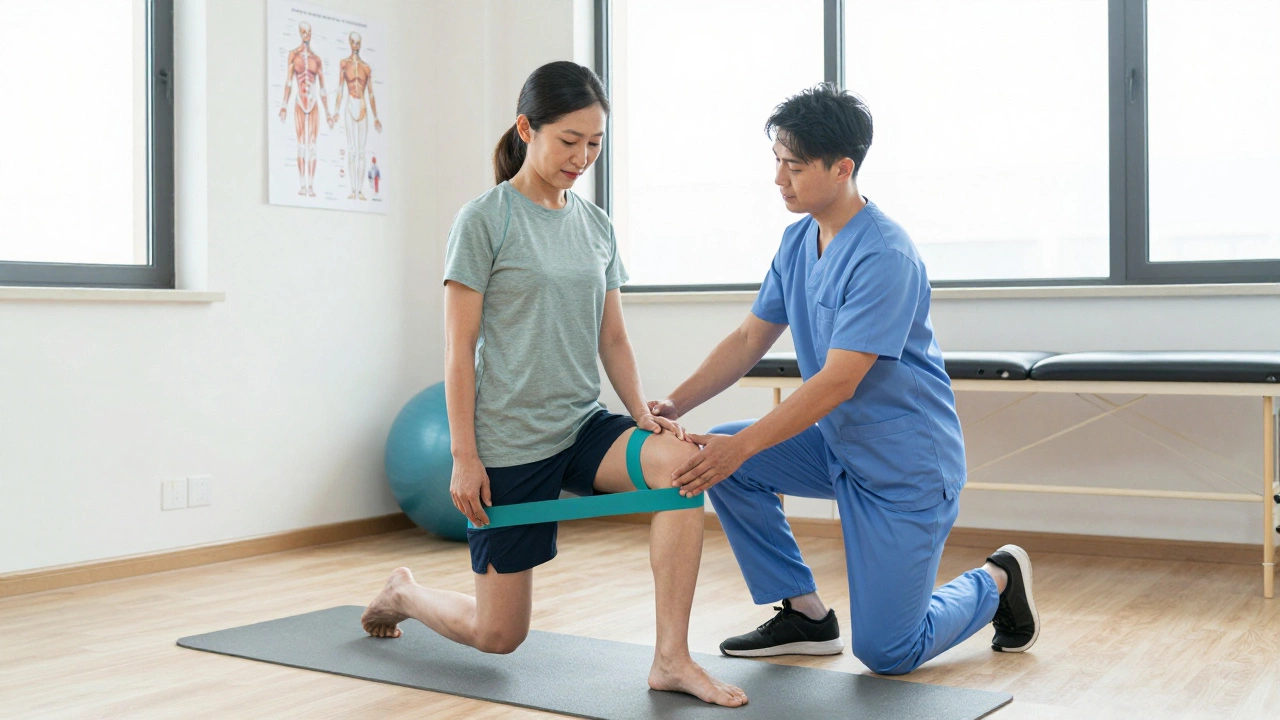
Even the best diagnosis doesn’t fix pain if you can’t walk, lift, or bend without agony. That’s where physical therapy comes in. A physical therapist is a licensed healthcare professional who uses movement, exercise, manual therapy, and education to restore function and reduce pain.
Most orthopedic doctors refer patients to physical therapists. But you don’t always need a referral. In Bangalore, many private clinics let you walk in for an assessment. A good physical therapist will test your range of motion, muscle strength, posture, and gait. They’ll then create a plan-maybe core strengthening for lower back pain, or shoulder mobility drills for rotator cuff issues.
Studies show that for chronic low back pain and knee osteoarthritis, physical therapy is as effective as surgery-and far less risky. It’s also cheaper. Many patients avoid surgery altogether with consistent therapy. If your pain is tied to poor movement habits, weak muscles, or bad posture, a physical therapist can fix it faster than any pill or needle.
When to see a neurologist or pain specialist
Not all muscle pain comes from the muscles themselves. If you have numbness, tingling, burning, or shooting pain down your leg or arm, it could be nerve-related. That’s the job of a neurologist is a doctor who specializes in disorders of the nervous system, including nerves, spinal cord, and brain.
Conditions like sciatica, carpal tunnel, or spinal stenosis often start as joint or muscle pain but are actually caused by pinched nerves. A neurologist might order an EMG (nerve conduction test) or MRI of the spine to find the problem.
For chronic, widespread pain that doesn’t respond to standard treatments, a pain management specialist is a doctor trained in advanced techniques to treat persistent pain, including injections, nerve blocks, and medication regimens.
These doctors are often anesthesiologists or physiatrists with extra training. They’re not quick-fixers-they help people who’ve tried everything else. In India, pain clinics are still rare outside big cities, but they’re growing. If you’ve been on painkillers for over six months and still hurt, it’s time to consider one.
What to avoid: misleading options
There’s a lot of noise out there. Some people swear by chiropractors for back pain. Others try massage therapists or acupuncturists. These can help with relaxation or temporary relief, but they’re not replacements for medical diagnosis.
Chiropractors, for example, focus on spinal alignment. But if your knee pain is from cartilage loss, adjusting your spine won’t fix it. Massage can ease muscle tension, but won’t heal a torn tendon. Acupuncture might reduce pain signals temporarily, but won’t stop inflammation from rheumatoid arthritis.
Don’t skip the doctor to go straight to alternative therapies. Use them as supplements-not substitutes.
How to pick the right specialist
Here’s a simple guide to choosing who to see first:
- Did your pain start after an injury? → See an orthopedic doctor.
- Do your joints swell, feel warm, or hurt even when resting? → See a rheumatologist.
- Is your pain worse with movement, and do you feel stiff in the morning? → Start with physical therapy or an orthopedic referral.
- Do you have numbness, tingling, or pain radiating down your arm or leg? → See a neurologist.
- Have you tried everything and still hurt? → Ask for a pain management specialist.
Most insurance plans in India cover visits to orthopedic doctors and rheumatologists. Physical therapy is often out-of-pocket, but worth every rupee. Don’t delay-if joint damage is happening, early action saves mobility later.
Real-life example: A Bangalore case
Meet Priya, 52, from Indiranagar. She started with knee pain after gardening. Her local clinic said it was "wear and tear" and gave her painkillers. Six months later, her knees locked up. She saw an orthopedic doctor, who ordered an MRI and found severe cartilage loss. He recommended physical therapy first. After eight sessions, her pain dropped 60%. She still takes glucosamine and walks daily. She avoided knee replacement-because she got the right care early.
That’s the difference. Not every pain needs surgery. Not every pain needs pills. But every pain needs the right expert.
Can a general physician treat joint and muscle pain?
Yes, a general physician can help with mild, short-term pain. They can prescribe pain relievers, recommend rest, or order basic tests. But if the pain lasts more than a few weeks, keeps coming back, or affects your daily life, they’ll likely refer you to a specialist. General doctors are great starters, but not long-term solvers for complex joint or muscle issues.
Is surgery always needed for joint pain?
No. In fact, most joint pain doesn’t require surgery. For osteoarthritis, physical therapy, weight management, and injections often delay or even prevent the need for joint replacement. Surgery is usually considered only when pain is severe, movement is extremely limited, and other treatments have failed for at least six months.
What’s the difference between an orthopedic doctor and a physiatrist?
An orthopedic doctor is trained in surgery and non-surgical treatment of bones and joints. A physiatrist (physical medicine and rehabilitation doctor) focuses on non-surgical recovery-using therapy, braces, injections, and exercise to restore function. You might see a physiatrist after surgery, or instead of surgery if your issue is nerve or muscle-related.
Can Ayurveda or yoga cure joint pain?
Ayurveda and yoga can help manage symptoms and improve mobility, especially for chronic conditions like osteoarthritis. Some people find relief from herbal oils, massage, or gentle yoga poses. But they don’t reverse structural damage like cartilage loss or autoimmune inflammation. Use them as complementary tools-not replacements-for medical care.
When should I get an MRI for joint pain?
You don’t need an MRI for every ache. If your pain follows a clear injury, improves with rest, and isn’t getting worse, imaging isn’t urgent. But if you have sudden swelling, numbness, weakness, pain at night, or no improvement after 4-6 weeks of basic care, an MRI can reveal hidden problems like ligament tears, nerve compression, or early arthritis.
Next steps: What to do today
If you’re in Bangalore and unsure where to start, here’s what to do right now:
- Write down when the pain started, what makes it worse, and what helps.
- Check if you have swelling, redness, or numbness-these are red flags.
- Call an orthopedic clinic for an initial consultation. Most offer first visits under ₹500.
- Ask if they have an in-house physical therapy department.
- If you’re under 50 and have joint pain without injury, ask about rheumatology screening.
Joint and muscle pain doesn’t have to be a life sentence. The right specialist, at the right time, can change everything.