First IVF Cycle: What to Expect, Costs, and Real Outcomes
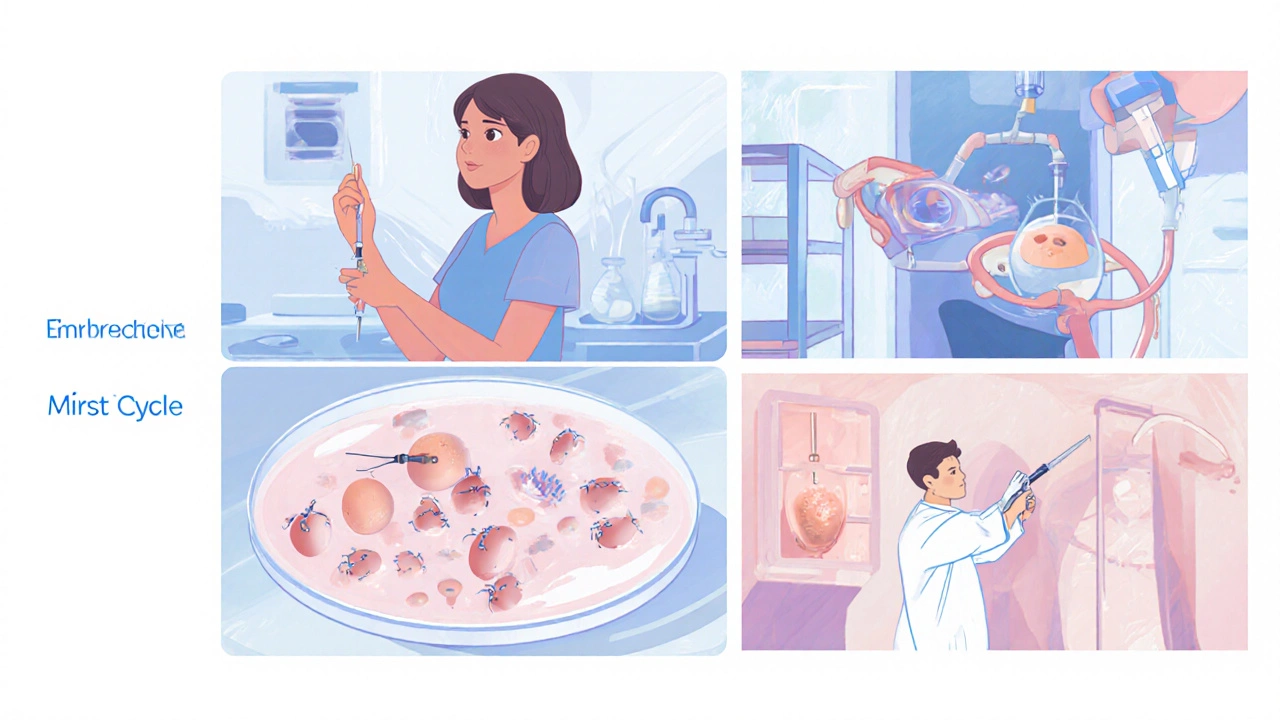
When you start your first IVF cycle, a medical process where eggs are fertilized outside the body and implanted into the uterus to achieve pregnancy. Also known as in vitro fertilization, it’s one of the most common paths to parenthood for couples facing infertility in India. It’s not just about science—it’s about timing, money, and emotional resilience. Many assume IVF is a quick fix, but the reality is more complex. The embryo transfer, the step where one or more embryos are placed into the uterus after fertilization usually happens 3 to 5 days after egg retrieval. But that’s just one part of a 4-6 week journey filled with daily injections, blood tests, ultrasounds, and waiting.
Success rates for a first IVF cycle, the initial round of treatment using the patient’s own eggs and sperm vary widely in India. For women under 35, the chance of a live birth is around 30-40% per cycle, according to data from major clinics in Delhi, Mumbai, and Bangalore. But if you’re over 40, that number drops to 10-15%. It’s not just age—factors like ovarian reserve, sperm quality, and clinic experience matter just as much. Most people don’t realize that IVF cost in India, the total price for one full cycle including medications, monitoring, and procedure ranges from ₹1.5 lakh to ₹3 lakh, depending on the city and clinic. That’s often out-of-pocket, since insurance rarely covers it. And while some clinics promise 70% success, real-world results are much lower. The emotional toll is real too. Many couples feel guilt, shame, or isolation during this process, especially in communities where fertility is still stigmatized.
What you won’t hear from brochures: the first cycle often fails. That doesn’t mean you’re broken. It means your body is unique, and IVF is still a trial-and-error process. Some people get pregnant on the first try. Others need two or three. A few discover underlying issues—like undiagnosed endometriosis or male factor infertility—only after the first round. That’s why knowing the IVF timeline, the full sequence from ovarian stimulation to pregnancy test helps you prepare mentally. You’ll be on hormones for 10-14 days, then have egg retrieval, wait 3-5 days for embryo development, and finally wait another 9-12 days for a blood test. That’s nearly six weeks of constant monitoring. And if it doesn’t work? You’re not alone. About half of all couples need more than one cycle. Below, you’ll find real stories, cost breakdowns, and medical insights from people who’ve walked this path—so you know what to expect, what to ask, and when to keep going.
IVF Success Rate on the First Cycle: What the Numbers Really Show
Explore real first‑cycle IVF success rates, age‑specific numbers, key factors, and practical tips to improve your odds before the first try.