
Knee Replacement Recovery Timeline Explorer
Select a timeframe below to view specific mobility goals, assistive devices, and key focus areas for that stage of your recovery journey.
Immediate Aftermath (Days 1-3)
Day 1Mobility Status
Stand and take few steps with walker
Key Focus
Pain control and clot prevention
What to Expect
Don't expect miracles on day one. Your leg will feel heavy and numb. Early mobilization is critical to prevent blood clots. Aggressive pain management ensures you can move. Hydration is vital, especially in hot climates.
You’ve heard the horror stories. Friends or relatives who had a knee replacement a surgical procedure that replaces damaged joint surfaces with artificial components and spent months hobbling around, dreading every step. Or maybe you’re the one staring at your swollen, stiff knee, wondering if you’ll ever climb stairs without gripping the railing like it’s a life raft. The truth is, the road back to normal walking isn’t a straight line. It’s more of a jagged hill you have to climb, but here is the good news: most people are walking independently within two weeks and driving again within six.
If you are asking "how long does it take to walk normally," the short answer is usually three to six months for a truly fluid, pain-free gait. But "normal" is subjective. For some, normal means walking to the mailbox. For others, it means hiking on weekends. Let’s break down exactly what happens week by week so you aren’t blindsided by the process.
The Immediate Aftermath: Days 1-3
Don’t expect miracles on day one. When you wake up from anesthesia, your leg will feel heavy, numb, and possibly painful. This is normal. Your body is in shock from the trauma of surgery. In modern orthopedic practice, specifically following guidelines from organizations like the American Academy of Orthopaedic Surgeons, early mobilization is critical. You will likely be asked to stand and take a few steps with a walker or crutches within 24 hours of surgery.
This isn’t about speed; it’s about circulation and preventing blood clots. You might feel dizzy or weak. That’s okay. The goal here is just to get vertical. Pain management is aggressive during this phase because uncontrolled pain makes movement impossible. If you’re in Bangalore or similar hot climates, staying hydrated is extra important to keep your energy up for these first tiny victories.
The Walker Phase: Weeks 1-2
By the end of the first week, most patients transition from a walker to crutches or a cane. This is often the hardest mental hurdle. You might feel unstable. Your quadriceps (the big muscles on the front of your thigh) are still waking up from being cut and retracted during surgery. They need time to fire correctly again.
During these two weeks, your home becomes your gym. Physical therapy exercises aren’t optional; they are the medicine. You’ll focus on extending your knee fully and bending it to about 90 degrees. Walking is short and frequent. Ten minutes here, ten minutes there. Trying to walk for an hour straight will just leave you swollen and frustrated. Listen to your body. If it throbs, rest and ice.
Ditching the Crutches: Weeks 3-6
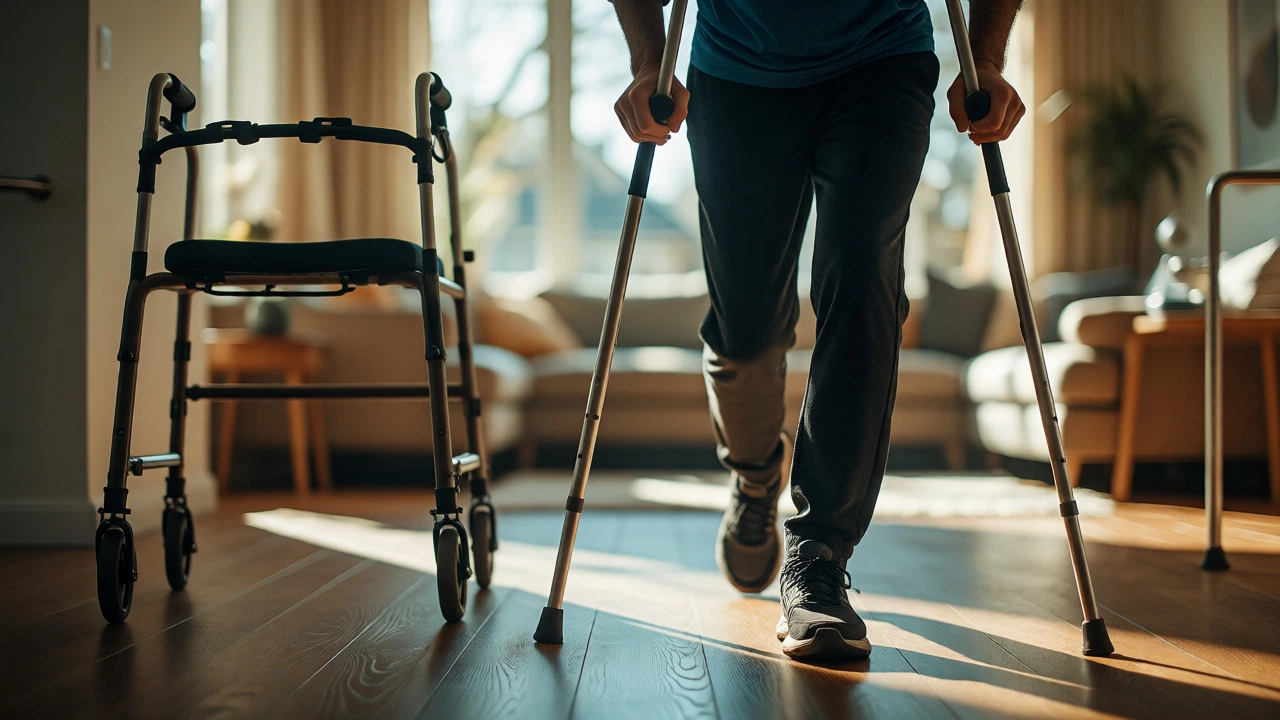
This is the turning point. By week three or four, many patients drop the crutches entirely. You might still limp slightly, especially when tired, but you’re walking unassisted. This feels huge. You can go to the bathroom alone, make coffee, and maybe even drive if your surgeon clears you (usually right leg replacements require waiting until you can brake comfortably).
However, "walking" doesn’t mean "walking well." Your gait-the way you move-might still look a bit mechanical. You might avoid putting full weight on the operated side out of habit or residual fear. This is where targeted gait training comes in. A good physiotherapist will correct your stride length and heel-to-toe roll. Without this correction, you risk developing hip or back pain later as you compensate.
Nearing Normalcy: Months 2-3
At the three-month mark, things start feeling significantly better. The sharp post-op pains have mostly faded, replaced by occasional stiffness after sitting for too long. You can walk for longer distances-maybe 20 to 30 minutes continuously. Stairs become less of a battle. You might even forget which leg was operated on for a few seconds.
But don’t rush into high-impact activities. Running, jumping, or playing tennis is still off-limits. Your soft tissues are still remodeling. Think of your new knee like a brand-new pair of shoes; they need breaking in. Pushing too hard now can cause persistent swelling that sets you back weeks.
Full Integration: Months 4-6+
So, when is it truly "normal"? Most clinical studies suggest that maximum improvement continues for up to a year. However, by month six, the vast majority of patients report satisfaction with their mobility. You should be able to walk on uneven terrain, manage household chores, and engage in low-impact exercise like cycling or swimming without significant limitation.
Here is a realistic comparison of milestones:
| Timeframe | Mobility Status | Key Focus |
|---|---|---|
| Day 1 | Stand and take few steps with walker | Pain control and clot prevention |
| Week 1-2 | Walking with walker/crutches indoors | Bending to 90 degrees, hygiene independence |
| Week 3-6 | Walking with cane or unassisted (short distance) | Gait correction, stair climbing |
| Month 2-3 | Unassisted walking, moderate distance | Strength building, endurance |
| Month 4-6 | Normal daily walking, no aids | Low-impact sports, return to work |
| Month 6-12 | Maximum functional improvement | Fine-tuning mechanics, confidence |

Why Some People Take Longer
Not everyone follows this script perfectly. Age plays a role, but not as much as muscle quality. If you were sedentary before surgery, your muscles have less reserve to draw from. Pre-operative strength is the best predictor of post-operative success. Studies show that patients who did pre-habilitation exercises recovered faster than those who didn’t.
Other factors include BMI. Carrying extra weight puts more stress on the new joint and slows down rehabilitation. Mental health matters too. Fear of falling or re-injury can cause you to guard your leg, leading to poor mechanics and slower progress. If you’re anxious, talk to your therapist. Confidence is part of the cure.
Tips to Speed Up Your Walk
You can’t change biology, but you can optimize your environment. Here is how to hack your recovery:
- Prep your home: Remove rugs, install grab bars, and set up a chair at table height so you aren’t struggling to sit down. Fewer obstacles mean safer, more confident steps.
- Ice aggressively: Swelling kills range of motion. Ice for 20 minutes after every exercise session, not just once a day.
- Protein intake: Your muscles are rebuilding. Ensure you’re eating enough protein to support tissue repair. In Indian diets, dal and paneer are great, but you might need supplements if appetite is low due to meds.
- Sleep well: Healing happens during sleep. Poor sleep increases pain perception. Stick to a routine.
When to Worry
Some setbacks are normal. Increased swelling after a long day? Normal. Occasional clicking sounds? Usually normal. But watch out for red flags. If your calf becomes hot, red, and tender, suspect a blood clot. If you develop a fever over 101°F (38.3°C), call your doctor immediately-it could indicate infection. Don’t tough it out. Early intervention saves months of recovery.
Can I drive after knee replacement?
If you had right knee surgery, wait until you can perform an emergency stop without pain, usually 4-6 weeks. For left knee surgery, you can often drive sooner, around 2-3 weeks, provided you’re not taking strong opioids that impair reaction time.
Will my knee always click or pop?
Many patients experience clicking or popping noises. This is often due to scar tissue or the interaction between metal and plastic components. As long as it isn’t accompanied by pain or locking, it’s generally harmless and tends to diminish over time.
How long do I need physical therapy?
Formal PT typically lasts 6-12 weeks. However, home exercises should continue for at least 6 months. Consistency is key to maintaining the gains made in the clinic.
Is walking bad for the new knee?
No, controlled walking is essential. It lubricates the joint and strengthens supporting muscles. Just avoid overdoing it. Pain is your guide-if it hurts sharply, stop and rest.
When can I resume sexual activity?
Most surgeons recommend waiting 4-6 weeks. Positioning is crucial initially to avoid excessive flexion or twisting of the knee. Use pillows for support and communicate with your partner.