IVF Genetic Connection Explorer
Select a scenario to see how the baby's DNA is distributed and the nature of the biological connection.
Genetic Distribution
Key Insight:
The baby inherits the same genetic blueprint as natural conception.
You might have heard stories about "science babies" or high-tech labs, but the core question often comes down to something deeply personal: if a baby is made in a lab, is it still genetically yours? The short answer is yes, but the "how" depends entirely on whose cells were used to start the process. It isn't a one-size-fits-all answer because IVF has a few different pathways.
Quick Facts: Genetic Ties in IVF
- Standard IVF: Baby has 50% mom's DNA and 50% dad's DNA.
- Egg Donation: Baby has 50% donor's DNA and 50% dad's DNA.
- Gestational Surrogacy: The baby's DNA comes from the intended parents, not the surrogate.
- Mitochondrial DNA: Always comes from the egg provider.
How DNA Works in Standard IVF
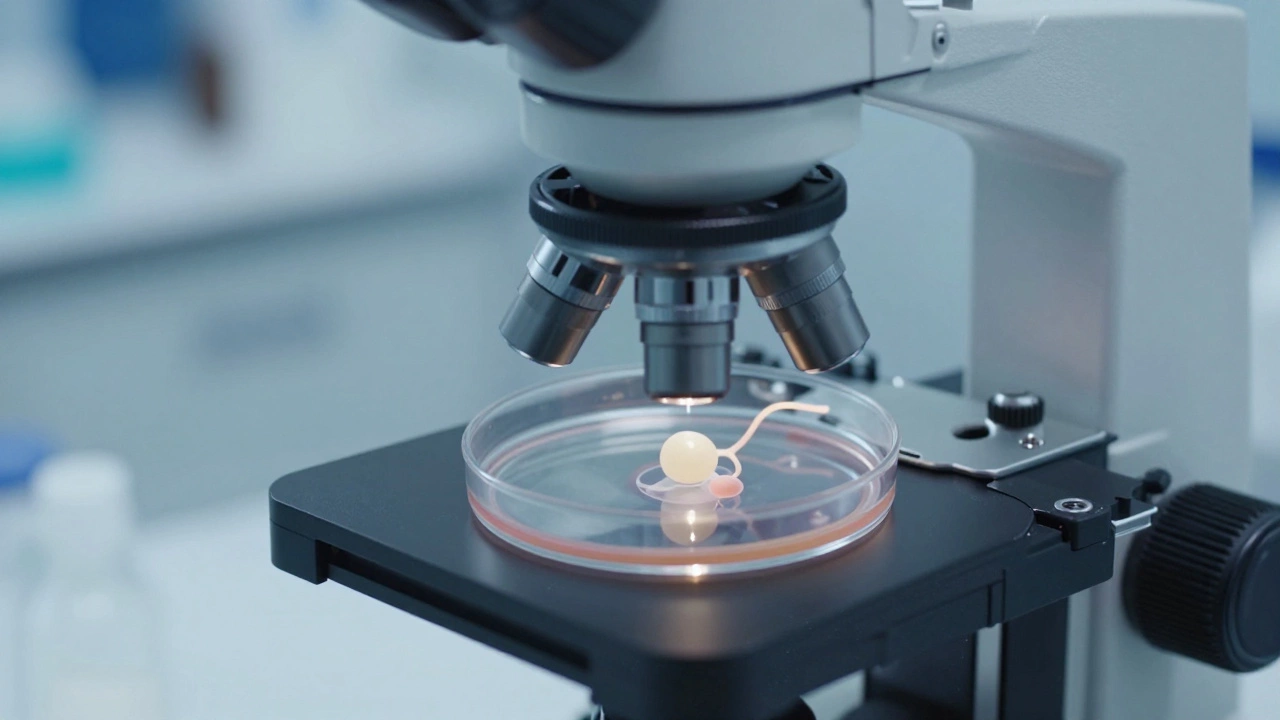
In a typical cycle, IVF is a medical procedure where eggs are surgically removed from a woman's ovaries, fertilized by sperm in a laboratory, and then implanted back into the uterus. Commonly known as In Vitro Fertilization, this process doesn't change the genetic blueprint. Since the doctors use the mother's own eggs and the father's sperm, the baby inherits the same 23 chromosomes from each parent as if they had conceived naturally.
If you are the biological mother providing the eggs, your IVF babies DNA is exactly what you would expect. You'll see your eyes, your smile, or perhaps that stubborn streak you got from your own parents. The lab environment is just a "meeting place" for the sperm and egg; it doesn't rewrite the genetic code.
The Role of Egg Donation
Things change when a woman uses a donor egg. This happens if the mother has premature ovarian failure, severe endometriosis, or other conditions that make it impossible to produce viable eggs. In this case, a Egg Donor is a woman who provides her oocytes to another person or couple to enable them to conceive.
When a donor egg is used, the biological connection to the mother is not genetic. The baby will inherit half of its DNA from the egg donor and half from the father. While the woman carrying the baby is the mother in every emotional and legal sense, and she provides the environment for the baby to grow, she doesn't share the same DNA sequence as the child. However, science is starting to show that the womb isn't just a passive suitcase. Through a process called epigenetic signaling, the mother's body can influence how certain genes in the baby are "turned on" or "off," meaning she still leaves a mark on the child's development.
What About Surrogacy?
Confusion often arises between "carrying the baby" and "providing the DNA." In Gestational Surrogacy is an arrangement where a surrogate mother carries a pregnancy for intended parents, with the embryo created via IVF using the parents' (or donors') genetic material.
In this scenario, the surrogate mother has zero genetic relationship with the baby. She provides the uterus and the nutrients, but she doesn't contribute any DNA. The baby’s genetic map is entirely determined by the egg and sperm used to create the embryo. This is different from "traditional surrogacy," where the surrogate's own egg is used, making her the biological mother.
The Secret of Mitochondrial DNA
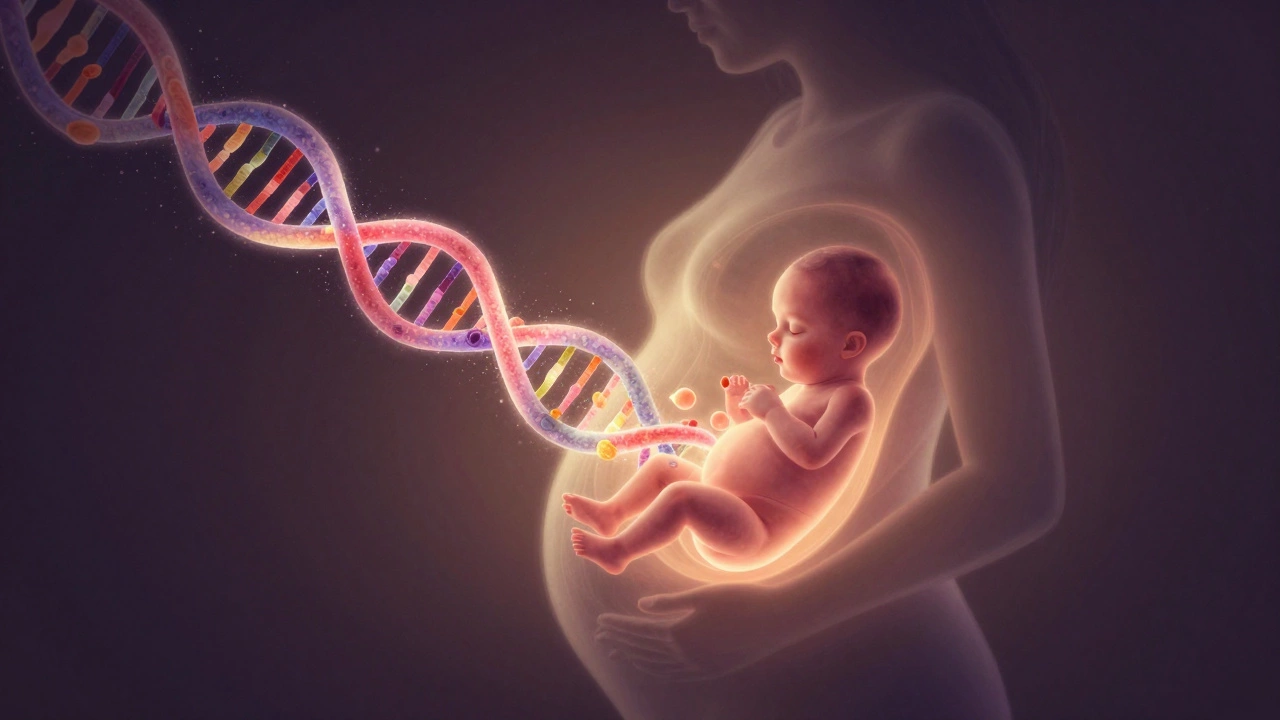
Most people think of DNA as just the stuff that determines hair color or height, but there is a tiny, separate piece called Mitochondrial DNA is the small circular genome found inside mitochondria, which is inherited exclusively from the mother's egg.
Mitochondria are the powerhouses of the cell. While the nuclear DNA (the main blueprint) is a 50/50 split, the mitochondrial DNA is a 100% match to the egg provider. This means that even in standard IVF, the "battery pack" of the cell comes only from the mom. In rare medical cases, doctors use "Mitochondrial Replacement Therapy" (three-parent IVF) to prevent deadly genetic diseases, where the nuclear DNA of the parents is placed into a donor egg with healthy mitochondria.
| Scenario | Maternal DNA % | Paternal DNA % | Donor DNA % | Connection Type |
|---|---|---|---|---|
| Own Eggs & Sperm | 50% | 50% | 0% | Full Biological |
| Donor Egg & Own Sperm | 0% | 50% | 50% | Partial Biological |
| Own Eggs & Donor Sperm | 50% | 0% | 50% | Partial Biological |
| Donor Egg & Donor Sperm | 0% | 0% | 100% | Non-Genetic (Gestational) |
Epigenetics: The Womb's Influence
If you're using a donor egg, you might feel a bit disconnected from the idea of "DNA." But here is where it gets interesting: Epigenetics is the study of how your behaviors and environment can cause changes that affect the way your genes work.
The environment inside the uterus is an active biological space. The mother's blood provides nutrients, hormones, and proteins that can attach to the baby's DNA (a process called methylation). This doesn't change the DNA sequence itself-the "letters" stay the same-but it changes how the baby's body reads those letters. So, while the genetic code comes from the donor, the way that code is expressed is heavily influenced by the woman who carries the pregnancy.

Common Misconceptions About Lab-Grown Embryos
There is a common myth that because the embryo spends a few days in a petri dish, it might pick up "lab DNA" or be altered by the chemicals used. This is simply not true. The Embryo is an early stage of development from the fertilization of the ovum to the start of the fetal stage. It is kept in a highly controlled incubator that mimics the human body. The scientists aren't editing the DNA; they are just providing a safe space for the egg and sperm to merge.
Another point of confusion is the use of PGT-A (Preimplantation Genetic Testing for Aneuploidies). This is a screening process where a few cells are taken from the embryo to check for chromosomal abnormalities. This is a diagnostic tool-it's like taking a photo of the DNA to make sure everything is healthy. It doesn't change the baby's genetics; it just helps the doctors choose the strongest embryo for transfer.
Will my child look like me if I use a donor egg?
Genetically, the child will look more like the egg donor and the biological father. However, appearance is complex. Many parents find that through a process called "maternal bonding" and the influence of epigenetics, as well as the father's genetic traits, the child develops a striking resemblance to the mother over time.
Does the surrogate mother's DNA mix with the baby?
No. In gestational surrogacy, the surrogate is like a high-tech oven. She provides the warmth and nutrients for the "cake" (the embryo) to bake, but she doesn't add any of her own ingredients to the recipe. The baby's DNA remains solely that of the egg and sperm providers.
Can IVF cause genetic mutations?
There is no evidence that IVF itself causes mutations in the baby's DNA. While some studies have looked at very rare epigenetic shifts, the vast majority of IVF babies are genetically healthy. Most issues found during screening are caused by natural chromosomal errors during the egg or sperm's own development, not the IVF process.
Is mitochondrial DNA different from nuclear DNA?
Yes. Nuclear DNA is in the nucleus and determines most of your traits (like height and eye color), coming from both parents. Mitochondrial DNA is located in the mitochondria (the cell's power plant) and is passed down only from the mother.
Does the IVF process change the baby's blood type?
No. Blood type is determined by the genetics of the parents. The IVF process does not alter the blood group or any other primary genetic marker of the child.
Next Steps for Intending Parents
If you are feeling anxious about the genetic connection, the best thing you can do is ask your clinic for a detailed breakdown of your specific treatment plan. If you're considering egg donation, talk to a counselor about how to handle the genetic aspect of the relationship. For those using their own eggs, remember that the "lab part" is just a temporary step-once that embryo is in the womb, the biological journey is exactly the same as any other pregnancy.