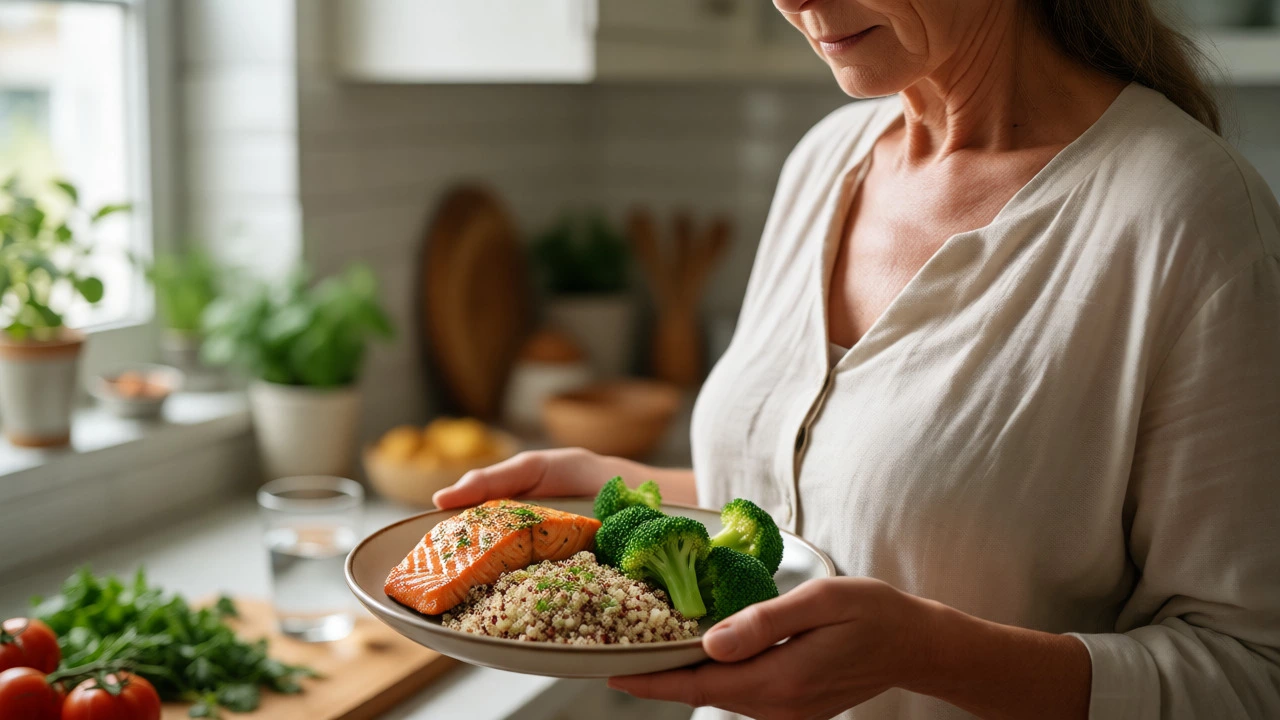
Personalized Calorie & Protein Calculator for Women 55+
Enter your details below to find your maintenance calories, safe weight loss target, and recommended protein intake to protect muscle mass.
Your Daily Targets
Based on Mifflin-St JeorProtein Tip: Aim for grams of protein per meal (assuming 3 meals) to combat anabolic resistance and preserve muscle mass.
*Results are estimates. Individual needs vary based on genetics, body composition, and health conditions. Always consult a healthcare provider before starting a new diet plan.
Turning 55 isn't just a birthday milestone; it's a metabolic turning point. If you're trying to shed those stubborn pounds now, the math has changed since your thirties. You might be eating less than you used to, yet the scale barely moves. That’s frustrating, but it’s not your fault. It’s biology. As estrogen levels drop during and after menopause, your body naturally loses muscle mass and stores more fat around the midsection. This shift slows your resting metabolic rate, meaning you burn fewer calories just sitting on the couch.
So, how many calories should you actually eat? There is no single magic number that fits every woman. However, most health experts agree on a safe starting range. For a moderately active woman aged 55 or older, aiming for 1,200 to 1,500 calories per day often creates a steady deficit without starving your muscles. But before you slash your plate in half, let’s look at why this number varies and how to find yours.
Why Your Metabolism Slows Down After 55
You’ve probably heard people say, "I could eat whatever I wanted when I was younger." They’re right. Between ages 40 and 60, your basal metabolic rate (BMR)-the energy your body uses to keep your heart beating and lungs breathing-drops by about 2% per decade. This isn't just laziness setting in; it’s a physiological reality driven by sarcopenia, which is the age-related loss of skeletal muscle mass.
Muscle is metabolically expensive tissue. It burns calories even when you sleep. When you lose muscle, your engine gets smaller, so it needs less fuel. If you continue eating the same amount you did at 40, you’ll likely gain weight because your "engine" requires less gas. The solution isn’t just cutting food; it’s protecting muscle while creating a slight calorie deficit.
| Age Group | Sedentary (Little Exercise) | Moderately Active (Light Exercise) | Active (Regular Exercise) |
|---|---|---|---|
| 31-50 Years | 1,800 kcal | 2,000 kcal | 2,200 kcal |
| 51+ Years | 1,600 kcal | 1,800 kcal | 2,000 kcal |
This table shows maintenance levels. To lose weight, you generally subtract 300-500 calories from these numbers. Notice how the gap widens with activity. This brings us to a crucial point: you cannot out-diet a sedentary lifestyle at this age. Movement becomes part of your calorie calculation, not just an optional extra.
Calculating Your Personal Calorie Target
Generic charts are helpful, but they don’t know your height, weight, or genetics. To get a precise target, use the Mifflin-St Jeor Equation, which is considered the most accurate standard for adults. Here’s the simplified version for women:
- BMR = (10 × weight in kg) + (6.25 × height in cm) - (5 × age in years) - 161
Once you have your BMR, multiply it by an activity factor:
- 1.2 if you sit most of the day (desk job, little exercise).
- 1.375 if you exercise lightly 1-3 days a week.
- 1.55 if you exercise moderately 3-5 days a week.
If the result is 1,800 calories, subtracting 500 gives you a 1,300-calorie diet. This usually leads to losing about one pound per week. Going below 1,200 calories can backfire. Your body may interpret severe restriction as starvation, lowering your thyroid function further and holding onto fat reserves. Patience beats intensity here.
The Protein Priority: Protecting Muscle Mass
Here is where most women over 55 go wrong. They cut calories by skipping meals or eating only vegetables. This works for short-term water weight, but it accelerates muscle loss. If you lose muscle, your metabolism drops even more, making future weight loss harder.
To prevent this, prioritize protein. Aim for 1.2 to 1.6 grams of protein per kilogram of body weight daily. For a 70kg (154lb) woman, that’s roughly 84-112 grams of protein. Why so high? Older bodies process protein less efficiently than younger ones-a phenomenon called "anabolic resistance." You need more protein to trigger the same muscle-building response.
Good sources include:
- Greek yogurt (high calcium, too)
- Eggs or egg whites
- Chicken breast or turkey
- Lentils and chickpeas
- Fish like salmon or tuna
Spreading this protein across three meals helps maintain satiety and stabilizes blood sugar, reducing those late-night cravings that derail diets.

Don’t Fear Carbs and Fats
Keto and low-carb trends dominate social media, but they aren’t necessary for everyone. In fact, extremely low-carb diets can sometimes increase cortisol (stress hormone) levels, which promotes abdominal fat storage-the exact spot you want to avoid at 55.
Focus on quality rather than elimination. Choose complex carbohydrates like oats, quinoa, and sweet potatoes. These provide fiber, which aids digestion and keeps you full longer. Fiber also helps manage cholesterol, a key concern post-menopause. Similarly, healthy fats from avocados, nuts, and olive oil support brain health and hormone balance. Don’t eliminate entire food groups unless you have a specific medical reason advised by your doctor.
Strength Training: The Secret Weapon
If you change nothing else, add resistance training. Cardio is great for your heart, but lifting weights builds the muscle that drives your metabolism. You don’t need to become a bodybuilder. Two sessions a week using dumbbells, resistance bands, or bodyweight exercises (like squats and push-ups) make a massive difference.
Studies show that strength training combined with a moderate calorie deficit preserves lean mass better than cardio alone. It also improves bone density, reducing osteoporosis risk. Think of it as investing in your metabolic infrastructure. The more muscle you have, the more calories you burn passively, allowing you to eat slightly more without gaining weight.
Common Pitfalls to Avoid
Even with the right plan, small habits can sabotage progress. Watch out for liquid calories. A fancy latte or glass of wine adds up quickly without filling you up. At 55, alcohol tolerance decreases, and it can disrupt sleep, which negatively impacts hunger hormones like ghrelin and leptin.
Another trap is underestimating portion sizes. Hand-sized portions are a good rule of thumb, but measuring occasionally ensures accuracy. Finally, don’t ignore stress and sleep. High stress raises cortisol, encouraging belly fat. Poor sleep increases hunger. Prioritizing seven hours of rest is as important as counting calories.
When to Seek Professional Help
If you’re eating within your calculated range and exercising, but still not losing weight, consider consulting a registered dietitian or a specialist at a weight loss clinic. They can check for underlying issues like hypothyroidism, insulin resistance, or medication side effects that affect weight. Some medications for blood pressure or mood disorders cause weight gain. A professional can help adjust your strategy or explore options like GLP-1 agonists if appropriate.
Remember, weight loss at 55 is slower. Losing 0.5 to 1 pound per week is excellent progress. Celebrate non-scale victories: fitting into old jeans, having more energy, or lower blood pressure. These signs indicate your health is improving, even if the number on the scale lags behind.
Is 1,200 calories too low for a 55-year-old woman?
For many sedentary women, 1,200 calories is the minimum safe threshold for weight loss. However, if you are tall, very active, or have significant muscle mass, 1,200 might be too low and could slow your metabolism. Listen to your body; if you feel dizzy, weak, or overly hungry, increase your intake to 1,400-1,500 calories.
Does menopause make weight loss impossible?
No, it makes it harder, not impossible. Hormonal changes shift fat storage to the abdomen and reduce muscle mass, requiring a stricter approach to protein intake and strength training. With adjusted calorie targets and consistent exercise, sustainable weight loss is absolutely achievable.
Should I count calories forever?
Most people don’t need to count indefinitely. Use calorie tracking for 4-6 weeks to learn proper portion sizes and understand your food choices. Once you develop intuitive eating habits aligned with your goals, you can switch to mindful eating techniques, though periodic check-ins are wise during holidays or life changes.
What role does hydration play in weight loss after 55?
Hydration is critical. Thirst signals often diminish with age, leading to dehydration that mimics hunger. Drinking water before meals can aid satiety and boost metabolism slightly. Aim for adequate fluid intake throughout the day, focusing on water, herbal teas, and high-water-content foods.
Are supplements necessary for weight loss at this age?
Supplements are rarely magic bullets. While Vitamin D and Calcium are important for bone health, and possibly magnesium for sleep, no pill replaces a calorie-controlled diet and exercise. Consult your doctor before starting any new supplement, especially if you take other medications.