Cancer Survival & Treatment Estimator
Select a cancer type and its detection stage to visualize the estimated 5-year survival rate and key treatment insights derived from medical data.
Why this matters?
The article highlights that early detection is the single biggest factor in turning a "hard" fight into an "easy" one. For example, localized melanoma has a ~99% survival rate, while metastatic melanoma drops significantly without modern immunotherapy.
Testicular Cancer (Localized)
Primary Treatment
Surgery + Chemo/Radiation
Key Advantage
Highly sensitive to standard treatments
Factors Influencing "Easiness"
Imagine getting a diagnosis that sounds terrifying but comes with a surprisingly good ending. It happens more often than you might think. When people hear the word "cancer," they often picture a long, grueling battle with uncertain outcomes. But not all cancers are created equal. Some types are so responsive to treatment that doctors can cure them in over 90% of cases if caught early. So, what is the easiest cancer to fight? The answer isn't just one single disease, but rather a group of cancers where modern medicine has largely won the war.
This article breaks down which cancers have the highest survival rates, why they are easier to treat, and what factors actually determine your success. We aren't talking about minimizing the emotional toll-any cancer diagnosis is scary-but focusing on the medical reality of curability and treatment burden.
The Top Contenders for Highest Survivability
When oncologists talk about "easy" fights, they usually mean high five-year survival rates and less invasive treatment options. Three specific cancers consistently top this list: Testicular Cancer, a malignancy arising from germ cells in the testicles, highly curable even in advanced stages, Thyroid Cancer, cancer of the thyroid gland, typically slow-growing and highly treatable, and certain forms of Melanoma, skin cancer originating in melanocytes, highly curable when detected early.
Why these three? They share common traits: they are often detected before spreading, they respond well to surgery or targeted therapies, and they rarely require the harsh, full-body toxicity associated with older chemotherapy protocols. Let's look at each one closely.
Testicular Cancer: The Gold Standard of Curability
If there is one cancer that serves as the poster child for successful treatment, it is testicular cancer. According to the American Cancer Society, the five-year relative survival rate for localized testicular cancer is nearly 100%. Even when the cancer has spread to distant parts of the body, the survival rate remains around 73-75%. This is unheard of for most other solid tumors.
The reason lies in its biology. Testicular cancer primarily affects young men aged 15 to 35. Younger bodies generally tolerate treatment better, but more importantly, testicular tumors are exquisitely sensitive to platinum-based chemotherapy (like cisplatin) and radiation. In many cases, a simple surgical removal of the affected testicle (orchiectomy) is curative. If further treatment is needed, the drugs work fast and effectively. You don't face months of debilitating side effects; you face a few cycles of treatment that usually clear the disease completely.
Thyroid Cancer: Slow and Steady Wins the Race
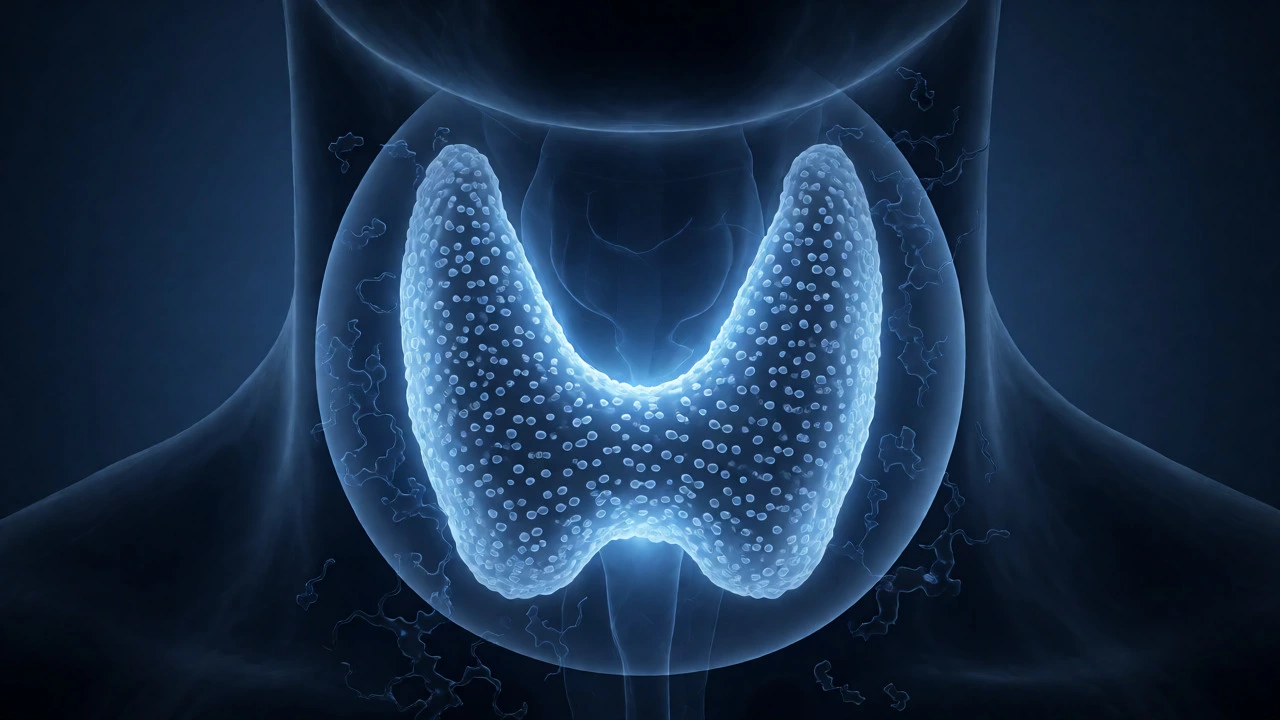
Next up is thyroid cancer, specifically papillary thyroid carcinoma, which accounts for about 80% of all thyroid cancers. The five-year survival rate for localized papillary thyroid cancer is close to 100%. Even for regional spread, it hovers around 98%.
Why is it considered "easy"? Because it grows slowly. Unlike pancreatic cancer, which can double in size in weeks, papillary thyroid cancer may take years to become clinically significant. This gives doctors a huge window to detect it via ultrasound or physical exam. Treatment is straightforward: surgical removal of the thyroid (thyroidectomy) followed by radioactive iodine therapy to mop up any remaining cells. Most patients go on to live normal lives, taking a daily pill (levothyroxine) to replace the hormone their thyroid used to make. The quality of life post-treatment is exceptionally high compared to other cancer survivors.
Melanoma: Early Detection Equals Cure
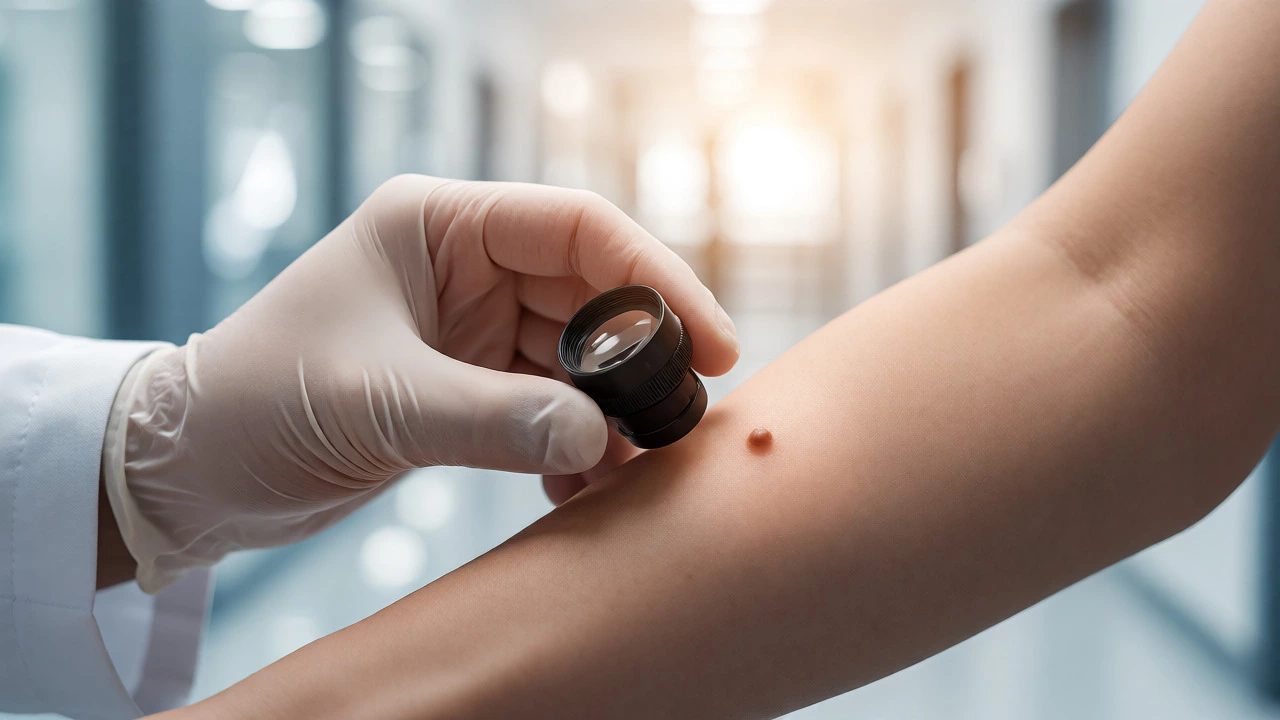
Skin cancer is the most common cancer overall, but melanoma is the most dangerous type. However, if caught while it is still confined to the outer layer of skin (in situ) or slightly deeper, it is incredibly easy to fight. The five-year survival rate for localized melanoma is 99%.
The key here is visibility. You can see your skin. A mole that changes shape, color, or size is a red flag you can spot in the mirror. Once a dermatologist removes the suspicious lesion with wide excision margins, the job is often done. No chemo, no radiation, just a scar and regular check-ups. The challenge arises only when melanoma metastasizes, but even then, new immunotherapies like checkpoint inhibitors have turned stage IV melanoma from a death sentence into a manageable chronic condition for many.
| Cancer Type | 5-Year Survival Rate (Localized) | Primary Treatment | Key Advantage |
|---|---|---|---|
| Testicular Cancer | ~100% | Surgery + Chemo/Radiation | Highly sensitive to standard treatments |
| Papillary Thyroid Cancer | ~100% | Surgery + Radioactive Iodine | Slow growth allows early detection |
| Early Melanoma | ~99% | Surgical Excision | Visible symptoms aid self-detection |
| Hodgkin Lymphoma | ~90% | Chemo + Radiation | Highly responsive to combined modalities |
Beyond the Big Three: Other Highly Treatable Cancers
While testicular, thyroid, and melanoma lead the pack, they aren't alone. Two other cancers deserve mention because their survival rates have skyrocketed due to medical advances.
Hodgkin Lymphoma, a type of lymphoma characterized by Reed-Sternberg cells, highly curable with modern regimens has a five-year survival rate of about 90% for early-stage disease. Before the 1960s, Hodgkin lymphoma was fatal. Today, it is one of the most curable cancers thanks to precise radiation targeting and effective chemotherapy combinations like ABVD. Patients often return to work within weeks of finishing treatment.
Prostate Cancer, cancer of the prostate gland, often slow-growing and managed with active surveillance or local therapies is another interesting case. While not always "easy" to ignore, many low-risk prostate cancers are so slow-growing that they never cause harm. Doctors now use "active surveillance"-monitoring the cancer without immediate treatment-for many men. For those who do need treatment, robotic surgery or radiation offers high cure rates with manageable side effects. The controversy here isn't about curability, but about avoiding overtreatment.

What Actually Makes a Cancer "Easy" to Fight?
You might wonder, why are some cancers easy and others brutal? It boils down to four biological and logistical factors:
- Detectability: Can you see it or feel it? Skin cancers and breast lumps are obvious. Pancreatic or ovarian cancers hide deep inside, leading to late diagnoses.
- Growth Speed: Slow-growing tumors give doctors time to plan. Fast-growing tumors demand aggressive, toxic interventions.
- Treatment Sensitivity: Some tumor cells are naturally vulnerable to specific drugs. Testicular cells die easily under cisplatin. Glioblastoma cells resist almost everything.
- Anatomical Location: Is the tumor in a place surgeons can reach safely? Removing a thyroid is routine. Removing part of the brainstem is complex.
It’s also worth noting that "easy" doesn’t mean "no effort." A thyroid cancer patient still faces surgery, potential voice changes, and lifelong medication. A testicular cancer survivor might deal with fertility concerns or nerve damage. But compared to the marathon of care required for lung or pancreatic cancer, these journeys are significantly shorter and less physically taxing.
The Role of Early Detection in Changing the Odds
Here is the uncomfortable truth: an "easy" cancer can become hard if ignored. A small, localized melanoma is a minor outpatient procedure. A metastatic melanoma requires weeks of immunotherapy infusions and carries a risk of severe autoimmune side effects.
Screening guidelines exist for a reason. Regular skin checks catch melanoma. Self-exams catch testicular lumps. Ultrasounds catch thyroid nodules. When you catch these diseases at Stage I, the fight is short. At Stage III or IV, the fight lengthens, costs rise, and survival rates drop.
Consider breast cancer. It isn't on our "easiest" list because it varies wildly by subtype. Triple-negative breast cancer is aggressive and hard to treat. Hormone-receptor-positive breast cancer is much more manageable. This variability shows that "easiness" is often subtype-specific, not just organ-specific.
Living After the Battle: Quality of Life Matters
Survival stats tell half the story. How you live after treatment matters too. Patients with "easy" cancers often report higher quality of life post-treatment. Why? Less neuropathy, fewer cognitive issues (chemo brain), and faster return to normal activities.
For instance, a man cured of testicular cancer can likely father children (with sperm banking beforehand) and resume sports quickly. A woman treated for early-stage breast cancer with lumpectomy and radiation returns to work in weeks. Contrast this with head and neck cancer survivors, who may struggle with swallowing or speech for years.
However, psychological impact shouldn't be dismissed. Survivorship guilt, fear of recurrence, and anxiety are real, regardless of how "easy" the medical fight was. Support groups and counseling remain vital tools for all cancer patients.
Key Takeaways
- Top Easy Cancers: Testicular, Papillary Thyroid, and Early-Stage Melanoma have near-perfect survival rates.
- Why They Are Easy: High sensitivity to treatment, slow growth, and ease of detection.
- Other Candidates: Hodgkin Lymphoma and low-risk Prostate Cancer also have excellent outcomes.
- Crucial Factor: Early detection turns potentially difficult cancers into manageable ones.
- Reality Check: "Easy" refers to medical curability, not the absence of stress or side effects.
Which cancer has the highest survival rate?
Testicular cancer and localized papillary thyroid cancer both boast five-year survival rates approaching 100%. These cancers are highly responsive to treatment and are often detected early, making them among the most curable malignancies known to medicine.
Is breast cancer easy to fight?
Breast cancer survivability depends heavily on the subtype. Hormone receptor-positive breast cancers are often very treatable with high survival rates. However, triple-negative breast cancer is more aggressive and harder to treat. Overall, breast cancer is one of the most studied and successfully treated cancers, but it is not uniformly "easy" across all subtypes.
Can thyroid cancer come back after treatment?
Yes, thyroid cancer can recur, but it is rare for papillary thyroid cancer to be fatal. Recurrences are often detected early through blood tests (thyroglobulin levels) and ultrasounds. When they do occur, they are usually treatable with additional radioactive iodine or surgery, maintaining a high long-term survival rate.
Why is testicular cancer so curable?
Testicular cancer cells are biologically distinct and highly sensitive to platinum-based chemotherapy drugs like cisplatin. Additionally, the disease typically affects younger men whose bodies tolerate treatment well, and it is often detected early due to the accessibility of the testicles for self-examination.
Does "easy to fight" mean no side effects?
No. All cancer treatments carry risks. Surgery can cause pain or scarring; radiation can cause fatigue; chemotherapy can cause nausea. However, "easy to fight" implies that the side effects are generally temporary, manageable, and that the likelihood of complete remission is extremely high compared to other cancers.