
Cancer Curability Risk Calculator
Personalized Cancer Risk Assessment
This tool helps you understand your risk for highly curable cancers when detected early. Remember: early detection is key!
When someone hears the word "cancer," they often think of a death sentence. But not all cancers are the same. Some types, if caught early and treated properly, can be cured in nearly every case. The truth is, cancer isn’t one disease-it’s hundreds. And some of them are 100% curable under the right conditions.
What "100% curable" really means
"100% curable" doesn’t mean every single person ever diagnosed will live forever. It means that when detected at the earliest stage and treated with standard medical care, the chance of long-term survival-five years or more without recurrence-is so high that it’s considered a cure. In medical terms, that’s called "complete remission with no relapse."
For example, if 99 out of 100 people with a specific cancer type survive at least five years after treatment, doctors often say it’s "effectively curable." That’s because cancer rarely comes back after five years if it hasn’t already. So while no doctor will ever say "guaranteed," some cancers come incredibly close.
Testicular cancer: The poster child for curable cancer
Testicular cancer is one of the most curable cancers in the world. When found early-before it spreads beyond the testicle-the cure rate is over 99%. Even if it has spread to nearby lymph nodes, the survival rate still stays above 95%. How? Because it’s highly sensitive to chemotherapy and radiation.
Young men between ages 15 and 35 are most at risk. The signs are simple: a lump or swelling in the testicle, a feeling of heaviness, or dull pain in the groin. Many ignore these symptoms, thinking it’s just a strain or injury. But catching it early turns a scary diagnosis into a one-time treatment. Surgery to remove the affected testicle, followed by chemo if needed, usually ends the story. Most men go on to live full lives, including fathering children.
Thyroid cancer: Silent but highly treatable
Thyroid cancer, especially the papillary type, is another cancer with near-perfect survival rates. When caught early, the five-year survival rate is 99.9%. That’s not a typo. In many cases, patients don’t even feel sick. The cancer is found during a routine neck exam, an ultrasound for another reason, or a simple blood test.
Treatment is straightforward: remove the thyroid gland (thyroidectomy), then take daily hormone pills to replace what the gland used to make. Radioactive iodine therapy often follows to kill any remaining cancer cells. Because thyroid cancer grows slowly and rarely spreads aggressively, even advanced cases have high survival rates. People live decades after diagnosis with normal lifespans.
Hodgkin lymphoma: A victory for modern medicine
Hodgkin lymphoma, a cancer of the immune system, was once deadly. Now, it’s one of the most successfully treated cancers. Stage I and II Hodgkin lymphoma has a cure rate of over 95%. Even stage III and IV, where it has spread widely, still has an 80-90% cure rate thanks to combination chemotherapy and sometimes radiation.
The classic signs? Swollen lymph nodes in the neck, armpits, or groin; unexplained fever; night sweats; and weight loss without trying. Many people dismiss these as a bad cold or stress. But if they last more than two weeks, a doctor should check them. A biopsy confirms it. Treatment is intense but short-usually 4 to 6 months. Most patients return to work, school, and normal life within a year.
Early-stage cervical cancer: Preventable and curable
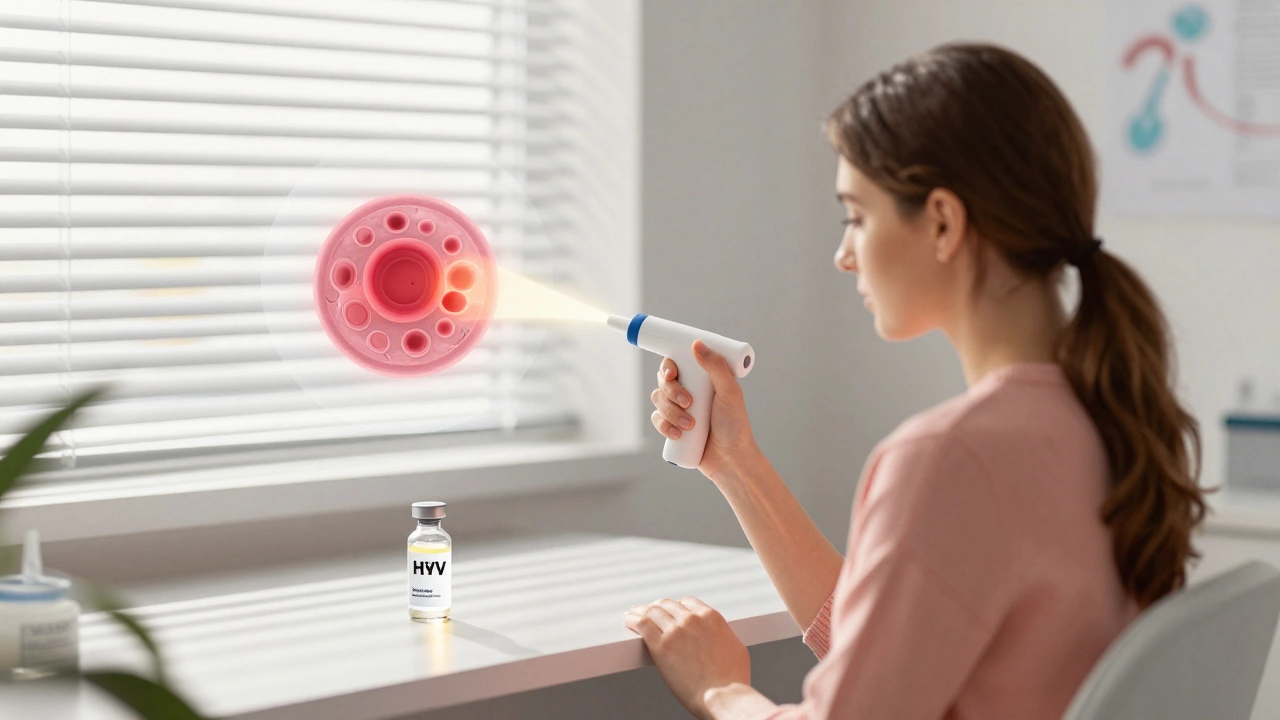
Cervical cancer used to be a leading cause of death in women. Now, it’s one of the most preventable cancers thanks to the HPV vaccine and regular Pap smears.
When detected before it becomes invasive (called CIN 3 or high-grade dysplasia), it can be removed with a simple outpatient procedure. Even invasive early-stage cervical cancer (Stage I) has a 90%+ survival rate with surgery and sometimes radiation. The key? Screening. Women who get regular Pap tests or HPV tests rarely develop advanced cervical cancer.
In countries with strong screening programs, like India’s national cervical cancer screening initiative, cases are dropping fast. The HPV vaccine, given to girls as young as 9, prevents the virus responsible for 90% of these cancers. Prevention + early detection = near-total cure.
Early-stage prostate cancer: Often harmless
Prostate cancer is tricky. It’s common-about 1 in 8 men will be diagnosed-but most cases grow so slowly they never cause harm. In fact, many men die with prostate cancer, not from it.
When caught early and confined to the prostate, the five-year survival rate is nearly 100%. Treatment options include surgery, radiation, or active surveillance (monitoring without immediate treatment). The choice depends on age, health, and cancer aggressiveness. For older men with low-risk tumors, doctors often recommend watchful waiting. Why? Because the side effects of treatment-like incontinence or impotence-can be worse than the cancer itself.
The PSA blood test helps find it early. But it’s not perfect. False positives happen. That’s why doctors now combine it with MRI scans and biopsies to avoid overtreating harmless cancers.
Why some cancers are curable and others aren’t
What makes testicular or thyroid cancer so responsive to treatment? Three things: early detection, slow growth, and high sensitivity to therapy.
- Early detection: These cancers show clear signs early, and tests exist to catch them before they spread.
- Slow growth: They don’t rush to invade other organs. That gives time to act.
- Therapy sensitivity: Their cells respond predictably to chemo, radiation, or surgery. They don’t mutate quickly to escape treatment.
Compare that to pancreatic cancer or glioblastoma (a brain tumor). These cancers spread silently, grow fast, and resist treatment. That’s why their survival rates stay low-even when caught early.
What you can do right now
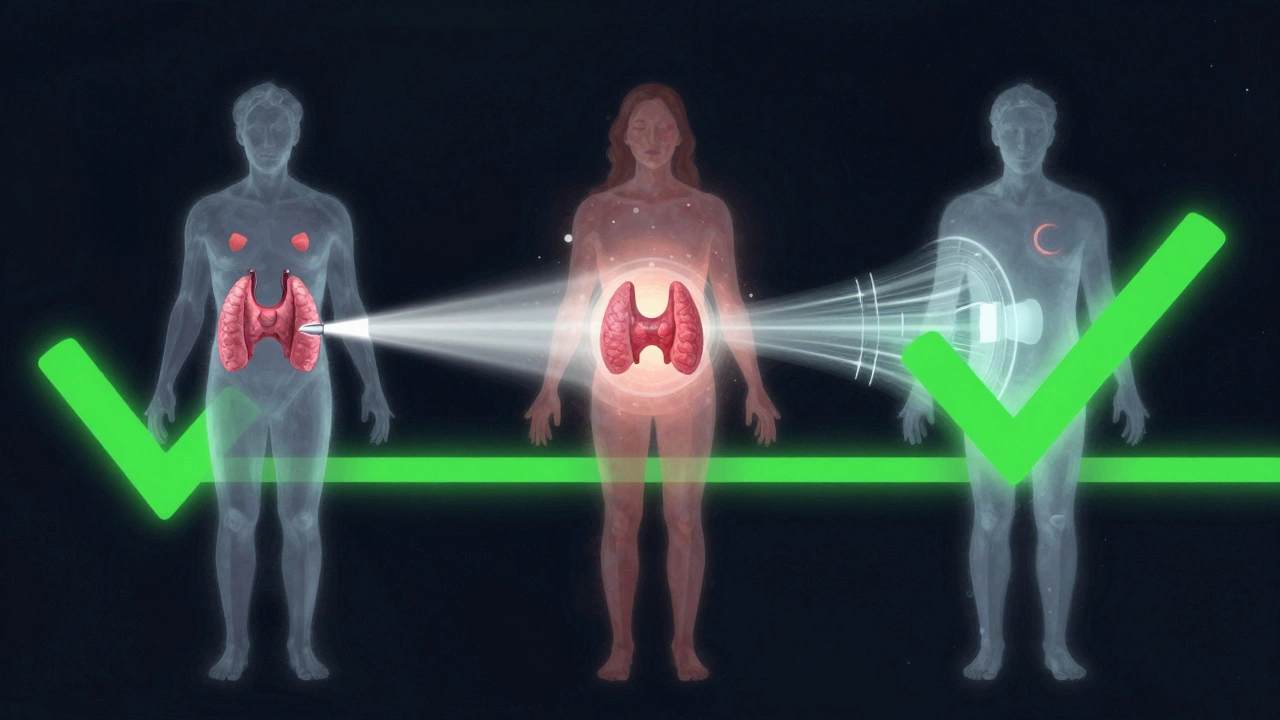
You can’t control genetics, but you can control screening. Here’s what works:
- Men: Do monthly self-checks for testicular lumps. Talk to your doctor if you notice anything unusual.
- Women: Get regular Pap smears and HPV tests starting at age 21. Get the HPV vaccine if you’re under 26.
- Everyone: Know the signs of lymphoma (swollen nodes, night sweats, weight loss) and thyroid issues (neck lump, hoarseness, fatigue).
- Men over 50: Ask about PSA testing-especially if you have a family history.
Don’t wait for symptoms. Many of these cancers don’t cause pain until it’s too late. Prevention and early screening save lives.
Myth vs. Reality
- Myth: "If cancer is found early, it’s always curable."
Reality: Only certain cancers are. Lung, liver, and pancreatic cancers rarely are-even when caught early. - Myth: "Cure means you’ll never get sick again."
Reality: Most cured cancer patients live normal lives, but they still need follow-ups. Some have long-term side effects. - Myth: "Only rich countries have curable cancers."
Reality: India’s cervical cancer screening programs and testicular cancer care have high success rates. Access matters more than wealth.
Is there any cancer that is 100% curable in all cases?
No cancer is 100% curable in every single case. But some, like early-stage testicular cancer or papillary thyroid cancer, have cure rates so high-99% or above-that doctors consider them effectively curable. The difference between "almost certain" and "guaranteed" matters in medicine, but for practical purposes, these cancers can be treated successfully in nearly every patient.
Can you survive cancer without treatment?
For most cancers, survival without treatment is extremely low. But for a few slow-growing types-like some early-stage prostate or thyroid cancers-some people live for years without treatment. This is called "watchful waiting" and only works when doctors confirm the cancer is not aggressive. It’s never a suggestion for aggressive cancers like lung or colon cancer.
Does chemotherapy always cure cancer?
No. Chemotherapy works best on cancers that are sensitive to it, like testicular cancer, Hodgkin lymphoma, and some types of leukemia. For others, like pancreatic or brain cancer, chemo only slows growth or eases symptoms. It’s not a magic bullet-it’s one tool among many, and its effectiveness depends on the cancer type and stage.
Are childhood cancers curable?
Yes, many childhood cancers are highly curable. Acute lymphoblastic leukemia (ALL), the most common childhood cancer, has a cure rate of over 90% today. Wilms tumor (kidney cancer) and Hodgkin lymphoma in children also have cure rates above 90%. Early diagnosis, specialized pediatric care, and clinical trials have made huge progress in this area.
Why is cervical cancer so preventable?
Because almost all cases are caused by the HPV virus, which can be prevented with a vaccine. Plus, cervical cancer takes years to develop from precancerous changes. That gives doctors time to catch and remove abnormal cells with simple procedures during routine Pap smears. It’s one of the few cancers where you can prevent it, screen for it, and cure it-all before it becomes dangerous.
Final thought
Knowing which cancers are curable isn’t about giving false hope. It’s about empowering people to act. If you know testicular cancer is highly treatable, you’ll check yourself. If you know cervical cancer is preventable, you’ll get the vaccine. Early action turns a life-threatening diagnosis into a minor medical event. The cancers we can cure aren’t rare-they’re common. And they’re waiting for you to notice the warning signs.