Herb Finder Quiz
Answer the questions below to find the herb that best matches your current health needs.
Herb Name
CategoryWhy it helps:
Key Compound:
You walk into a health store or scroll through an online pharmacy, and you’re hit with a wall of green bottles. Ashwagandha here, Turmeric there, maybe some Rhodiola or Ginseng lurking in the background. It’s overwhelming. You want something that actually works, not just another placebo wrapped in fancy packaging. So, what is the best natural herb to take? The honest answer isn’t a single magic bullet-it depends entirely on what your body needs right now.
Think of herbs like tools in a toolbox. You wouldn’t use a hammer to tighten a screw. Similarly, taking Ashwagandha for energy when you need sleep support is a mismatch. This guide cuts through the marketing noise to help you identify which herb aligns with your specific health goals, backed by science rather than hype.
There Is No Single "Best" Herb for Everyone
If someone tells you one herb fixes everything, they’re selling something. Human biology is complex. Your stress levels, diet, sleep quality, and genetic makeup all influence how you respond to plant compounds. What works wonders for your friend might do nothing for you-or worse, cause side effects.
The concept of a universal "best" herb is a myth driven by broad-spectrum marketing. Instead, we need to look at functional categories. Are you trying to lower cortisol? Boost focus? Reduce inflammation? Each goal has a champion herb. For instance, if you’re dealing with chronic stress, adaptogens are your go-to. If joint pain is the issue, anti-inflammatories take the lead. Choosing based on symptoms ensures you’re targeting the root problem, not just throwing supplements at the wall to see what sticks.
Top Contenders Based on Specific Health Goals
To make this practical, let’s break down the heavy hitters in the herbal world. These aren’t random picks; these are herbs with substantial clinical research behind them. We’ve categorized them by their primary strength so you can match the tool to the job.
| Herb Name | Primary Use Case | Key Active Compound | Typical Dosage Range | Time to Notice Effects |
|---|---|---|---|---|
| Ashwagandha | Stress & Anxiety Reduction | Withanolides | 300-600 mg (standardized extract) | 4-8 weeks |
| Turmeric | Inflammation & Joint Pain | Curcuminoids | 500-1,000 mg (with black pepper) | 2-4 weeks |
| Ginger | Digestion & Nausea | Gingerols | 1-2 grams (fresh or dried) | 30 minutes - 2 hours |
| Rhodiola Rosea | Mental Fatigue & Focus | Rosavins | 200-600 mg | 1-2 weeks |
| Valerian Root | Sleep Onset | Valerenic Acid | 300-600 mg | Immediate (nightly use) |
Ashwagandha: The Stress Buster
If modern life feels like a pressure cooker, Ashwagandha is an ancient Ayurvedic herb known as an adaptogen, meaning it helps the body resist physical and mental stressors. Unlike stimulants that push you harder, Ashwagandha lowers cortisol-the primary stress hormone. Studies published in journals like the Indian Journal of Psychological Medicine have shown significant reductions in anxiety scores among participants taking standardized extracts.
But here’s the catch: quality matters. Raw root powder often lacks potency. Look for extracts standardized to contain at least 5% withanolides. Without this standardization, you’re essentially paying for expensive dirt. Also, patience is key. This isn’t a quick fix like caffeine. It builds resilience over weeks. If you don’t feel anything after three days, keep going. Most people report a noticeable shift in their baseline stress levels around the four-week mark.
Turmeric: The Inflammation Fighter
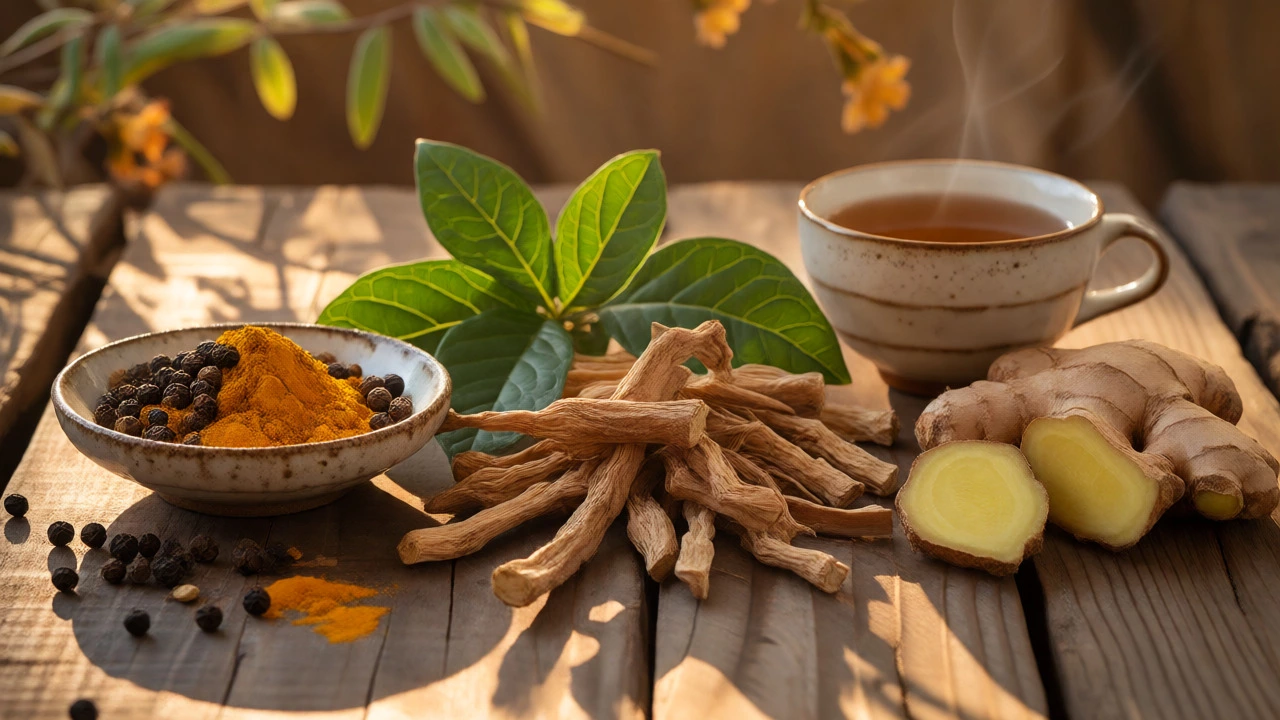
We hear about Turmeric constantly, mostly because curcumin, its active compound, is a potent anti-inflammatory. If you wake up with stiff joints or suffer from low-grade systemic inflammation, this is your top pick. However, raw turmeric powder has terrible bioavailability. Your body barely absorbs it.
To fix this, you need two things: fat and piperine. Piperine, found in black pepper, increases curcumin absorption by up to 2,000%. Many high-quality supplements combine these naturally. Alternatively, making golden milk with coconut oil and a pinch of black pepper works well. Don’t expect miracles overnight for arthritis pain, but consistent use over a month often leads to reduced stiffness and improved mobility.
Ginger and Peppermint: The Gut Protectors
Digestive issues are surprisingly common yet often ignored. If bloating, gas, or nausea ruins your day, look no further than Ginger. Gingerols stimulate gastric emptying, moving food through your system faster and reducing that heavy, stuck feeling. It’s particularly effective for motion sickness and morning nausea.
For those dealing with Irritable Bowel Syndrome (IBS) specifically involving cramping, Peppermint Oil is superior. Enteric-coated capsules prevent the oil from releasing too early in the stomach, delivering it directly to the intestines where it acts as an antispasmodic. This distinction is crucial-regular peppermint tea won’t give you the same targeted relief as coated capsules for IBS symptoms.
How to Choose Quality Supplements
The supplement industry is loosely regulated. Just because it says "natural" doesn’t mean it’s pure. Here is a quick checklist to ensure you aren’t wasting money:
- Third-Party Testing: Look for seals from USP, NSF International, or ConsumerLab. These organizations verify that what’s on the label is actually in the bottle.
- Standardization: Ensure the product lists the percentage of active compounds (e.g., "5% Withanolides"). Avoid vague terms like "proprietary blend" without disclosed amounts.
- Form Matters: Capsules generally offer better dosage control than teas. Extracts are more potent than whole herbs but require careful dosing.
- Allergen Check: Verify the product is free from fillers like magnesium stearate or artificial colors if you have sensitivities.
Safety First: Interactions and Side Effects
Natural does not equal safe for everyone. Herbs are pharmacologically active. They interact with medications. For example, Turmeric acts as a blood thinner. If you’re on warfarin or aspirin, adding high-dose curcumin could increase bleeding risk. Similarly, St. John’s Wort interacts with antidepressants, birth control pills, and heart medications.
Pregnant or breastfeeding women should be extra cautious. Many herbs lack sufficient safety data for these populations. Always consult your healthcare provider before starting any new regimen, especially if you manage chronic conditions like diabetes or hypertension. Start with a low dose to test tolerance. If you experience digestive upset or headaches, discontinue use immediately.
Final Thoughts: Start Simple
Don’t try to fix everything at once. Pick one primary symptom. If stress is dominating your life, start with Ashwagandha. If joint pain is limiting your movement, try Turmeric. Give it 4-8 weeks. Track your progress in a simple journal. Note changes in sleep, mood, or pain levels. This data-driven approach beats guessing every time. Once you’ve addressed one area, you can consider adding another herb if needed. Remember, consistency beats intensity. A small amount of the right herb taken daily will outperform a massive dose taken sporadically.
Can I take multiple herbs at the same time?
Yes, many people do, but it requires caution. Combining herbs with similar mechanisms (like two sedatives) can amplify effects unexpectedly. It’s best to introduce one herb at a time, waiting at least two weeks before adding another. This allows you to isolate which herb is causing any positive or negative effects. Always check for interactions between specific herbs and your current medications.
How long does it take for herbs to work?
It varies by herb type. Acute remedies like Ginger for nausea or Valerian for sleep may work within hours or days. Adaptogens like Ashwagandha or Rhodiola typically require 4 to 8 weeks of consistent use to show significant benefits in stress resilience or energy levels. Anti-inflammatories like Turmeric usually show results in 2 to 4 weeks. Patience is essential.
Are herbal supplements safe for children?
Not automatically. Children metabolize substances differently than adults. While Chamomile or Ginger tea might be gentle enough for older children, concentrated extracts often lack pediatric safety data. Never give adult-strength supplements to kids without consulting a pediatrician. Dosage must be adjusted strictly based on weight and age.
What is the difference between an herb and a spice?
Botanically, many herbs are spices. The distinction is largely culinary vs. medicinal. Spices are primarily used for flavoring food in small quantities, while herbs are used for therapeutic purposes, often in higher concentrations or extracted forms. Turmeric is a classic example-it’s a spice in curry but a potent anti-inflammatory supplement in capsule form.
Do organic herbs matter?
Organic certification ensures the plants were grown without synthetic pesticides or fertilizers, which can accumulate in the final product. Given that herbs are often consumed in concentrated forms, avoiding pesticide residue is a good idea. However, third-party testing for purity and contaminants is even more critical than the organic label alone.