
Medical Tourism Cost Calculator
Calculate Your Savings
Compare costs for procedures in Thailand versus your home country
Estimated savings:
$0
Thailand cost vs US Total cost in Thailand: $0
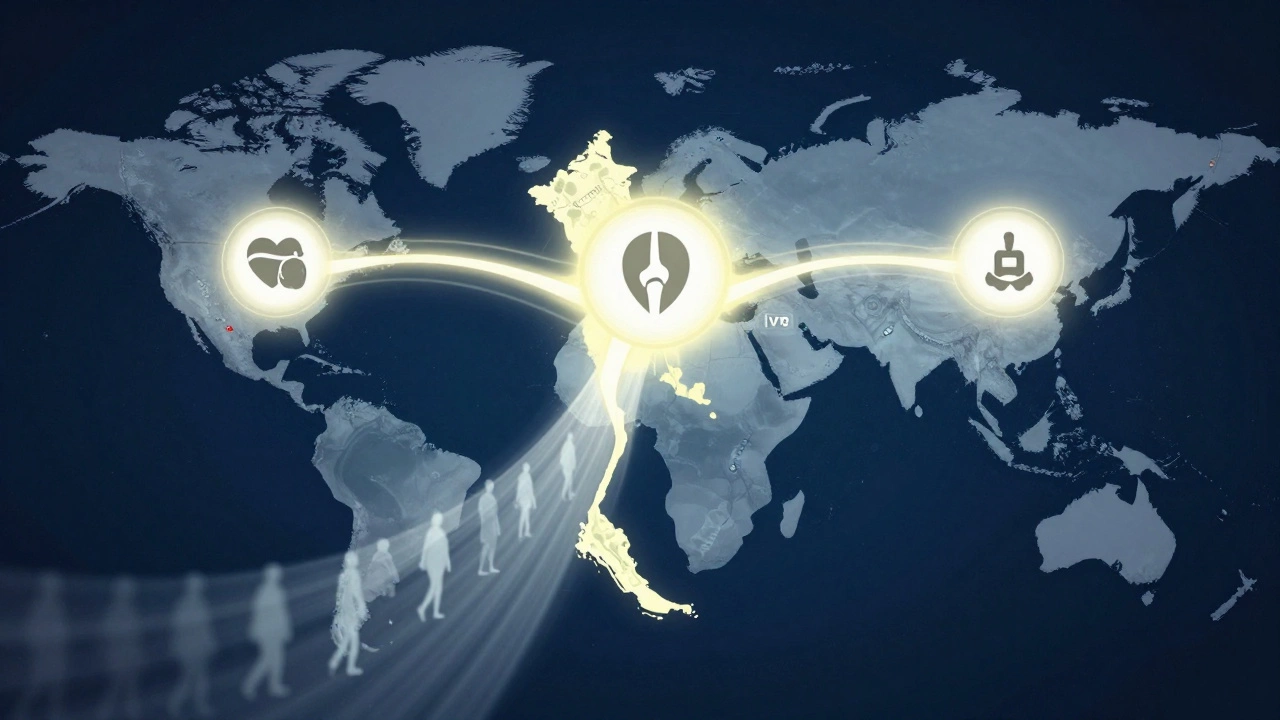
When people ask what the #1 medical tourism destination country in the world is, the answer isn’t just about fancy hospitals or low prices. It’s about consistency, scale, and trust. Every year, over 1.5 million international patients travel for care - and more than half of them head to one place: Thailand.
Why Thailand Leads the Pack
Thailand isn’t just a tourist hotspot. It’s a global hub for affordable, high-quality medical care. Hospitals like Bumrungrad International in Bangkok and Samitivej Hospital have been certified by JCI (Joint Commission International) for over 20 years. That means they meet the same safety and quality standards as top U.S. or European hospitals - but at a fraction of the cost.
For example, a heart bypass surgery in the U.S. can cost $200,000. In Thailand, the same procedure runs about $18,000 - including airfare, hotel, and recovery time. A knee replacement? Around $12,000 in Thailand versus $50,000 in Canada. Even cosmetic procedures like rhinoplasty or breast augmentation cost 70-80% less than in Australia or the UK.
But cost isn’t the only reason. Thailand’s medical staff speak fluent English. Most doctors trained in the U.S., UK, or Australia. Many worked in Western hospitals before returning home. Patients don’t need translators. They don’t feel like outsiders. They feel understood.
What Treatments Are Most Popular?
Thailand offers everything from complex surgeries to wellness retreats. Here’s what draws the most patients:
- Cardiac care - bypasses, angioplasties, valve replacements
- Orthopedics - hip and knee replacements, spinal surgeries
- Cosmetic surgery - facelifts, liposuction, breast implants
- Fertility treatments - IVF success rates match those in the U.S. and Europe
- Dental work - full mouth reconstructions, implants, veneers
- Wellness and prevention - detox programs, anti-aging therapies, stem cell treatments
Thailand’s fertility clinics are especially trusted. Many international couples choose Bangkok for IVF because success rates are above 50% for women under 35 - similar to top clinics in London or New York - but without the long waiting lists or $15,000 price tags per cycle.

How It Works: A Real Patient Journey
Let’s say you’re from Canada and need a hip replacement. You don’t just book a flight.
You start by sending your medical records to a Thai hospital via email. Within 24 hours, you get a detailed treatment plan, surgeon profile, and cost breakdown - all in writing. No hidden fees. No upselling.
You book your flight. The hospital arranges airport pickup. You stay in a private room with a view of the city. Your surgeon visits you daily. Nurses check on you every two hours. Physical therapy starts the day after surgery.
After five days, you’re discharged. You spend another week in a recovery villa with a personal assistant, meals prepared by a chef, and daily check-ins from your care team. By day 10, you’re walking without crutches. You fly home feeling stronger than you did before you left.
This isn’t marketing. This is standard practice in Thailand’s top medical tourism hospitals.
How Thailand Compares to Other Top Destinations
Other countries compete - but none match Thailand’s combination of volume, quality, and patient experience.
| Country | Avg. Cost Savings | English-Speaking Staff | JCI-Certified Hospitals | Specialty Strength |
|---|---|---|---|---|
| Thailand | 60-80% | Almost universal | Over 70 | Cardiac, orthopedics, fertility, cosmetics |
| India | 70-85% | High, but inconsistent | 40+ | Cardiac, cancer, organ transplants |
| Mexico | 50-70% | Moderate | 15-20 | Dental, cosmetic, bariatric |
| Singapore | 30-50% | Very high | 10+ | Cancer, neurology, complex surgeries |
| Turkey | 65-80% | Good in major cities | 25+ | Hair transplants, cosmetic surgery |
India saves you more money - especially for cancer and transplants. But language barriers and inconsistent post-op care make it riskier for first-timers. Mexico is great for dental work, but not for open-heart surgery. Singapore is top-tier but nearly as expensive as the U.S. Turkey dominates hair transplants, but lacks depth in complex procedures.
Thailand balances everything: price, skill, language, infrastructure, and patient comfort.
What You Need to Know Before Going
It’s not all smooth sailing. You still need to plan smart.
- Don’t go with the lowest price. A $5,000 hip replacement might be a red flag. Look for JCI certification. Check the surgeon’s track record.
- Bring your records. Email your scans, lab results, and doctor’s notes ahead of time. Thai hospitals rely on digital records - not paper.
- Plan for recovery time. Don’t book a flight home after 3 days. Most surgeries need 7-14 days of recovery before flying.
- Use a medical tourism facilitator. Reputable agencies (like Medigo or Patients Beyond Borders) handle logistics, translations, and aftercare. They’re not middlemen - they’re your safety net.
- Check your insurance. Some U.S. and European insurers now cover medical travel. Ask your provider. You might get reimbursed up to 60%.
The Bigger Picture: Why This Matters
Medical tourism isn’t about escaping your home country’s system. It’s about reclaiming control. In the U.S., you wait months for a specialist. In Canada, you’re on a public waiting list for a year. In the UK, NHS delays can push you into chronic pain.
Thailand offers an alternative: predictable timelines, transparent pricing, and care that doesn’t feel like a factory line. Patients don’t just get treated. They’re respected. They’re listened to. They’re cared for - not just fixed.
That’s why, year after year, Thailand remains the #1 destination. Not because it’s the cheapest. Not because it’s the most advanced. But because it gets the human part right.
Is medical tourism safe in Thailand?
Yes, if you choose accredited hospitals. Over 70 Thai hospitals are JCI-certified, meaning they meet global safety standards. Thousands of patients from the U.S., Canada, Europe, and Australia receive care there each year with very low complication rates. Always verify the hospital’s credentials and the surgeon’s experience before booking.
How long do I need to stay in Thailand for medical treatment?
It depends on the procedure. Minor surgeries like dental implants or cosmetic procedures may require 7-10 days. Major surgeries like heart bypass or joint replacement typically need 14-21 days - including hospital stay and recovery time. Most hospitals offer recovery packages with accommodations, meals, and follow-up checks to make this easier.
Can I use my health insurance for treatment in Thailand?
Some international insurance plans now cover medical travel, especially for procedures not covered quickly at home. U.S. insurers like Cigna and Aetna have started offering global care options. Always contact your insurer before booking. You may need pre-authorization, but reimbursement can cover up to 60% of the cost.
Are Thai doctors qualified to treat international patients?
Yes. Many Thai doctors trained in the U.S., UK, Australia, or Japan. They often worked in Western hospitals before returning home. Language isn’t a barrier - English fluency is standard in top medical tourism hospitals. You’ll find surgeons who speak your language, explain your options clearly, and answer your questions without jargon.
What’s the difference between medical tourism and regular travel?
Medical tourism is structured care, not vacation. While you may enjoy sightseeing, your priority is treatment. Top providers handle everything: pre-op consultations, hospital admission, recovery accommodations, and follow-up care. You’re not just a tourist - you’re a patient with a care plan. Reputable hospitals even coordinate with your home doctor after you return.