Walking After Knee Replacement: What You Need to Know
When you’ve had a knee replacement, a surgical procedure to replace a damaged knee joint with an artificial one, commonly done for severe osteoarthritis. Also known as total knee arthroplasty, it’s one of the most successful orthopedic surgeries in India, with over 2 lakh done yearly. But the real work starts after the surgery—and nothing matters more than learning how to walk again the right way.
Walking after knee replacement isn’t just about moving your leg. It’s about rebuilding strength, preventing blood clots, reducing swelling, and retraining your brain to use the new joint. Most patients start walking with help within 24 hours—often with a walker or crutches. The goal isn’t to go far, but to go often. Short, frequent walks (5-10 minutes every few hours) beat long, painful marches in the first week. Your body needs movement to heal, not rest. Skipping walks because it hurts? That’s the biggest mistake. Pain doesn’t mean damage—it means your muscles are waking up.
Recovery isn’t just about walking. It’s about knee rehab exercises, targeted movements designed to restore range of motion and muscle control after joint surgery. Straight leg raises, heel slides, and seated knee bends aren’t optional—they’re the foundation. Without them, your knee will stiffen, and you’ll struggle with stairs, sitting, or even standing up. And while walking gets you moving, these exercises get you controlling the movement. Doctors in India often pair these with ice, compression, and elevation—simple, cheap, and effective. You don’t need fancy gear. Just consistency.
Many people worry about overdoing it. Can you walk too much? Yes—but not in the way you think. Walking for 30 minutes straight on day 3? That’s risky. Walking for five minutes, six times a day? That’s perfect. The key is frequency, not distance. Your surgeon won’t tell you this, but most patients who recover fastest are the ones who walk a little, every few hours, even if they’re sore. Pain should stay below a 4 out of 10. If it hits 7 or higher, stop. Rest. Try again later.
What about walking aids? Most people switch from a walker to a cane in 2-4 weeks. Some skip the cane entirely by week 6. Don’t rush. If you’re still holding onto something at week 3, that’s normal. Your balance and strength will come. The goal isn’t to ditch your walker fast—it’s to walk without limping, without pain, and without fear. And that takes time.
And don’t ignore your other joints. If your other knee, hip, or back is hurting, it’s not coincidence. You’re shifting weight to compensate. That’s why joint mobility after surgery, the ability to move a joint through its full, pain-free range after an operation matters so much. If your hip or ankle is stiff, your new knee will pay for it. That’s why physical therapists check your whole lower body—not just the replaced joint.
You’ll find stories online about people hiking a week after surgery. Ignore them. Real recovery isn’t about speed. It’s about stability. It’s about being able to stand in the kitchen without wobbling. It’s about climbing stairs without holding the rail. It’s about walking to the mailbox without dreading it. The posts below give you real advice from people who’ve been there—what worked, what didn’t, and how to avoid the mistakes that slow you down. You’re not alone. And you don’t need to guess your way through this. The steps are clear. You just need to take them—one step at a time.
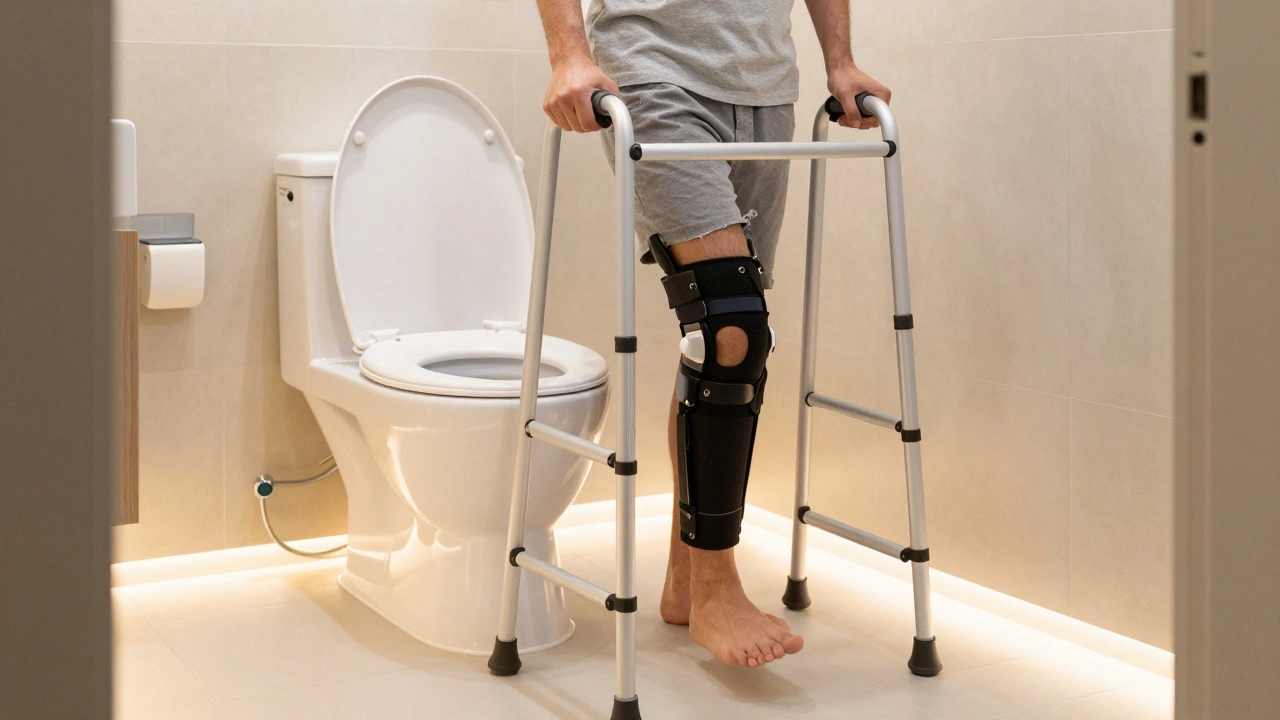
Can I Go to the Bathroom by Myself After Knee Surgery?
After knee replacement surgery, using the bathroom alone is possible within days if you prepare properly. Learn how to set up your bathroom, transfer safely, and know when to ask for help.

Is Walking Good for Stiff Knees? What Doctors in Bangalore Say
Walking is one of the safest and most effective ways to relieve stiff knees caused by arthritis or after knee replacement. Learn how to walk properly, avoid common mistakes, and use this simple habit to reduce pain and delay surgery.