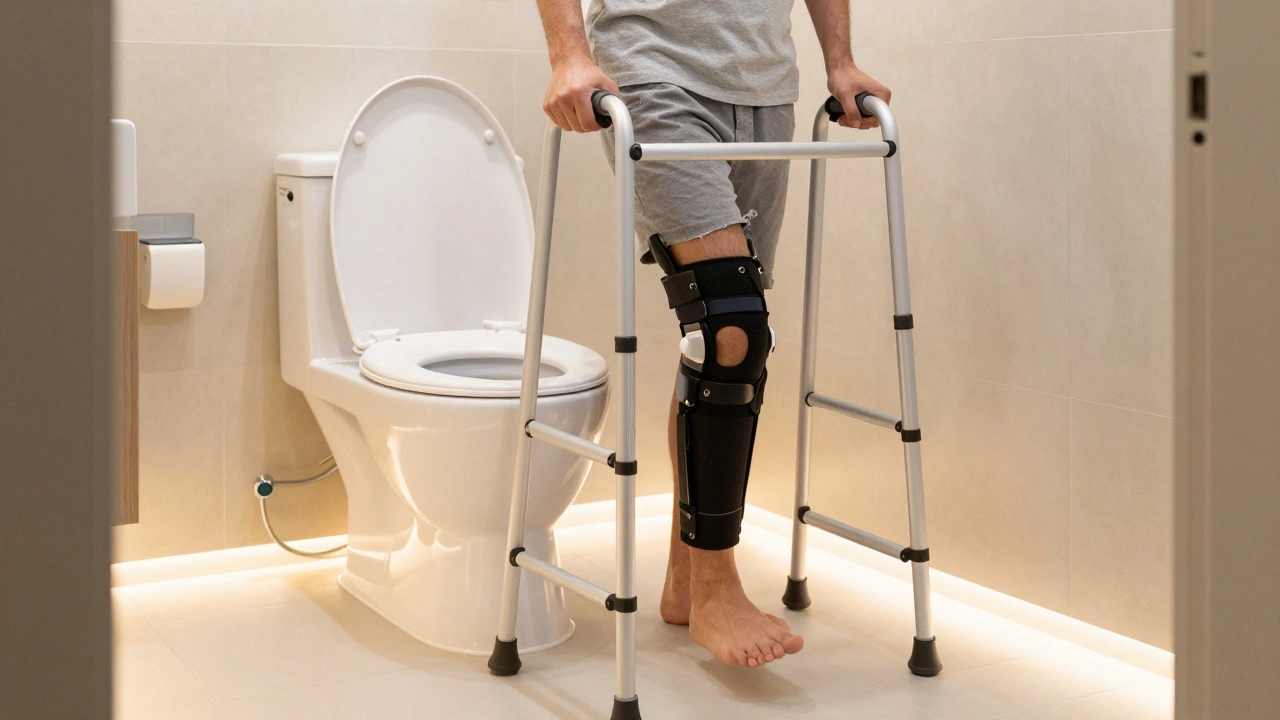
Bathroom Safety Calculator
Assess Your Bathroom Setup
Based on clinical guidelines, complete this checklist to determine if your bathroom is safe for independent use after knee surgery.
Your Safety Assessment
Recommendations
Your bathroom setup is not safe for independent use. Install grab bars and a raised toilet seat immediately.
After knee replacement surgery, one of the first things you worry about isn’t the pain or the swelling-it’s the bathroom. Can you get up, walk over, and use the toilet without help? Can you do it safely? The answer isn’t a simple yes or no. It depends on your surgery, your strength, your balance, and how well you follow your rehab plan. But here’s the truth: most people can use the bathroom by themselves within a few days, if they prepare right.
What Happens Right After Surgery?
In the first 24 to 48 hours after knee replacement, you’re not expected to walk alone. You’ll have IV lines, a catheter (if needed), and nurses checking on you often. Your knee will be swollen, stiff, and sore. Even standing up might feel impossible. That’s normal. The goal isn’t to rush to the bathroom-it’s to start moving safely. Most hospitals now use enhanced recovery protocols. That means you’ll likely get up and sit in a chair within 24 hours, even if you need help. Physical therapists will help you stand, take a few steps with a walker, and practice transferring from bed to chair. This isn’t just about mobility-it’s about preventing blood clots, reducing swelling, and getting your muscles working again.When Can You Use the Bathroom Alone?
By day two or three, many patients can use the bathroom independently-if the setup is right. You’ll need:- A raised toilet seat (at least 4 to 6 inches higher than normal)
- Grab bars on both sides of the toilet
- A stable walker or cane within reach
- No slippery floors
- A clear path from bed to bathroom
How to Practice Safe Bathroom Transfers
You don’t just walk to the toilet. You have to sit down, stand up, and balance-all with a stiff, healing knee. Here’s how to do it right:- Use your walker or cane to move slowly to the toilet. Don’t rush.
- Back up until you feel the toilet seat behind your legs.
- Reach back with both hands to grab the grab bars or armrests.
- Slowly lower yourself, using your arms to control the descent. Don’t drop.
- To stand: shift your weight forward, push up through your arms, and use your good leg to help lift. Your operated leg should bear only light pressure at first.
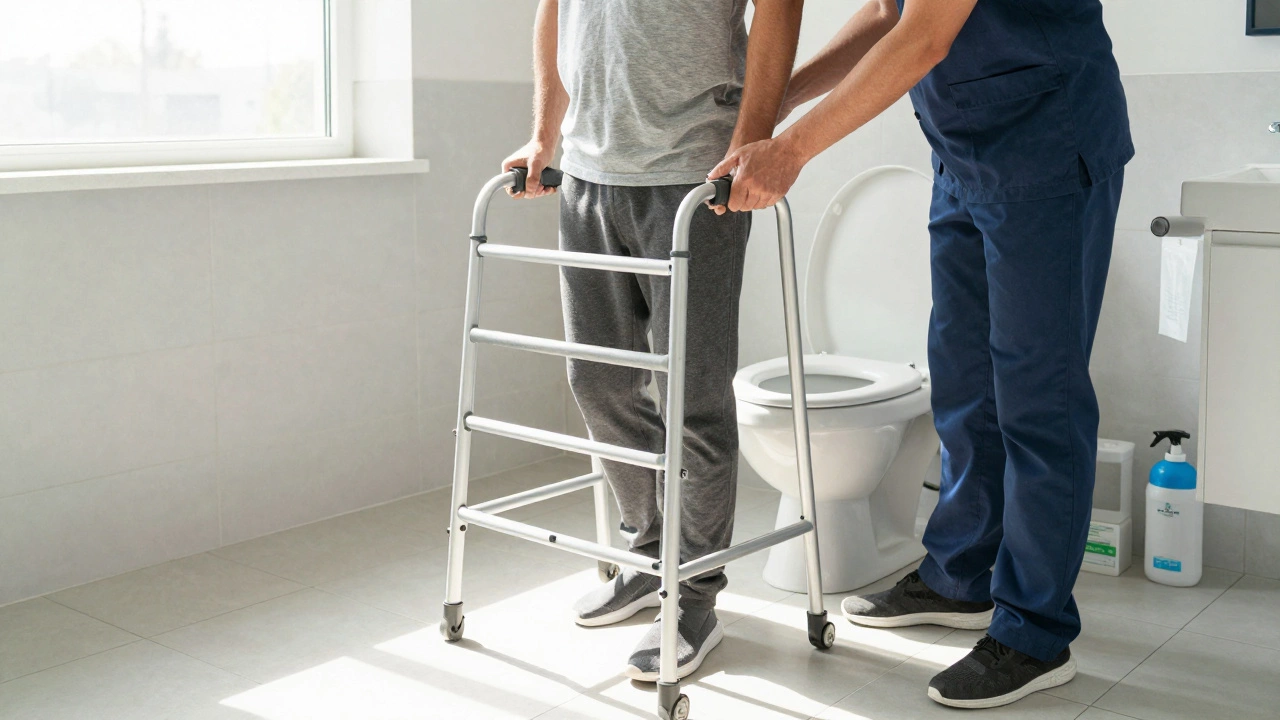
What If You Can’t Do It Alone Yet?
If you’re still shaky at day four, don’t panic. Recovery isn’t a race. Some people take five to seven days. Others need a caregiver for a week or more. That’s not failure-it’s normal. Signs you’re not ready:- You feel dizzy or lightheaded when standing
- Your knee buckles or gives out
- You need to hold onto walls or furniture to move
- You’re afraid to try
Home Setup Tips Before Surgery
The best time to fix your bathroom isn’t after surgery-it’s before. If you’re planning a knee replacement, make these changes at least two weeks ahead:- Install a raised toilet seat with arms (look for models with non-slip bases)
- Add grab bars on both sides of the toilet (not towel racks-they won’t hold your weight)
- Remove rugs or mats from the bathroom floor
- Put a shower chair and handheld showerhead in the tub
- Keep a sturdy chair near the bed for dressing
- Place a nightlight along your path to the bathroom

When to Call Your Doctor
You’re not alone in this. But some things need immediate attention:- Severe pain when trying to stand or sit
- Swelling or redness around the knee that worsens after activity
- Fever above 100.4°F (38°C)
- Inability to control bladder or bowel movements
Long-Term Independence
By week two, most patients can use the bathroom without help. By week four, many are walking without a cane. But the real win isn’t just independence-it’s confidence. You’re not just healing your knee. You’re rebuilding your life. One patient I spoke with, a 68-year-old retired teacher from Pune, said: "I cried the first time I walked to the bathroom alone. Not from pain-from pride. I hadn’t done that without help in months before surgery. Now I could again. That meant more than the pain going away." Your recovery isn’t just about the knee. It’s about reclaiming your dignity, your routine, your control. And yes-you can do it. Just take it step by step. One toilet trip at a time.Can I use a regular toilet after knee replacement surgery?
No, not right away. A regular toilet is too low and makes it harder to stand up without straining your new knee. Use a raised toilet seat with armrests for at least the first 4 to 6 weeks. This reduces pressure on your knee and gives you better leverage to stand safely.
Do I need help going to the bathroom after knee surgery?
In the first 1 to 3 days, yes-most patients need assistance. By day 3 to 5, many can do it alone if their bathroom is modified with grab bars and a raised seat. If you’re unsure, keep help nearby until you can stand and sit without wobbling or pain. Safety matters more than speed.
How long does it take to walk to the bathroom without a walker?
Most people use a walker for 2 to 4 weeks after surgery. By week 3, many switch to a cane or no assistive device at all, especially if they’re doing daily physical therapy. Walking to the bathroom without a walker usually happens around the same time-by week 3 or 4-if balance and strength are improving.
Is it safe to squat to use the toilet after knee replacement?
No. Squatting puts too much stress on the new knee joint, especially in the first 3 months. Avoid deep bending, kneeling, or squatting. Use a raised toilet seat and grab bars instead. Your surgeon will give you safe movement limits-follow them.
What if I live alone and have no one to help me?
You can still recover safely. Talk to your surgeon before discharge. Many hospitals arrange home health visits for the first week. You can rent a bedside commode, install grab bars yourself, and use a walker with a built-in seat. Some community services offer short-term help for seniors. Don’t try to go it alone without a plan-it’s risky.