Robotic Heart Surgery: What It Is, Who It Helps, and What You Need to Know
When you hear robotic heart surgery, a type of minimally invasive cardiac procedure where a surgeon controls robotic arms to perform delicate heart operations through tiny incisions. Also known as robot-assisted heart surgery, it’s changing how heart conditions like valve repair, bypass, and arrhythmia correction are treated in India’s top hospitals. Unlike open-heart surgery, which requires a large chest incision and splitting the breastbone, robotic systems use small holes—often just 1 to 2 centimeters wide—and high-definition 3D cameras to guide precision tools. This isn’t science fiction. It’s happening right now in cities like Mumbai, Delhi, and Bangalore, where hospitals are investing in systems like the da Vinci Surgical System to give patients better outcomes with less pain.
Robotic heart surgery isn’t for everyone, but it’s a game-changer for those who qualify. It works best for procedures like mitral valve repair, atrial septal defect closure, and some types of coronary artery bypass grafting. Patients with obesity, diabetes, or prior chest surgeries often benefit more because the smaller cuts mean less trauma to the body. The surgeon sits at a console, viewing a magnified, 3D view of the heart and moving robotic arms with hand controls. These arms don’t shake. They filter out tremors. They rotate 360 degrees—something human wrists can’t do. That’s why outcomes like reduced blood loss, shorter hospital stays, and faster return to work are common. Studies from Indian cardiac centers show patients go home 2 to 3 days earlier than with traditional surgery, and most resume light activities within 2 weeks.
But here’s the catch: not every hospital has the equipment, and not every surgeon is trained. The cost is higher than open surgery, and insurance coverage varies. Some patients are better off with traditional methods, especially if they have complex, multi-vessel disease or emergency conditions. That’s why knowing your options matters. If your doctor suggests surgery, ask: Is robotic an option? What’s the success rate here? What are the risks compared to open surgery? The right answer isn’t always the most advanced one—it’s the one that fits your body, your life, and your goals.
Behind every robotic heart surgery is a team—surgeons, nurses, and technicians trained in both cardiac care and advanced robotics. It’s not about replacing the doctor. It’s about giving them superpowers. And for patients, it means less pain, fewer scars, and more time doing what matters. If you or someone you know is facing heart surgery, don’t assume open-chest is the only way. Ask about robotic options. Research hospitals with experience. And remember: the goal isn’t just to fix the heart—it’s to get you back to living.
Below, you’ll find real patient stories, expert breakdowns of who benefits most, and clear comparisons between robotic and traditional heart procedures—all pulled from trusted sources in India’s medical community.
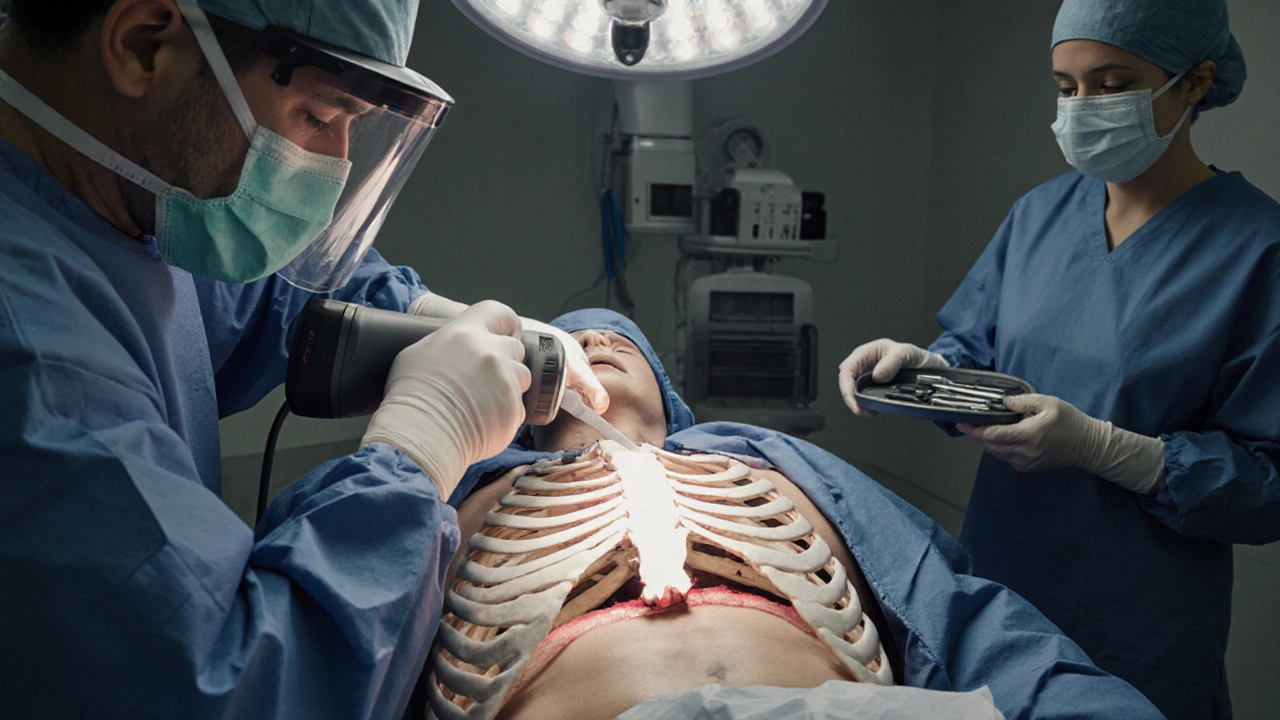
Do Surgeons Really Break Ribs for Open‑Heart Surgery? The Truth Explained
Discover whether heart surgeons really break ribs during open‑heart surgery, learn about sternotomy, minimally invasive options, recovery tips, and essential questions to ask your surgeon.