Knee Replacement Activity Checker
Select an Activity
Click on an activity to see its safety rating and medical reasoning.
Analysis Result
Select an activity from the list to view detailed safety information based on implant physics and longevity guidelines.
You finally made it. The surgery is over, the pain from arthritis or injury has faded, and you are walking around with a new lease on life. But then, your surgeon drops a phrase that stops you in your tracks: "There are some permanent restrictions."
It feels like a buzzkill. You spent months rehabbing, sweating through physical therapy, and dreaming of hiking trails or playing tennis again. Now, you’re being told there’s a ceiling to what your new knee can handle. It’s not about keeping you safe from minor bumps; it’s about protecting the longevity of an expensive, complex mechanical implant inside your body.
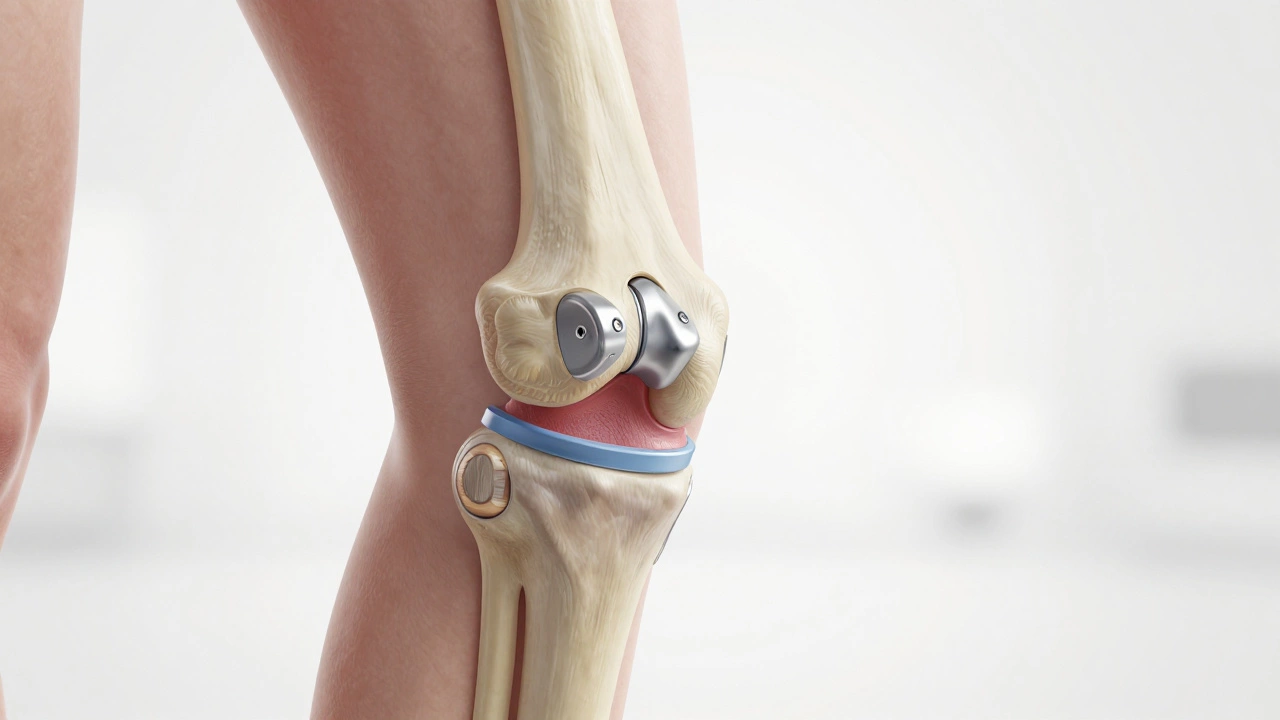
Total Knee Arthroplasty is a surgical procedure where damaged cartilage and bone in the knee joint are replaced with prosthetic components. While this restores function, the artificial joint does not have the same shock-absorbing capacity as natural tissue. Understanding these permanent limits isn't just medical advice-it's the difference between using your new knee for ten years versus twenty-five.
The Physics of Your New Knee: Why Limits Exist
To understand why you can’t just go back to everything you did before, you have to look at what actually happened during surgery. Your surgeon removed the worn-out ends of your femur (thigh bone) and tibia (shin bone). In their place, they attached metal trays and inserted a plastic spacer, usually made of ultra-high-molecular-weight polyethylene (UHMWPE).
This plastic component is durable, but it is not indestructible. Every time you run, jump, or squat deeply, you generate forces several times your body weight. Natural cartilage absorbs these shocks beautifully. Metal-on-plastic interfaces do not. They grind. Over time, microscopic particles wear off the plastic. This debris triggers an immune response in your body, leading to inflammation and bone loss-a condition known as osteolysis. This is the number one reason knee replacements fail prematurely.
So, when doctors talk about restrictions, they aren't trying to be restrictive for the sake of it. They are trying to minimize wear and tear on that plastic liner. Think of it like wearing out the soles of your shoes. Walking wears them down slowly. Running on concrete wears them down fast. Jumping off a curb? That tears them up immediately.
Activities You Should Permanently Avoid
Let’s get straight to the point. There are specific movements and sports that put excessive stress on the knee implant. Most orthopedic surgeons agree that you should permanently avoid high-impact activities. Here is the list you need to memorize:
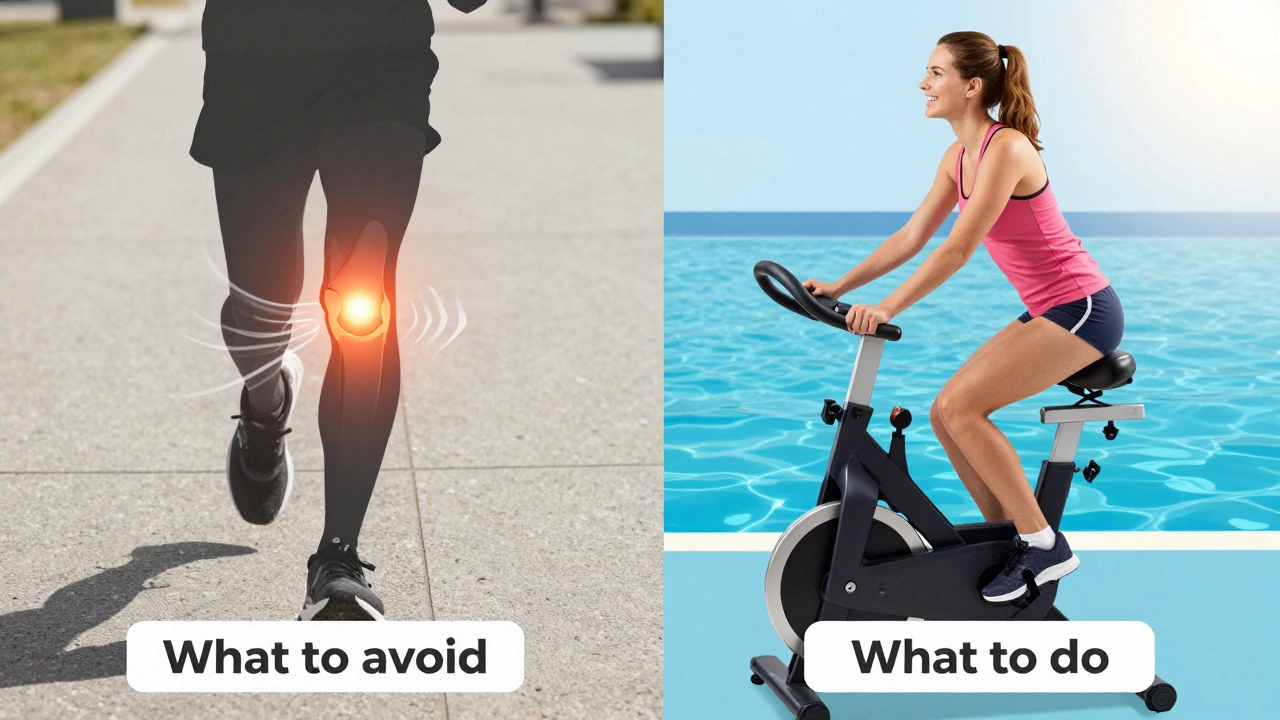
- Running and Jogging: Even on soft surfaces, the repetitive pounding creates significant shear force on the implant. It accelerates polyethylene wear significantly compared to walking.
- Jumping Sports: Basketball, volleyball, and trampolining involve landing impacts that can loosen the cement or screws holding the implant in place.
- High-Impact Aerobics: Classes that involve jumping jacks, box jumps, or plyometrics are off-limits.
- Heavy Weightlifting: Squats with heavy barbells or leg presses with extreme loads can damage the joint. Light resistance training is encouraged, but heavy powerlifting is not.
- Contact Sports: Football, rugby, and martial arts carry a risk of direct trauma to the knee, which could fracture the bone around the implant or dislocate the joint.
If you are someone who loved trail running or competitive tennis, this is hard news. But consider this: the goal of knee replacement is pain-free daily living, not athletic performance. Trading a few years of high-intensity sport for decades of pain-free walking and gardening is a trade most patients say was worth it.
What About Deep Squats and Kneeling?
This is where cultural context matters. In many parts of Asia, including India, kneeling and deep squatting are part of daily life-whether it’s praying, cleaning floors, or sitting on low stools. For Western patients, this might seem trivial, but for others, it’s a major lifestyle adjustment.
Physically, your new knee allows for about 110 to 120 degrees of flexion. That’s enough to sit in a standard chair, drive a car, and climb stairs. However, getting into a full deep squat (where your butt touches your heels) often requires more than 135 degrees of flexion. Trying to force this movement puts immense pressure on the posterior capsule of the knee and the plastic insert.
Many patients find they cannot kneel comfortably on hard surfaces. The sensation is often described as feeling "something in the way" or a sense of instability. If you must clean floors, use a mop with a long handle or a kneeling pad if you choose to kneel on soft grass. Don’t force a deep squat if you feel pain or catching. Your body will tell you its limit quickly.
Safe Activities: What You CAN Do Forever
Just because some doors are closed doesn’t mean all are. In fact, most people are surprised by how active they can remain. Low-impact activities are not just allowed; they are encouraged to keep the muscles strong and the joint mobile.
| Activity | Safety Level | Why? |
|---|---|---|
| Walking | Excellent | Low impact, strengthens muscles without excessive joint load. |
| Cycling (Stationary or Road) | Excellent | Smooth motion range, builds quad strength with minimal shock. |
| Swimming & Water Aerobics | Excellent | Buoyancy removes weight-bearing stress entirely. |
| Golf | Good | Walking the course is great; swinging is low impact if posture is maintained. |
| Tennis (Doubles) | Moderate | Less running than singles, but lateral cuts can stress the knee. Use caution. |
| Hiking (Flat Terrain) | Good | Enjoyable walking, but avoid steep descents which increase knee load. |
| Running | Avoid | High impact causes rapid polyethylene wear. |
Notice that swimming and cycling are top-tier recommendations. These activities maintain cardiovascular health and muscle tone without punishing the joint. If you were a runner, transitioning to a stationary bike or elliptical machine is the best next step. You’ll still get your heart rate up, but your knee will thank you.
The Myth of "Once Restricted, Always Restricted"
Some patients hear "permanent" and assume it means they can never change their mind. While the structural limitations of the implant are permanent, your fitness level is not. A stronger quadriceps muscle acts as a shock absorber for the knee. If you stay fit, your knee handles moderate loads better than if you are sedentary.
However, don’t let confidence override physics. Just because you *can* jog a mile without pain today doesn’t mean the plastic isn’t wearing down. Pain is a poor indicator of implant wear. By the time you feel pain from loosening or wear, significant damage may have already occurred. Adhering to low-impact guidelines is proactive protection, not reactive treatment.

Travel and Security Checks
One less discussed restriction involves travel. Your knee implant contains metal. While modern implants are designed to minimize magnetic interference, you will set off airport security scanners. This isn’t a medical restriction, but a logistical one.
You don’t need to declare it medically, but be prepared for a pat-down. Carry your knee replacement identification card (provided by your surgeon or hospital) in your wallet. It explains the metal presence and speeds up the process. Also, be mindful of prolonged sitting during long flights. Stiffness is common after hours in a cramped seat. Walk the aisle every hour if possible to keep the joint lubricated and prevent blood clots (Deep Vein Thrombosis), which remains a risk even years after surgery if mobility is severely restricted for long periods.
When to Call Your Doctor
Living with a knee replacement requires vigilance. You are now the primary monitor of your joint’s health. Contact your orthopedic surgeon immediately if you experience:
- Persistent swelling that doesn’t improve with rest and ice.
- A sudden onset of pain, especially if it occurs at rest or night.
- A feeling of "giving way" or instability, as if the knee is slipping out of place.
- Redness, warmth, or fever, which could indicate an infection.
- A grinding or clicking sensation that is new or worsening.
These symptoms could signal loosening, infection, or mechanical failure. Early detection is critical. Waiting until you can’t walk to seek help often leads to more complex revision surgeries.
Conclusion: Embracing the New Normal
Accepting permanent restrictions after knee replacement is a mindset shift. It’s moving from an identity of "athlete" or "active elder" to "smart mover." You are no longer fighting against gravity and friction with biological cartilage; you are working with a mechanical aid. Respect the machine, and it will serve you well.
Most patients report higher satisfaction when they adjust their expectations. They stop trying to replicate their pre-surgery athleticism and start celebrating their newfound ability to walk pain-free, play with grandchildren, and travel. The restrictions are real, but the freedom from chronic pain is far greater.
Can I ever run again after a knee replacement?
Generally, no. Running places high impact forces on the knee joint, which accelerates the wear of the plastic spacer in your artificial knee. While some young, highly active patients may attempt light jogging, most orthopedic surgeons advise against it permanently to ensure the implant lasts 15-20 years. Switching to cycling or swimming provides similar cardiovascular benefits without the joint damage.
Is it safe to kneel on the floor after surgery?
Physically, yes, but many patients find it uncomfortable or psychologically difficult. The sensation of having a foreign object in the knee while kneeling can feel strange or unstable. Additionally, deep kneeling can strain the scar tissue. If you need to clean floors, consider using a long-handled mop or a kneeling pad to reduce discomfort. Never force a deep squat if it causes pain.
How long does a knee replacement last if I follow restrictions?
With proper care and adherence to low-impact activity guidelines, 90-95% of knee replacements last at least 15 to 20 years. Some last 30 years or more. Factors like weight, activity level, and surgical technique play a role. Maintaining a healthy weight is crucial, as every extra pound adds four pounds of pressure to the knee joint.
Can I play golf or tennis after knee replacement?
Golf is generally considered safe and is highly recommended. The walking involved is beneficial, and the swing is low-impact. Tennis is more nuanced. Doubles tennis, which involves less running and fewer lateral cuts, is often acceptable. Singles tennis, with its intense sprinting and stopping, poses a higher risk of wear and loosening. Consult your surgeon based on your skill level and intensity.
Do I need to take antibiotics before dental work forever?
Current guidelines from the American Academy of Orthopaedic Surgeons (AAOS) and the American Dental Association (ADA) generally do NOT recommend routine antibiotic prophylaxis for dental procedures after knee replacement, unless you have specific high-risk conditions like a history of joint infection, immunocompromised status, or hemophilia. However, practices vary by region and surgeon. Always check with your orthopedic doctor before any dental procedure.