
Stiff Knee Relief Selector
Assess Your Symptoms
Recommendation
You wake up, swing your legs out of bed, and your knee feels like it’s rusted shut. It’s not just in your head; that grinding sensation and limited range of motion are real physical barriers. Whether you’re recovering from a knee replacement or dealing with everyday wear and tear, stiffness is the enemy of mobility. The good news? You don’t have to live with it. With the right mix of movement, heat, and patience, you can grease those gears again.
Why Does Your Knee Feel Like Concrete?
Knee stiffness isn’t a disease itself; it’s a symptom. Think of your knee as a complex hinge made of bone, cartilage, ligaments, and fluid. When things go wrong-usually due to inflammation, scar tissue, or lack of use-the joint capsule tightens up. If you’ve had surgery recently, your body creates scar tissue as part of healing. While necessary, this tissue can bind down if you don’t move enough, creating a "frozen" feeling. For non-surgical cases, osteoarthritis is the usual suspect. As cartilage wears thin, bones rub closer together, triggering swelling. That swelling pushes against the joint capsule, making it feel tight and hard to bend. Understanding the root cause helps you pick the right fix. Is it mechanical blockage? Inflammation? Or just disuse atrophy?
The Power of Motion: Gentle Exercises That Work
Here’s the counter-intuitive truth: moving a stiff knee hurts less than keeping it still. Rest feels safe, but it actually worsens stiffness by allowing tissues to tighten further. You need controlled, low-impact movement to stimulate synovial fluid production-the natural lubricant of your joints.
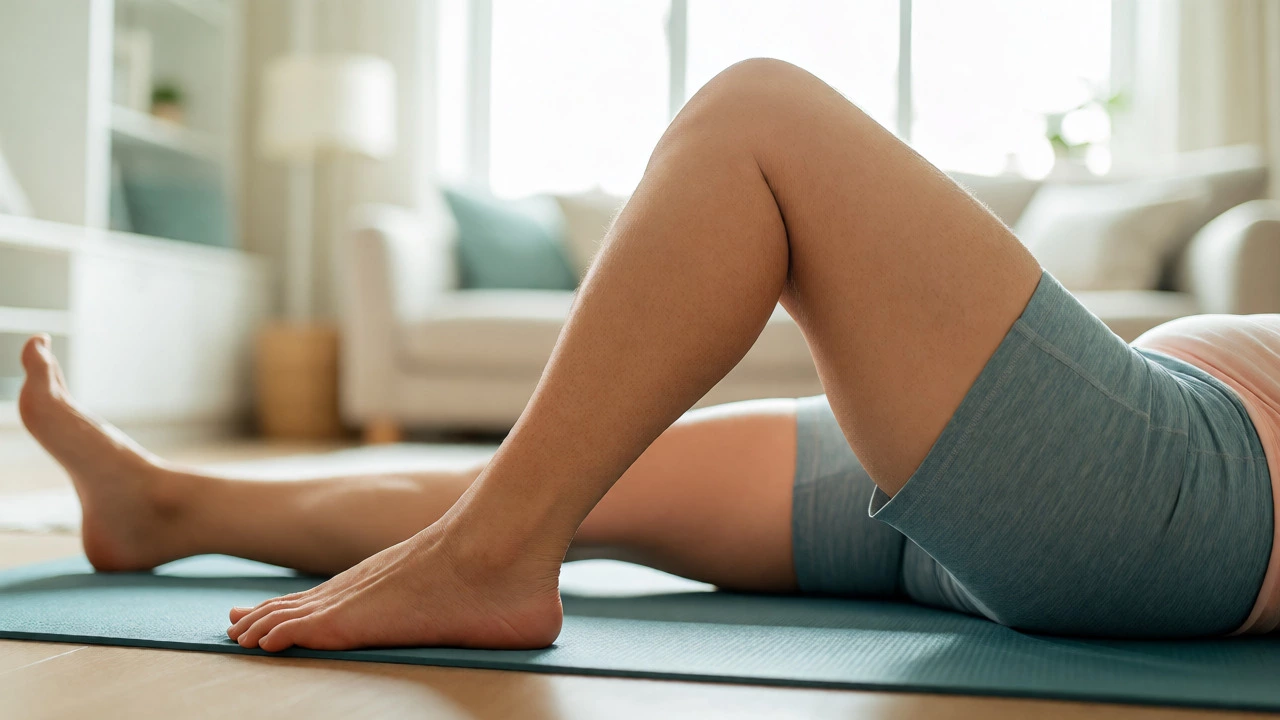
- Heel Slides: Lie on your back with legs straight. Slowly slide one heel toward your buttocks, bending the knee as far as comfortable. Hold for five seconds, then slide back down. Repeat 10 times. This gently stretches the quadriceps and hamstrings without heavy loading.
- Quad Sets: Sit with your leg straight. Tighten the muscle on top of your thigh (quadriceps) by pushing the back of your knee into the floor. Hold for 5 seconds. Relax. This activates muscles that support the joint without moving it, reducing pain while building strength.
- Sit-to-Stands: Use a sturdy chair. Without using your hands, stand up and sit down slowly. Keep your feet flat. This functional movement mimics daily life and forces the knee through its full range under mild load.
Consistency beats intensity here. Doing these exercises twice a day for ten minutes is better than one grueling hour once a week. Listen to your body: discomfort is okay; sharp pain is not.
Heat, Cold, and Contrast Therapy
Temperature manipulation is a simple, drug-free way to manage stiffness. But when do you use which? Heat therapy increases blood flow and relaxes tight muscles. Use a warm towel or heating pad for 15-20 minutes before exercising. Warmth makes collagen fibers more pliable, allowing for deeper stretches. If your knee feels achy and stiff in the morning, heat is your best friend. Cold therapy reduces inflammation and numbs pain. Apply an ice pack wrapped in a thin cloth for 10-15 minutes after activity or if the knee feels swollen and hot. Never apply ice directly to the skin to avoid frostbite. Some people find contrast therapy helpful-alternating between warm and cold water showers directed at the knee. Start with three minutes of warmth, switch to one minute of cool, and repeat three times. Always end with cold if inflammation is present, or heat if stiffness dominates.
Manual Therapy and Massage Techniques
Your knee doesn’t exist in isolation. Tightness in the hips, ankles, or even lower back can alter how you walk, putting extra stress on the knee joint. Self-massage or professional manual therapy can break up adhesions in the surrounding soft tissue.
Try using a foam roller on your quadriceps and IT band (the side of your thigh). Spend two minutes rolling slowly over tender spots. Avoid rolling directly over the kneecap or inflamed areas. For the calf muscles, gentle stretching against a wall can relieve tension that pulls on the back of the knee. If you have access to a physiotherapist, ask about joint mobilization techniques. These involve small, passive movements performed by a therapist to restore glide within the joint surfaces. It’s not something you can easily replicate at home, but it can be a game-changer for stubborn stiffness.Lifestyle Tweaks for Long-Term Mobility
Exercise alone won’t fix everything if your daily habits work against you. Weight management plays a huge role. Every pound of excess weight puts four pounds of pressure on your knees during walking. Losing even 5-10% of your body weight can significantly reduce strain and improve comfort.
Footwear matters too. Worn-out shoes with poor arch support change your gait, forcing your knees to compensate. Replace running shoes every 300-500 miles. Consider orthotic inserts if you have flat feet or high arches, as they help align the kinetic chain from the ground up. Hydration is often overlooked. Synovial fluid is mostly water. Dehydration can make this fluid thicker and less effective at lubricating joints. Drink plenty of water throughout the day, especially if you’re active.
When to See a Doctor
While most stiffness responds to home care, some signs warrant professional evaluation. If your knee locks up completely (you can’t straighten or bend it), swells dramatically overnight, or feels unstable (like it’s giving way), see an orthopedist. These could indicate meniscal tears, loose bodies, or severe arthritis progression.
Also, consult a specialist if stiffness persists despite six weeks of consistent self-care. They might recommend imaging (X-ray or MRI) to check structural integrity or suggest interventions like corticosteroid injections to reduce inflammation temporarily, giving you a window to exercise effectively.| Method | Best For | Frequency | Key Benefit |
|---|---|---|---|
| Heat Therapy | Morning stiffness, pre-exercise prep | 15-20 mins before activity | Relaxes muscles, improves flexibility |
| Cold Therapy | Post-activity soreness, acute swelling | 10-15 mins after activity | Reduces inflammation, numbs pain |
| Range of Motion Exercises | Daily maintenance, post-surgery rehab | 2x daily, 10 reps each | Maintains joint fluid circulation |
| Foam Rolling | Tight quads, IT band syndrome | 2-3x weekly | Releases soft tissue adhesions |
FAQs About Stiff Knees
Is it normal for my knee to be stiff after sitting for a long time?
Yes, this is very common, often called the "gelling phenomenon." When you stay still, synovial fluid thickens slightly, causing temporary stiffness. Moving around for a few minutes usually loosens it up. However, if the stiffness lasts more than 30 minutes after starting to move, it might signal inflammatory arthritis.
Can I run with a stiff knee?
It depends on the severity. If the stiffness is mild and goes away quickly with warm-up, light jogging might be fine. If you feel pain or grinding, switch to low-impact activities like cycling or swimming until the mobility improves. Running places high impact loads on the joint, which can aggravate existing stiffness.
Do supplements like glucosamine help with knee stiffness?
Evidence is mixed. Some studies show modest benefits for pain reduction in osteoarthritis, but they rarely reverse structural damage. Glucosamine and chondroitin may help some individuals maintain comfort levels, but they are not a substitute for exercise and weight management. Consult your doctor before starting any new supplement regimen.
How long does it take to loosen a stiff knee after surgery?
Recovery varies, but significant improvement usually happens within the first 6-12 weeks post-operation. Full range of motion may take up to a year. Consistent physical therapy is crucial during this period. Missing sessions can lead to permanent loss of extension or flexion.
Should I stretch a painful stiff knee?
Gentle stretching is encouraged, but never force it. Pain is a signal to stop or reduce intensity. Focus on static holds rather than bouncing movements. If stretching causes sharp pain, stop immediately and try heat therapy instead. Work within a pain-free range initially.
Next Steps for Better Mobility
Start today. Pick one exercise from the list above and do it now. Don’t wait for Monday. Create a routine: heat before, move during, ice after if needed. Track your progress by noting how far you can bend your knee each week. Small wins add up. If you’re struggling to create a plan, consider booking a session with a physical therapist who can tailor exercises to your specific anatomy and condition. Your knees carry you through life; treating them well pays dividends for decades.