Knee Replacement Sleep Position Calculator
How Long to Sleep Straight After Knee Replacement
This calculator helps determine when you can safely sleep in more comfortable positions based on medical guidelines.
After knee replacement surgery, one of the most common questions patients ask is: How long do I have to sleep with my leg straight? The answer isn’t just a number of days-it depends on your surgeon’s protocol, your body’s healing speed, and how well you follow early recovery steps. But here’s the truth: most people don’t need to sleep with their leg perfectly straight for weeks. In fact, forcing it can do more harm than good.
Why Do Doctors Suggest Keeping the Leg Straight?
The idea comes from a simple goal: prevent stiffness and maintain joint alignment while swelling is highest. After surgery, your knee joint is swollen, tender, and still adjusting to the new implant. Keeping the leg extended helps reduce pressure on the back of the knee and prevents the formation of scar tissue that could limit motion later. But this doesn’t mean you need to lock your leg into a rigid, board-straight position all night.
Modern physical therapy guidelines focus on safe range of motion, not extreme immobilization. Studies from the Journal of Bone and Joint Surgery show that patients who were allowed to sleep with a slight bend (5-10 degrees) had better sleep quality and just as good long-term outcomes as those forced into full extension. The key isn’t straightness-it’s avoiding positions that strain the joint or cause twisting.
What’s the Real Timeframe?
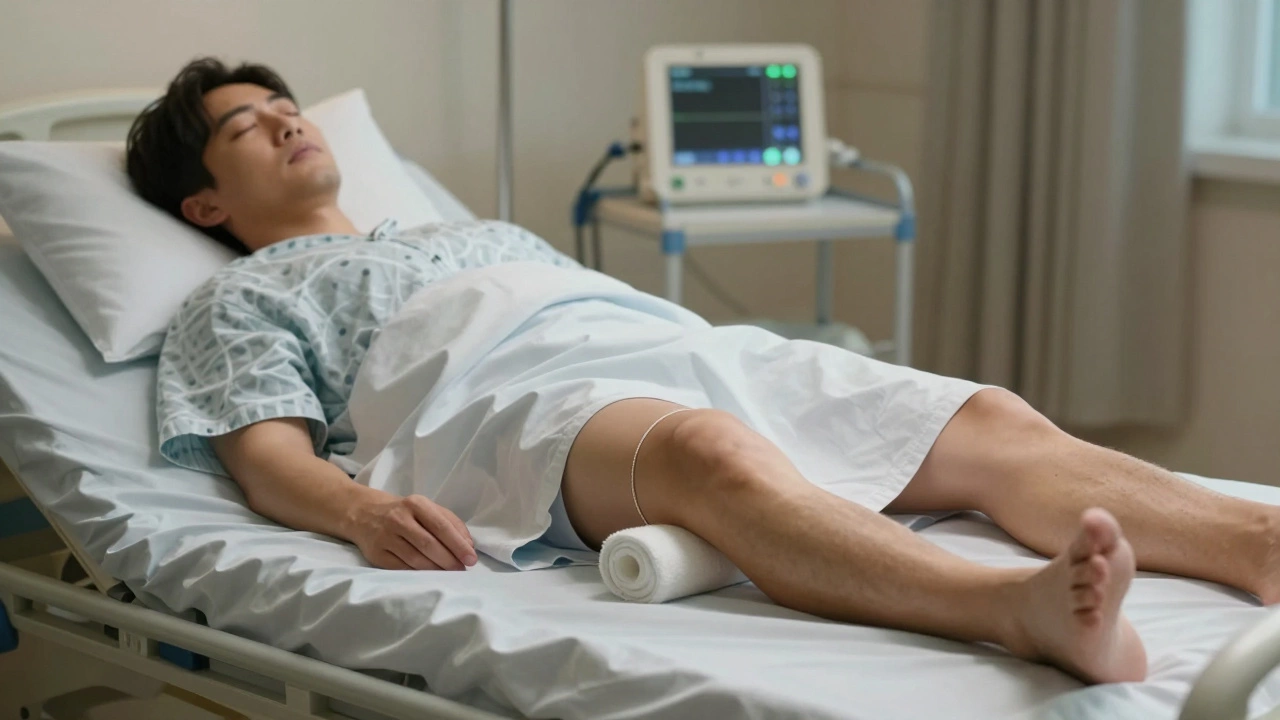
Most patients are advised to keep their leg as straight as comfortably possible for the first 1 to 2 weeks after surgery. During this time, swelling peaks, and the body is still healing the soft tissues around the knee. You might use a pillow or wedge under your calf-not under your knee-to gently support the leg in a neutral position. This helps avoid hyperextension or excessive bending that could pull on sutures.
By week 3, many surgeons stop requiring strict straight positioning. By week 4, you’re usually allowed to sleep in whatever position feels comfortable, as long as you’re not putting pressure on the surgical side or twisting your knee. Some patients naturally roll onto their side and rest the operated leg on a pillow between their knees. That’s fine. Others sleep on their back with a slight bend. That’s also fine.
There’s no evidence that sleeping with your leg bent after the first two weeks causes long-term damage. What matters more is whether you’re doing your prescribed exercises, walking regularly, and avoiding prolonged sitting with the knee bent too tightly.
What Not to Do
Don’t put a pillow directly under your knee. This might feel soothing at first, but it encourages your knee to stay bent, which can lead to contractures-permanent tightening of the joint. That’s something you’ll need physical therapy to fix later.
Don’t sleep on your side without support. If you roll over and let the operated leg hang down or twist inward, you risk straining the ligaments or irritating the incision. Use a pillow between your legs if you sleep on your side.
Don’t force your leg straight with a rigid brace overnight unless your surgeon specifically ordered it. Most modern knee replacements don’t require this. Braces are for walking, not sleeping.
How to Sleep Comfortably
Here’s what works for most people after the first week:
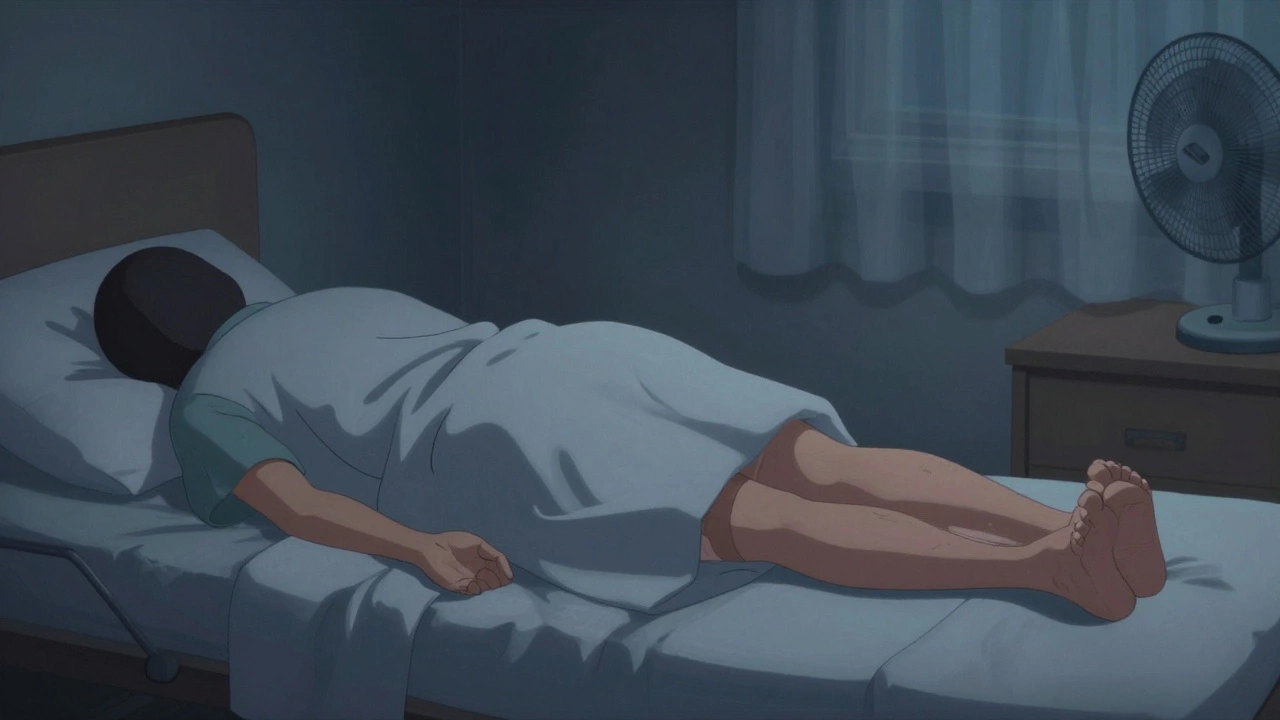
- On your back: Place a thin pillow or rolled towel under your calf, not your knee. This keeps the leg slightly extended without pressure.
- On your side (opposite the operated leg): Use a pillow between your knees to keep alignment. Don’t let the operated leg drape over the other.
- On your side (on the operated side): Only do this after week 3, and only if you can keep the leg straight with a pillow under the ankle.
- Use a wedge pillow: These are designed for post-op recovery. They support the leg at a 5-10 degree angle, which is ideal for circulation and comfort.
Many patients find that elevating the entire leg with a pillow under the mattress (not just under the foot) helps reduce swelling and makes it easier to fall asleep.
When to Worry
If after 4 weeks you still can’t sleep without severe pain, stiffness, or if your knee feels locked in one position, talk to your physical therapist. These aren’t normal. You might be developing a flexion contracture or have unresolved swelling. Don’t wait until your 6-week checkup-call sooner.
Also, if your leg turns numb, cold, or blue while sleeping, that’s a red flag. It could mean blood flow is being cut off. Change your position immediately and contact your doctor.
What Happens If You Don’t Follow the Rules?
Skipping the early straight-leg advice doesn’t mean you’ll ruin your surgery. But it can slow down your recovery. People who sleep with their knee bent 90 degrees all night for weeks often report:
- Slower regain of full extension (can’t straighten leg completely)
- More difficulty walking without a limp
- Longer need for assistive devices like walkers
- Need for extra physical therapy sessions
That’s why the first two weeks matter. It’s not about perfection-it’s about giving your knee the best chance to heal without unnecessary tension.
What About Nighttime Swelling?
Swelling is normal for weeks after surgery. Elevating your leg above heart level while sleeping helps. Try propping your bed up with blocks under the legs at the head end-just 4 to 6 inches. That’s enough to reduce fluid buildup without making you feel like you’re sleeping on a ramp.
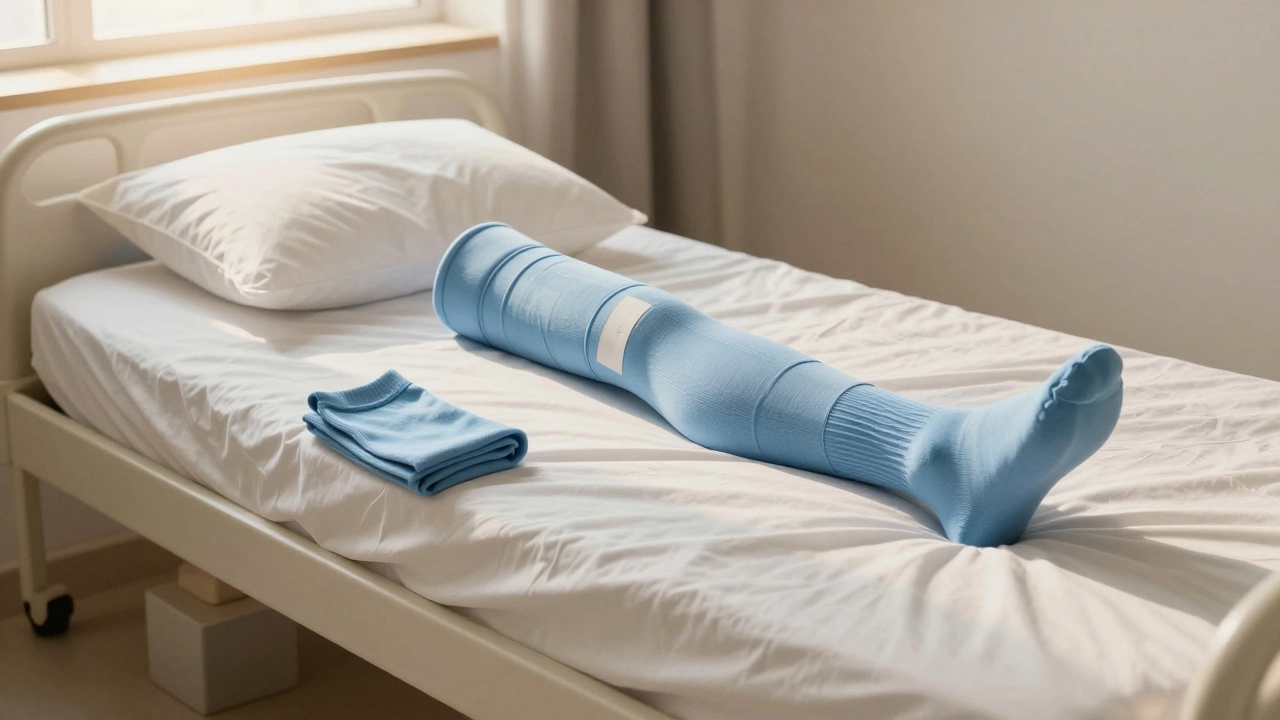
Compression stockings worn during the day also help, but remove them at night unless your surgeon says otherwise. They can restrict circulation if left on too long while lying down.
How Long Before You Can Sleep Normally?
By 6 weeks, most people can sleep in any position without discomfort. Some even forget they had surgery. Others take longer-especially if they had a more complex procedure or had limited motion before surgery.
The goal isn’t to sleep like you did before. It’s to sleep without pain, without fear, and without stiffness. Once you can fully straighten your leg while sitting and walk without a limp, you’ve passed the critical phase.
Final Tip: Listen to Your Body
Surgeons give general guidelines because everyone heals differently. If you’re in pain, change position. If you wake up with a tight, stiff knee, do a few gentle straightening exercises before getting up. A simple seated leg extension-pushing your heel down into the bed while relaxing your thigh-can help maintain mobility without forcing anything.
Recovery isn’t about following rules perfectly. It’s about staying consistent, staying patient, and paying attention to what your body tells you. Your knee will thank you for the care you give it in the first few weeks-not because you slept perfectly straight, but because you gave it time, space, and respect to heal.