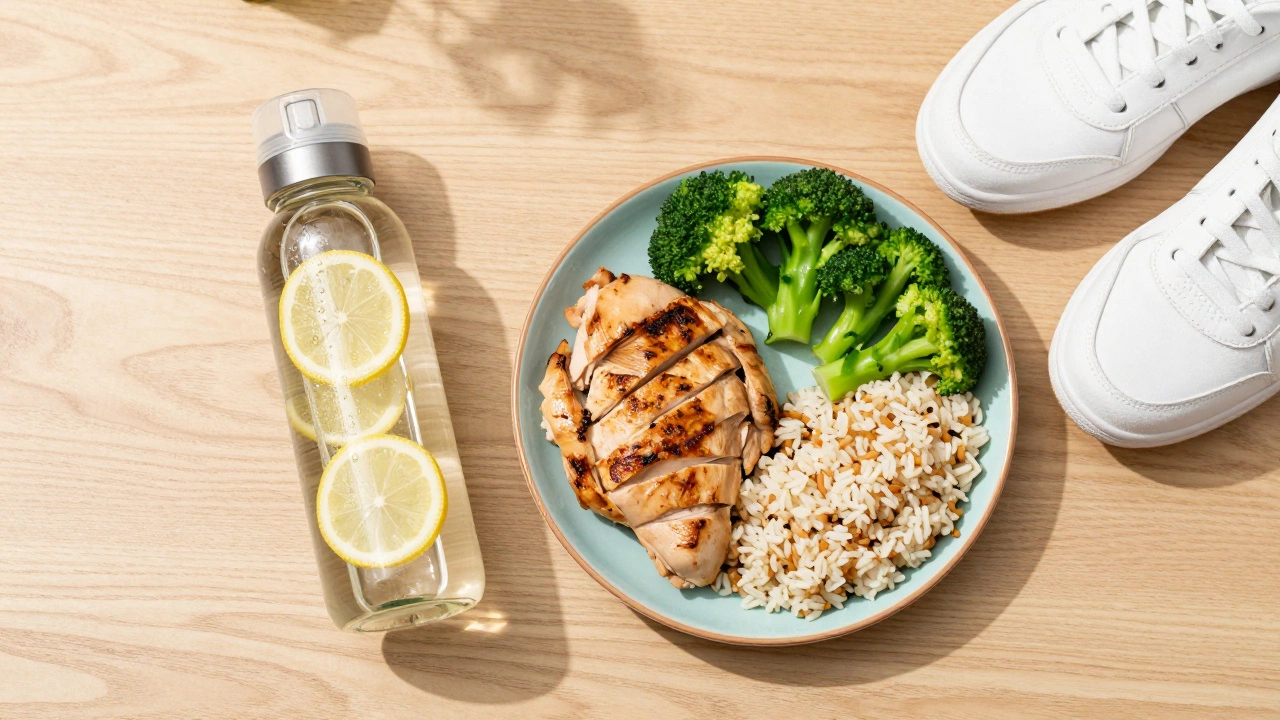
Your Personal 3-3-3 Rule Plan Generator
Step 1: Choose Your Focus
Which version of the 3-3-3 rule appeals to you most?
Configure Your Day
Your Plan Preview
Adjust your settings to see your generated plan.
*Based on eliminating average snacking calories (300/day).
If you have spent any time scrolling through social media or visiting weight loss clinicsfacilities specialized in helping patients reduce body fat through medical supervision lately, you have probably seen the term "3 3 3 rule" tossed around. Everyone claims it works, but nobody agrees on exactly what it means. One influencer says it is about three meals a day. Another says it is three liters of water and three workouts. It sounds simple enough-just count to three-but the details matter when your health is on the line.
Here is the truth: There is no official scientific guideline codified as the "3 3 3 Rule." Unlike BMI, which has specific mathematical definitions, this rule is a pop-culture catchphrase. However, that does not mean it is useless. When broken down correctly, it can serve as a mental shortcut to build healthy habits. Let us clear up the confusion, look at what makes sense medically, and figure out if this simple framework can actually help you shed pounds.
The Three Most Common Definitions
Before you try this, you need to know which version you are following. Because the term is unofficial, three distinct versions circulate in the wellness community. Understanding the difference prevents you from accidentally adopting a strategy that fails.
Version 1: The Eating Schedule
This version focuses on frequency. You consume three structured meals within a specific window, avoid snacking between them, and keep a consistent time gap. Some proponents suggest a 3-hour gap between meals. Others imply eating only 3 times a day strictly to lower insulin spikes. The goal here is control over hunger hormones.
Version 2: The Macronutrient Split
In this take, the numbers refer to portions. You aim for 3 servings of protein, 3 servings of vegetables, and 3 servings of carbohydrates per day. This looks like a simplified version of the "plate method." It ensures you get a balanced mix of fuel rather than just restricting calories blindly.
Version 3: The Daily Habits Protocol
This is arguably the most popular version currently. It breaks down into three non-negotiable daily targets:
- 3 Glasses of Water: Before every meal.
- 3 Hours of Movement: Not intense gym time, but accumulated steps or light activity.
- 30 Minutes of Sleep: Or sometimes 3 PM cutoff for caffeine.
Which one should you choose? Honestly, Version 3 offers the best balance of achievability and physiological benefit for the average person. It addresses hydration, activity, and recovery without requiring you to count every single gram of food. Let us dig deeper into why this specific combination tends to stick better than others.
Why the Numbers Might Actually Work
You might wonder why people keep coming back to these round numbers. From a behavioral psychology standpoint, simplicity is a superpower. Human brains struggle with complex math while hungry. Telling yourself "eat less" is vague. Telling yourself "eat three solid meals, stop grazing" is concrete. That clarity reduces decision fatigue.
Beyond the psychological ease, there is biological merit in limiting meal frequency. Constant snacking keeps your blood sugar levels elevated. When sugar stays high, the hormone Insulina hormone produced by the pancreas that regulates blood sugar and facilitates cellular glucose absorption remains active. Insulin is a storage hormone; as long as it is high, your body struggles to burn stored fat for energy. By committing to fewer meals, you give your body time to clear out insulin and switch to fat-burning mode.
Similarly, the hydration aspect connects directly to metabolism. Many people confuse thirst signals with hunger signals. Drinking water before meals helps fill the stomach physically, leading to smaller portion sizes during that meal. Research consistently shows that replacing sugary beverages with plain water alone can create a massive Calorie Deficitthe state where energy expenditure exceeds energy intake, required for losing body fat without feeling deprived.
| Variation Type | Primary Focus | Difficulty Level | Best For |
|---|---|---|---|
| Eating Schedule | Insulin Control & Portion Size | High (Requires discipline) | People prone to constant snacking |
| Macronutrient Split | Nutritional Balance | Medium (Requires counting) | Athletes or those tracking macros |
| Daily Habits Protocol | Lifestyle Foundation | Low (Habits over counting) | Beginners and busy professionals |
How to Implement It Step-by-Step
Knowing the theory is easy; living it is harder. Here is a practical walkthrough for applying the "Daily Habits" version of the 3 3 3 Rule to your everyday routine. We will assume you live a somewhat typical lifestyle, perhaps working an office job or running household duties.
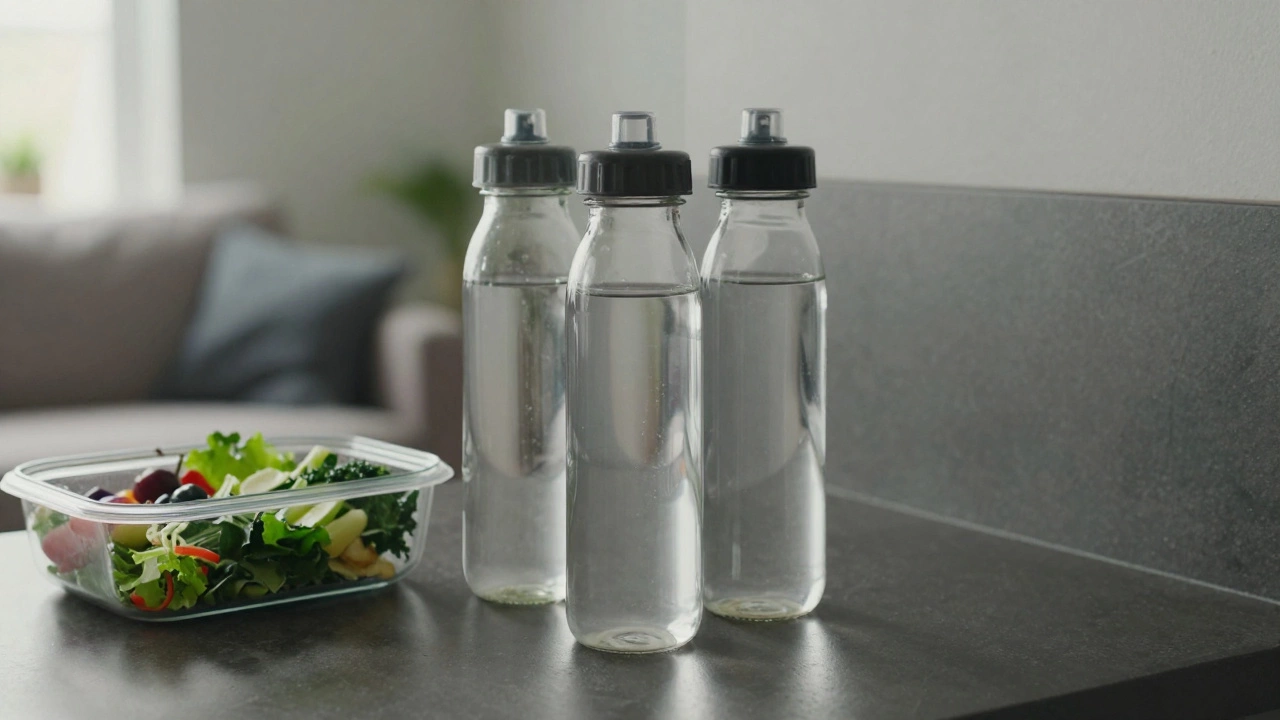
- Start with Water Intake: Buy a bottle that holds roughly 750ml. Your target is 3 bottles a day. Put one on your desk at home, one at work, and one in your bag. This visual cue removes the need to track volume mentally.
- Define Your Meals: Pick three windows. For example, Breakfast between 8 AM and 9:30 AM, Lunch between 12:30 PM and 2:00 PM, Dinner between 6:30 PM and 8:00 PM. Close your kitchen after dinner. No late-night ice cream unless it fits the plan.
- Movement Stacking: Aim for movement that feels achievable. Three ten-minute walks are easier to sustain than one hour-long gym session for beginners. Take them after meals to help digestion.
Consistency beats intensity here. It is better to do the "easy" version perfectly every day than to go hard on Monday and quit by Wednesday.
Potential Pitfalls and Misunderstandings
Simplicity comes with risks. Sometimes a rule is too simple for complex biology. If you are trying to lose significant weight, relying only on drinking water and walking may stall progress. Your baseline Basal Metabolic Ratethe number of calories your body burns while at complete rest dictates how much food you can eat. If you are sedentary, even three healthy meals might exceed your calorie limit if the portions are large.
You must pay attention to food quality. If your "3 Meals" consist of three large plates of fried rice and sugary curd, you will not lose weight just because you stopped snacking. The rule creates structure, but it does not automatically fix poor food choices. You still need to prioritize whole foods over processed ones.
Furthermore, be careful with water consumption. While hydration is vital, forcing excessive water intake beyond thirst signals can lead to electrolyte imbalances. Listen to your body's feedback loops. If you feel bloated or lightheaded, adjust the fluid intake.
Is It Sustainable Long-Term?
The biggest enemy of weight loss is not the diet itself; it is adherence. Crash diets often fail because they ask too much too soon. The 3 3 3 rule wins points for sustainability. It does not require expensive supplements or exotic ingredients. You can find the components of this rule in almost any market.
However, rigidity can become a problem. Life happens. You might miss a lunch break due to a meeting. If you view missing a window as a failure, you will likely abandon the whole plan later in the week. Treat the 3 3 3 rule as a guideline or anchor, not an unbreakable law. Missing a meal once shouldn't derail your confidence. Just return to the pattern at the next opportunity.
In the grand scheme of things, the 3 3 3 rule is a tool for building rhythm. Once you establish the rhythm of eating three times and moving daily, you naturally become more aware of what you are putting into your body. That awareness is what leads to permanent results.

Better Alternatives for Specific Goals
While the 3 3 3 rule is great for general health maintenance, some goals require different tools. If you are training for a sports event, you might need more frequent fueling windows. If you have diabetes, you should consult a specialist before restricting meal timing significantly, as insulin peaks vary.
For rapid fat loss, you might combine the meal frequency aspect of 3 3 3 with Intermittent Fastinga dietary pattern that cycles between periods of fasting and eating. Instead of spreading food across three wide windows, you condense them into a shorter block, say 12 PM to 8 PM, effectively creating a 16-hour fast. This amplifies the hormonal benefits of low insulin without changing your food choices drastically.
Frequently Asked Questions
Is the 3 3 3 rule medically approved?
It is not an officially recognized medical protocol by major health organizations. It is a heuristic-a mental model used for simplicity. While the individual components (drinking water, eating regular meals) are healthy, there is no clinical trial specifically validating the "3 3 3" label as a standalone cure for obesity.
Can I drink coffee or tea within this rule?
Black coffee or unsweetened tea generally fits the rule as zero-calorie fluids. However, they are not counted towards the water quota. Avoid adding sugar or milk, as that adds empty calories and triggers insulin, which defeats the purpose of the meal restriction.
How much weight can I expect to lose?
Results depend entirely on your starting point and calorie intake. Typically, adhering to three meals without snacking cuts 300-500 extra calories daily. Over a month, this could result in a safe loss of 2-4 kg, provided you maintain portion control.
Should I skip breakfast to follow this?
Not necessarily. The goal is 3 structured meals, not skipping breakfast specifically. If you eat lunch, dinner, and a mid-morning meal, that still counts as 3. However, skipping breakfast is often easier for people to maintain a longer fasting window.
What if I feel hungry during the day?
If hunger strikes between meals, start with water. Hunger waves often pass within 15 minutes. If you must eat, choose fiber-rich options like cucumber slices or leafy greens. If hunger persists, you likely did not eat enough volume at your last meal.