Ayurvedic Dosha Food Calculator
Find Your Ayurvedic Dosha
Answer 5 questions to discover your dominant dosha and learn what foods you should avoid.
Many people turn to Ayurveda for balance, energy, and long-term health-but what they eat can either support that balance or throw it completely off. Ayurveda doesn’t just tell you what to eat; it tells you what not to eat, based on your body type, season, and digestion. Ignoring these guidelines isn’t just about missing out on benefits-it can lead to bloating, fatigue, insomnia, or even chronic digestive issues.
Why Food Choices Matter More Than You Think
Ayurveda sees food as medicine. But not all medicine works for everyone. Your body is made up of three energies-Vata, Pitta, and Kapha-and each one reacts differently to food. Eating the same salad or smoothie as your friend might feel great for them but leave you sluggish or anxious. That’s because Ayurveda isn’t about calories or macros. It’s about how food affects your internal environment.
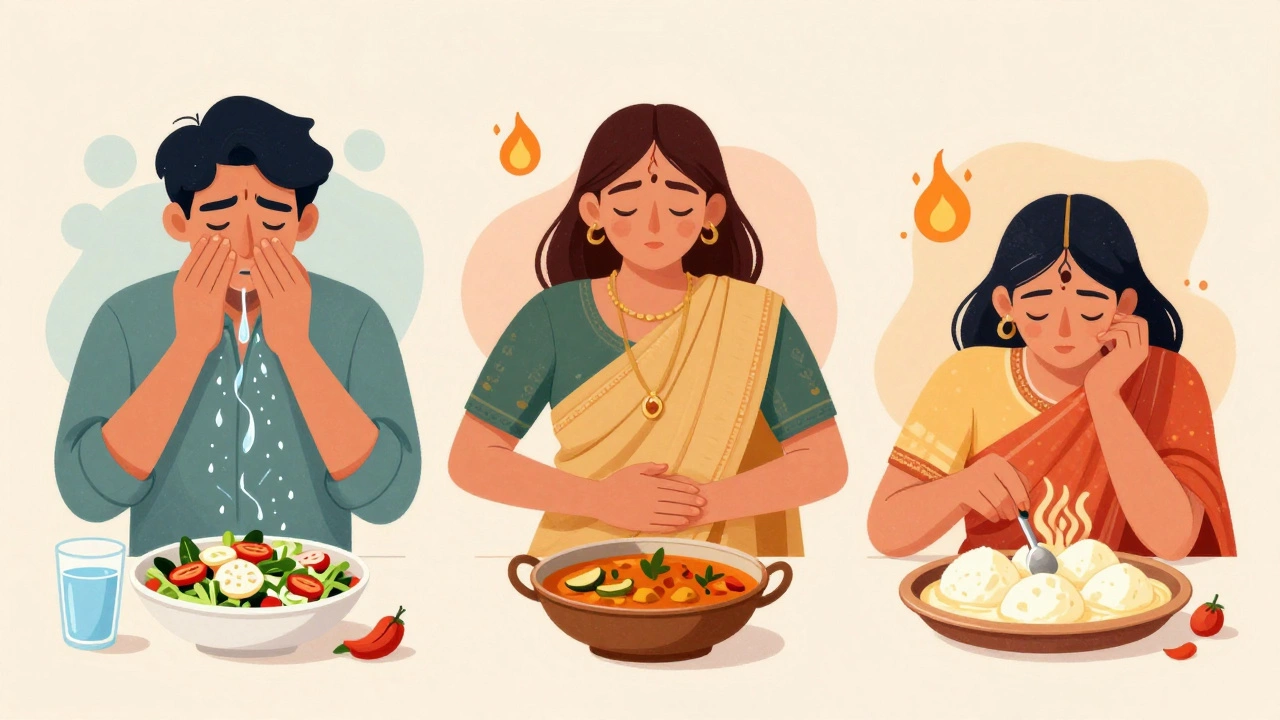
For example, if you have a Kapha-dominant body type, you might feel heavy after eating dairy or sweets. But if you’re Pitta-dominant, spicy food might cause heartburn. The same food can be healing for one person and harmful for another. That’s why blanket rules like “avoid sugar” or “eat more protein” don’t work in Ayurveda. You need to know what your body can’t handle.
Foods That Disrupt Vata
If you’re Vata-dominant-tall, thin, prone to anxiety, dry skin, or irregular digestion-you need warm, moist, grounding foods. Cold, raw, dry, or overly light foods will make your Vata go wild.
- Raw vegetables-especially cruciferous ones like broccoli, cauliflower, and kale-can cause gas and bloating. They’re hard to digest and increase Vata’s airy nature.
- Cold drinks and ice water shock your digestive fire. Ayurveda says your stomach needs warmth to break down food. Ice water? It’s like pouring cold water on a hot engine.
- Dry snacks like popcorn, crackers, and chips may seem harmless, but they’re drying and hard to digest. They leave you feeling ungrounded and anxious.
- Caffeine-even in tea or coffee-can overstimulate Vata, leading to insomnia or racing thoughts.
Instead of raw salads, try steamed veggies. Swap cold smoothies for warm herbal teas. Choose cooked apples over apple slices. Small shifts make a big difference.
Foods That Aggravate Pitta
Pitta types tend to be intense, driven, and prone to inflammation. If you get heartburn easily, break out in rashes, or feel irritable in heat, you’re likely Pitta-dominant. Your body runs hot-so you need cooling, calming foods.
- Spicy foods-chili peppers, hot sauces, black pepper, and even garlic-overheat your system. Even if you love them, they’ll eventually trigger acidity, rashes, or anger.
- Fried foods and deep-fried snacks like samosas or fries create internal heat. They’re hard to digest and clog your liver.
- Alcohol-even wine or beer-acts as a fire stimulant. It might feel relaxing, but it burns through your liver and disrupts sleep.
- Processed sugars and artificial sweeteners spike blood sugar fast, which triggers Pitta’s inflammatory response. Think soda, candy, and flavored yogurts.
- Tomatoes and eggplant-though healthy in other systems-are considered heating in Ayurveda. They can worsen acid reflux and skin rashes in Pitta.
Focus on sweet, bitter, and astringent tastes: cucumbers, melons, coconut water, leafy greens, and barley. Drink cool (not icy) water. Skip the nachos. Your body will thank you.
Foods That Increase Kapha
Kapha types are grounded, steady, and often carry more weight. If you feel sluggish after meals, get congested easily, or struggle to wake up, Kapha is likely your dominant dosha. You need light, dry, warm foods to keep your energy moving.
- Dairy products-milk, cheese, butter, yogurt-are heavy and slow digestion. Even if you’re not lactose intolerant, dairy increases mucus and lethargy in Kapha.
- Sweeteners-honey is okay in small amounts, but sugar, maple syrup, and agave? They clog your system. Kapha types metabolize sugar slowly, so it turns to fat fast.
- Heavy grains like wheat, rice, and oats can be okay in moderation, but overeating them leads to weight gain and brain fog. Barley and quinoa are better choices.
- Nuts and oils-even healthy ones like almonds or olive oil-are dense. A handful of almonds is fine. A whole bowl? That’s asking for congestion.
- Stale or fermented foods-leftovers, pickles, aged cheeses-create toxins (ama) in Kapha. Fresh food is non-negotiable.
Instead of creamy soups, go for clear broths. Swap ice cream for warm spiced apple. Eat your dinner before 7 p.m. and avoid late-night snacks. Your body will feel lighter, clearer, and more alert.
Common Foods to Avoid for Everyone (Regardless of Dosha)
Some foods are universally discouraged in Ayurveda-not because they’re “bad,” but because they disrupt digestion and create toxins.
- Leftovers older than 24 hours-they lose prana (life force) and turn into ama (toxins). Fresh is best.
- Artificial additives-colorings, preservatives, and flavor enhancers like MSG-overwhelm your system. They’re not recognized by your body’s natural processes.
- Combining milk with fruit-this classic combo (like yogurt with berries) creates fermentation in the gut. Milk is cooling; fruit is heating. They clash.
- Overeating-Ayurveda says fill half your stomach with food, a quarter with water, and leave a quarter empty. That’s not a suggestion. It’s a rule.
- Eating when emotionally upset-stress shuts down digestion. Eating while angry, anxious, or distracted creates undigested food that turns into toxins.
How to Know What’s Right for You
You don’t need to be an Ayurvedic expert to make better choices. Start simple:
- Notice how you feel after eating certain foods. Do you get sleepy? Bloating? Heartburn? Irritability?
- Track your meals for a week. Write down what you ate and how you felt 30 minutes later.
- Look for patterns. If you always feel foggy after dairy, try cutting it for 10 days.
- Ask yourself: Did this food make me feel lighter or heavier?
There’s no one-size-fits-all diet in Ayurveda. But there are universal signs of imbalance: fatigue, gas, poor sleep, skin issues, or mood swings. These aren’t random-they’re your body telling you what to stop eating.
What to Eat Instead
Ayurveda doesn’t just say “don’t eat this.” It tells you what to eat instead.
- Warm, cooked meals with ghee or olive oil
- Spices like turmeric, cumin, ginger, and coriander
- Seasonal, local produce
- Herbal teas like ginger-turmeric or fennel
- Small, regular meals-no skipping or bingeing
Even if you don’t know your dosha, these basics will help. Start with one change: swap cold cereal for warm oatmeal with cinnamon. See how you feel in three days.
Final Thought: It’s Not About Perfection
Ayurveda isn’t about being perfect. It’s about awareness. If you eat a slice of cake, don’t panic. But if you eat cake every day and feel sluggish, that’s a signal. The goal isn’t to eliminate foods forever-it’s to understand how they affect you. Your body knows what it needs. You just have to listen.