Cancer Survival & Challenge Explorer
Select a cancer type below to view its approximate five-year survival rate and the primary reasons why it is difficult to treat.
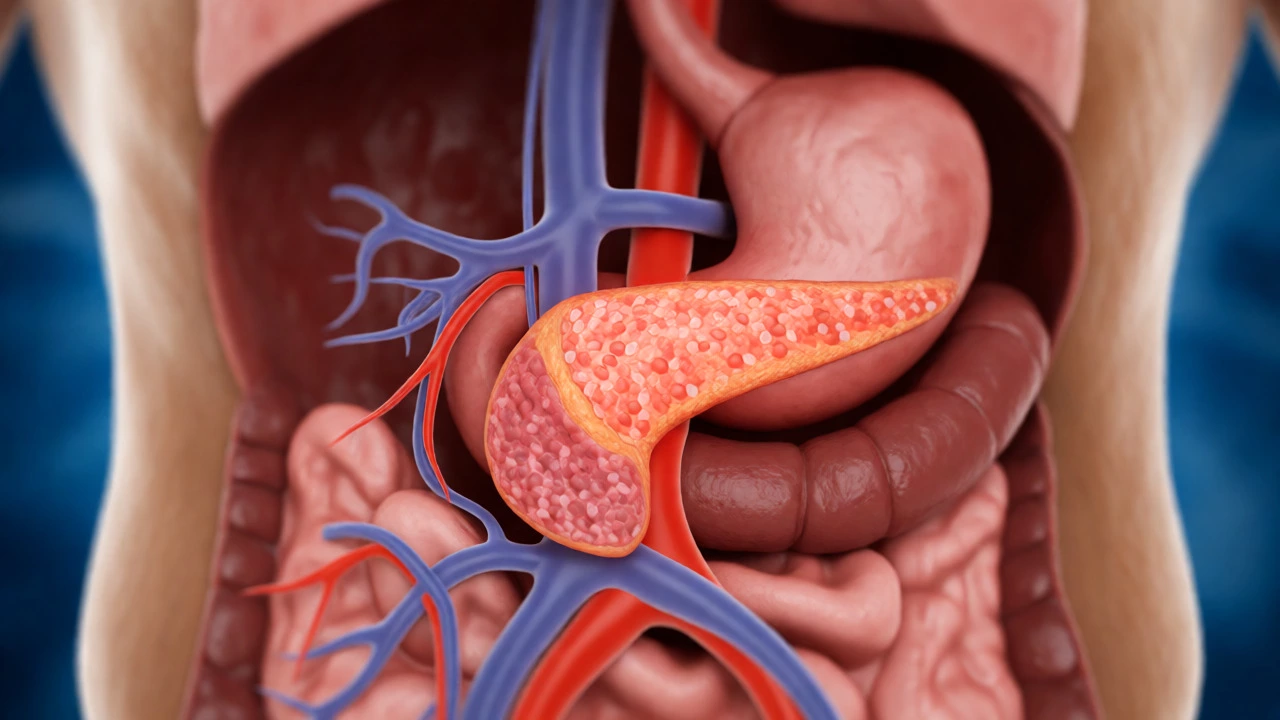
Pancreatic Adenocarcinoma
Late detection due to deep anatomical location; dense stromal barrier prevents drug penetration.
Often asymptomatic early on. Later signs include jaundice, unexplained weight loss, and back pain.
The pancreas sits deep behind the stomach surrounded by major blood vessels. By the time symptoms appear, the cancer has usually spread to the liver or lungs, making surgical removal impossible in most cases.
It is a question that keeps many people up at night: why do some cancers seem to vanish with treatment while others refuse to budge? If you have ever looked at survival statistics and felt confused by the wide gap between breast cancer outcomes and those for pancreatic cancer, you are not alone. The difference isn't just about luck; it comes down to biology, timing, and how well we can actually reach the tumor.
When we talk about "poor survival," we aren't just picking on the rarest diseases. We are looking at specific types where five-year survival rates hover below 10% or 15%. Why so low? Usually, it's because these tumors hide until they are too advanced to remove surgically, or they grow in places where surgery would damage vital organs too much. Let's break down which cancers fall into this difficult category and, more importantly, why they behave this way.
The Silent Killers: Pancreatic and Gallbladder Cancers
Pancreatic adenocarcinoma is often cited as the toughest opponent in oncology. With a five-year survival rate of roughly 13% (as of recent 2024-2025 data trends), it remains stubbornly resistant to most therapies. Why? The pancreas sits deep behind the stomach, surrounded by major blood vessels. By the time symptoms like jaundice or back pain appear, the cancer has usually spread to the liver or lungs.
Gallbladder cancer shares this trait. It is often discovered incidentally during gallstone removal surgeries. Because the gallbladder wall is thin, cancer cells escape quickly into the lymph nodes and liver. There is no reliable screening test for either of these. You cannot get a "gallbladder pap smear." This lack of early detection tools is the primary reason their survival rates remain poor compared to colon or breast cancer.
Brain Tumors: Glioblastoma’s Tough Armor
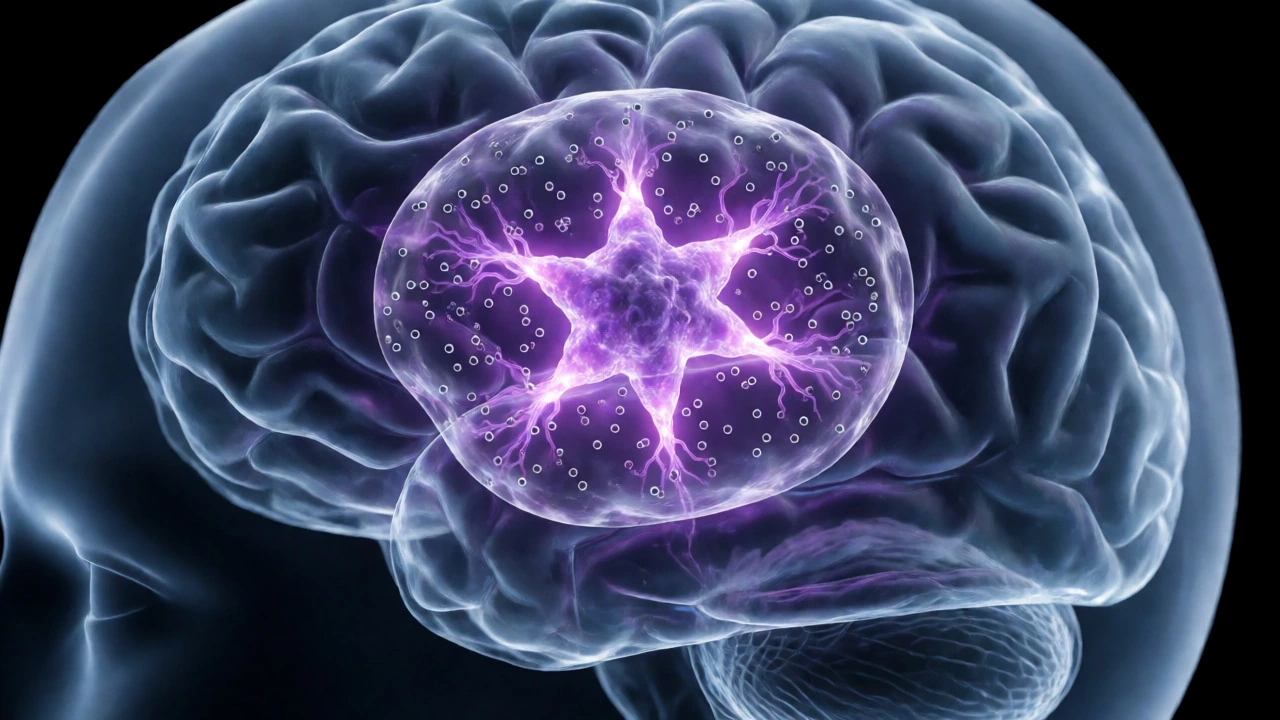
If you search for glioblastoma multiforme (GBM), you will see median survival times measured in months, not years-typically 14 to 16 months with aggressive treatment. GBM is a type of astrocytoma, a brain tumor that starts in star-shaped cells.
The problem here is the blood-brain barrier. This natural defense system protects your brain from toxins but also blocks most chemotherapy drugs from reaching the tumor. Surgeons can remove the main mass, but GBM sends microscopic tentacles into healthy brain tissue. These tendrils make complete removal impossible without causing severe neurological damage. As a result, recurrence is almost guaranteed, making long-term survival rare.
Lung Cancer: Not All Types Are Equal
Most people think of lung cancer as one disease, but there is a huge difference between small cell lung cancer (SCLC) and non-small cell lung cancer. SCLC accounts for about 10-15% of cases but is far more aggressive. It grows rapidly and spreads early.
While modern immunotherapy has improved outcomes slightly, the five-year survival rate for extensive-stage SCLC is still under 7%. Unlike other lung cancers, SCLC is rarely treated with surgery because it has usually spread by diagnosis. Chemotherapy works initially, but resistance develops quickly. This rapid progression is why it carries such a grim prognosis compared to its slower-growing cousins.
Rare and Aggressive: Mesothelioma and Cholangiocarcinoma
Mesothelioma is strongly linked to asbestos exposure. It affects the lining of the lungs (pleura) or abdomen (peritoneum). The latency period is long-often 20 to 50 years after exposure-so patients are often older when diagnosed. Five-year survival is around 10%.
Similarly, cholangiocarcinoma (bile duct cancer) is tricky because bile ducts are small and intertwined with liver structures. Surgery is complex, and if the cancer involves major veins, it becomes unresectable. Both cancers benefit from specialized care at high-volume centers, but general outcomes remain challenging due to late diagnosis and limited effective drug options.
Why Do These Cancers Survive Treatment?
You might wonder, "If we have MRI scans and genetic testing, why can't we catch these earlier?" The answer lies in tumor biology. Some cancers, like pancreatic and ovarian, shed few unique proteins into the blood that we can easily detect. Others, like glioblastoma, mutate rapidly, evolving resistance to drugs within weeks.
Another factor is the tumor microenvironment. In pancreatic cancer, dense scar tissue (stroma) surrounds the tumor, acting like a fortress wall that prevents immune cells and drugs from penetrating. This physical barrier makes standard chemotherapy less effective than it is in, say, leukemia, where cancer cells float freely in the blood.
| Cancer Type | Approximate 5-Year Survival Rate | Primary Reason for Poor Outcome | Common Early Symptoms |
|---|---|---|---|
| Pancreatic Adenocarcinoma | ~13% | Late detection; deep location; stromal barrier | Jaundice, weight loss, back pain |
| Glioblastoma Multiforme | ~5-7% | Blood-brain barrier; infiltrative growth | Headaches, seizures, cognitive changes |
| Small Cell Lung Cancer | ~7% | Rapid metastasis; early spread | Cough, shortness of breath, fatigue |
| Mesothelioma | ~10% | Long latency; pleural involvement | Chest pain, breathing difficulties |
| Gallbladder Cancer | ~20% | Thin wall allows quick escape; vague symptoms | Abdominal pain, nausea |

Is There Hope? New Treatments Changing the Game
Don't let these numbers discourage you entirely. Medicine is moving fast. For pancreatic cancer, new combinations of chemotherapy and targeted therapies are extending lives. Immunotherapy, which trains your own immune system to attack cancer, has shown promise in certain subtypes of lung and bladder cancers.
For glioblastoma, researchers are using tumor-treating fields (electric fields that disrupt cell division) alongside standard care. While not a cure, these tools buy valuable time. Clinical trials are also testing personalized vaccines based on a patient's specific tumor mutations. If you or a loved one faces one of these diagnoses, asking about clinical trial eligibility is crucial. Standard protocols are improving, but experimental approaches often offer the best shot at extended survival.
Key Takeaways
- Pancreatic and gallbladder cancers have poor survival mainly due to late detection and anatomical challenges.
- Glioblastoma is hard to treat because the blood-brain barrier blocks most drugs.
- Small cell lung cancer spreads faster than other lung types, limiting surgical options.
- Early symptoms are often vague, leading to delayed diagnosis.
- New therapies like immunotherapy and targeted drugs are slowly improving outcomes.
Which cancer has the lowest survival rate?
Pancreatic cancer consistently ranks among the lowest, with a five-year survival rate of approximately 13%. However, certain rare forms of glioblastoma and advanced small cell lung cancer also have very low long-term survival statistics, often under 10%.
Why is pancreatic cancer so hard to detect early?
The pancreas is located deep in the abdomen, and early tumors do not cause noticeable symptoms. There is also no routine screening test for the general population, unlike mammograms for breast cancer or colonoscopies for colorectal cancer. By the time symptoms like jaundice appear, the disease has often spread.
Can lifestyle changes reduce the risk of these deadly cancers?
Yes, partially. Smoking is the biggest preventable risk factor for pancreatic and small cell lung cancers. Maintaining a healthy weight, exercising regularly, and avoiding excessive alcohol can lower risks. For mesothelioma, avoiding asbestos exposure is critical. However, genetics also play a role, so family history matters.
Are there any promising new treatments for glioblastoma?
Research is focusing on overcoming the blood-brain barrier. Techniques include convection-enhanced delivery (injecting drugs directly into the brain) and tumor-treating fields. Personalized mRNA vaccines tailored to individual tumor mutations are also showing potential in clinical trials, offering hope for better control of the disease.
Does age affect survival rates for these cancers?
Generally, yes. Younger patients often tolerate aggressive treatments like surgery and high-dose chemotherapy better than older adults. However, some cancers, like glioblastoma, tend to be more aggressive in younger patients biologically, though older patients may have other health issues that complicate treatment. Each case is unique.