Healthy Meals for 55-Year-Olds: What Actually Works
When you’re 55, your body doesn’t need more food—it needs better nutrition, the right balance of vitamins, minerals, and proteins to keep bones strong, blood pressure in check, and energy steady. Also known as senior nutrition, this isn’t about dieting. It’s about eating in a way that supports your changing metabolism, joint health, and long-term independence. Your plate should look different than it did at 35. Digestion slows down. Muscle mass drops. Bones become more fragile. And if you’re managing blood sugar or blood pressure, the wrong meal can undo months of good habits.
Bone health after 50, a key concern for people in their mid-50s, depends heavily on calcium, vitamin D, and magnesium. Also known as osteoporosis prevention, it’s not just about milk—you need leafy greens, canned salmon with bones, almonds, and fortified foods daily. Heart-healthy diet, another critical focus, means cutting back on processed sodium and saturated fats, and choosing whole grains, legumes, and fatty fish like mackerel or sardines. This isn’t just about avoiding heart disease—it’s about keeping your arteries clear so you can keep walking, gardening, and playing with grandkids. And if you’re watching your blood sugar, diabetes-friendly meals, which balance carbs with fiber and protein to avoid spikes, are non-negotiable. Think oats with chia seeds instead of sugary cereal, or quinoa bowls with lentils and roasted veggies instead of white rice and fried chicken.
What works for a 55-year-old isn’t fancy. It’s simple: eggs with spinach for breakfast, a salad with grilled chicken and olive oil for lunch, and baked fish with steamed broccoli and sweet potato for dinner. Snacks? Greek yogurt, a handful of walnuts, or an apple with peanut butter. No need for expensive superfoods. Blueberries help, sure—but so do carrots, beans, and plain yogurt. The goal isn’t perfection. It’s consistency. You don’t need to eat perfectly every day. You just need to make choices that add up over time.
And here’s the truth: what you eat after 55 doesn’t just affect how you feel today. It affects whether you’ll need a cane in five years, whether you’ll avoid surgery for arthritis, and whether your brain stays sharp. The meals you choose now are the foundation for your next decade. You’re not just feeding your body—you’re protecting your freedom.
Below, you’ll find real advice from people who’ve been there—practical meal ideas, easy recipes, and what doctors in India actually recommend for staying strong, mobile, and healthy well into your 60s and beyond.
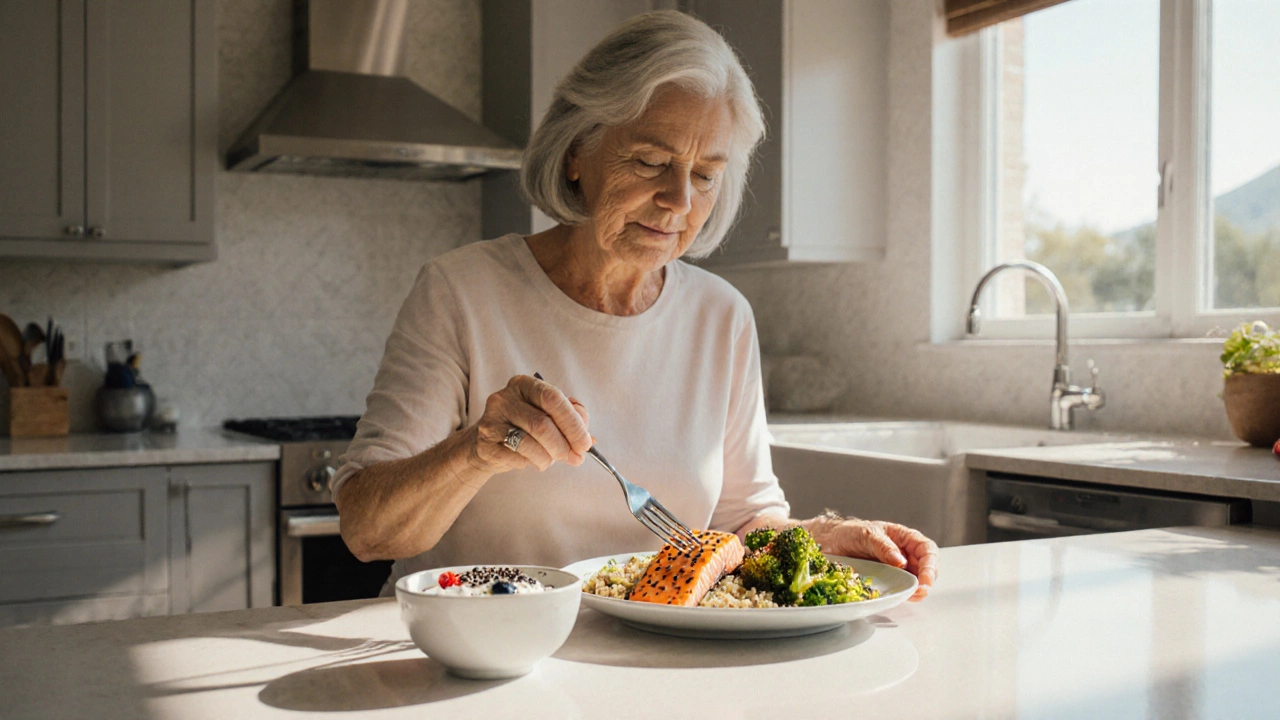
Best Diet Plan for a 55-Year-Old Woman to Lose Weight
A practical guide for 55‑year‑old women on the right foods, calorie targets, meal plans, and lifestyle habits to lose weight safely and sustainably.