Every year, millions of people hear the word cancer and immediately think of chemotherapy, radiation, and surgery. But what if your body already has the tools to fight it-right now? The truth is, cancer doesn’t just appear out of nowhere. It grows in environments your body creates over time. And the good news? You can change that environment.
Your body fights cancer every day
Your immune system kills between 5,000 and 10,000 abnormal cells every single day. That’s normal. Most of these cells never become cancer because your body recognizes them as threats and destroys them. But when this system slows down-because of poor diet, chronic stress, toxins, or lack of sleep-those abnormal cells start to multiply. Cancer isn’t an invader from outside. It’s your own cells going rogue, and your body’s ability to control them is what matters most.
There’s no magic pill or miracle fruit that instantly kills cancer. But decades of research show that certain lifestyle choices can make your body a hostile place for cancer cells to survive. It’s not about replacing medical treatment. It’s about supporting your body’s natural ability to keep cancer in check.
Starve cancer with what you eat
Cancer cells feed on sugar-especially glucose. They use it far more aggressively than healthy cells. That’s why high-sugar diets, refined carbs, and processed foods create the perfect fuel for tumor growth. Studies published in the Journal of Clinical Oncology show that people with consistently high blood sugar levels have a 30% higher risk of developing several types of cancer.
Switching to a low-glycemic diet doesn’t mean starving yourself. It means choosing foods that don’t spike insulin. Think:
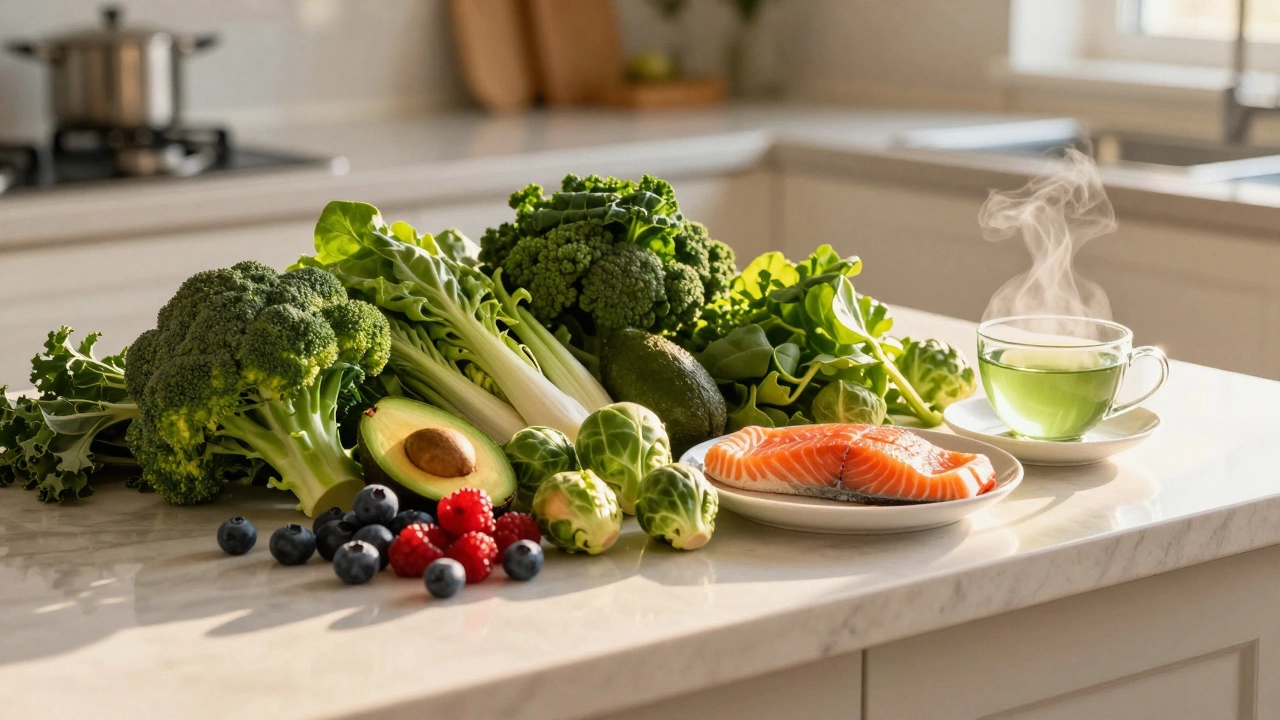
- Leafy greens like kale, spinach, and Swiss chard
- Cruciferous vegetables-broccoli, cauliflower, Brussels sprouts, cabbage
- Berries: blueberries, raspberries, strawberries (low sugar, high antioxidants)
- Healthy fats: avocado, olive oil, wild-caught salmon, flaxseeds
- Garlic, turmeric, ginger, green tea
Broccoli contains sulforaphane, a compound shown in lab studies to trigger cancer cell death (apoptosis) while leaving healthy cells untouched. One 2020 study in Cancer Prevention Research found that men who ate three servings of cruciferous vegetables per week had a 41% lower risk of aggressive prostate cancer.
Move your body-don’t just sit
Sitting for long hours isn’t just bad for your back. It’s bad for your cells. Inactivity raises insulin levels, increases inflammation, and lowers natural killer cell activity-the immune cells that hunt down cancer. People who exercise regularly have a 20-40% lower risk of developing 13 different types of cancer, according to the American Cancer Society.
You don’t need to run marathons. Just move. A 30-minute brisk walk five days a week cuts colon cancer risk by 30%. Strength training twice a week helps regulate hormones like estrogen and insulin-like growth factor, which can fuel breast and prostate cancers. Movement also helps flush toxins out of your lymphatic system, which has no pump like your heart-it relies on muscle contractions to circulate.
Sleep like your life depends on it
It does. Your body repairs DNA, clears brain toxins, and balances immune function during deep sleep. When you sleep less than 6 hours a night, your natural killer cell activity drops by 70%, according to a University of Chicago study. Night shift workers have a higher risk of breast and colon cancer because their melatonin levels are suppressed by artificial light.
Fix your sleep by:
- Going to bed and waking up at the same time every day
- Turning off screens 90 minutes before bed
- Keeping your room cool (around 65°F or 18°C)
- Using blackout curtains or a sleep mask
Melatonin isn’t just a sleep hormone. It’s a powerful antioxidant that directly inhibits tumor growth. You make more of it in total darkness.
Reduce your toxic load
Every day, you’re exposed to hundreds of chemicals in your food, water, air, and household products. Many of them are endocrine disruptors-meaning they mimic hormones and interfere with cell signaling. This confusion can trigger abnormal cell growth.
Here’s what to cut out:
- Plastic containers for food storage (use glass or stainless steel)
- Non-stick cookware (Teflon releases PFOA, linked to kidney and testicular cancer)
- Conventional personal care products (look for phthalates, parabens, and synthetic fragrances)
- Conventional meat and dairy (hormones and antibiotics accumulate in fat)
- Tap water without a filter (chlorine byproducts and heavy metals like arsenic)
Switch to organic produce when possible-especially for the Dirty Dozen: strawberries, spinach, kale, apples, grapes. These are the most contaminated with pesticides. The Environmental Working Group updates this list every year.
Manage stress like your health depends on it
It does. Chronic stress raises cortisol, which suppresses immune function. It also increases inflammation-the breeding ground for cancer. People with high stress levels are more likely to develop aggressive tumors and have worse outcomes.
Stress doesn’t cause cancer, but it creates the perfect conditions for it to grow. The solution isn’t to eliminate stress-it’s to manage it. Try:
- Deep breathing for 5 minutes twice a day (inhale 4 seconds, hold 4, exhale 6)
- Walking in nature-even 20 minutes reduces inflammatory markers
- Meditation or mindfulness apps (Headspace, Calm)
- Connecting with people who lift you up, not drain you
A 2021 study in Brain, Behavior, and Immunity found that breast cancer patients who practiced mindfulness for 8 weeks had significantly lower levels of IL-6, a key inflammatory protein linked to tumor progression.
Supplements that help-not heal
Supplements aren’t magic. But some have strong evidence for supporting your body’s natural defenses:
- Vitamin D: Over 1,000 studies link low vitamin D to higher cancer risk. Aim for blood levels between 40-60 ng/mL. Get tested. Most people need 2,000-5,000 IU daily.
- Curcumin: The active compound in turmeric. Lab studies show it shuts down cancer cell signaling pathways. Take with black pepper for absorption.
- Omega-3s: From fish oil or algae. Reduce inflammation. Dose: 2,000-3,000 mg EPA+DHA daily.
- Mushroom extracts: Reishi, turkey tail, and cordyceps have immune-modulating effects. Turkey tail has been studied in combination with chemotherapy for gastric cancer.
Never replace medical treatment with supplements. Use them to support your body’s natural systems under professional guidance.

What doesn’t work
There are dozens of myths floating around: baking soda cures cancer. Juice fasting kills tumors. Essential oils reverse metastasis. None of these are backed by science.
Some people feel better after extreme diets or detoxes-but that’s because they stopped eating junk food. The body doesn’t need to be “detoxed.” Your liver and kidneys do that perfectly if you give them clean inputs.
Don’t waste money on expensive supplements promising cancer cures. Stick to the basics: real food, movement, sleep, stress control, and toxin reduction.
It’s not about being perfect
You don’t need to eat only organic, never use plastic, meditate daily, and run 10K every week. Progress, not perfection, is what matters. One change at a time builds momentum.
If you’re currently undergoing treatment, talk to your oncologist before making big changes. Many doctors now encourage lifestyle improvements alongside traditional care. The goal isn’t to fight cancer alone-it’s to give your body the best possible chance to heal.
Cancer thrives in neglect. It fades in attention. Small, consistent actions-eating better, moving more, sleeping deeper, breathing calmer-create a body where cancer can’t survive. Not because of one miracle food. But because your whole system is working the way it was meant to.
Can you really destroy cancer cells naturally without treatment?
No single natural method can eliminate established cancer on its own. Cancer is a complex disease that often requires medical intervention. However, lifestyle choices like diet, exercise, sleep, and stress management can significantly support your body’s ability to fight cancer cells, reduce recurrence risk, and improve treatment outcomes. Natural approaches work best as complements-not replacements-for evidence-based care.
Which foods are most effective at fighting cancer cells?
Cruciferous vegetables like broccoli and kale contain sulforaphane, which triggers cancer cell death. Berries are rich in antioxidants that reduce DNA damage. Garlic and turmeric have compounds shown in studies to block tumor growth pathways. Green tea’s EGCG inhibits angiogenesis-the process tumors use to build blood supply. These foods don’t cure cancer, but they make your internal environment less hospitable to it.
Does sugar feed cancer? Should I cut it out completely?
Yes, cancer cells use glucose more aggressively than healthy cells. But cutting out all sugar isn’t necessary or healthy. The goal is to eliminate refined sugars and processed carbs that spike blood sugar and insulin. Whole fruits, which contain fiber and antioxidants, are fine. Focus on stabilizing blood sugar with protein, healthy fats, and fiber-rich vegetables instead of fearing natural sugars.
Can stress cause cancer to spread?
Stress doesn’t cause cancer, but chronic stress raises cortisol and inflammation, which can help tumors grow and spread. Studies show that people under long-term stress have weaker immune responses and higher levels of proteins that promote tumor angiogenesis. Managing stress through sleep, exercise, and mindfulness helps your body maintain control over abnormal cells.
Are supplements like turmeric or vitamin D enough to prevent cancer?
Supplements alone won’t prevent cancer. But when combined with a healthy lifestyle, they can reduce risk. Vitamin D deficiency is linked to higher cancer rates, and correcting it can lower risk by up to 30%. Curcumin shows promise in lab studies, but its effects are strongest when paired with a low-inflammatory diet. Think of supplements as tools-not solutions.
What to do next
Start with one change. Pick the easiest one: swap soda for sparkling water with lemon. Take a 20-minute walk after dinner. Turn off your phone an hour before bed. Add one serving of broccoli to your dinner. These small steps build momentum.
Track how you feel-not just weight or numbers. Better sleep? More energy? Less brain fog? These are signs your body is healing. Cancer prevention isn’t a race. It’s a daily practice of choosing your health, one decision at a time.