
Ayurvedic Meat Compatibility Checker
Your Constitution Profile
Select your options and click Analyze to see your Ayurvedic meat recommendations.
There’s a widespread myth that Ayurveda is strictly vegetarian. Walk into any yoga studio or wellness center, and you’ll likely hear that eating meat disrupts your spiritual purity or clogs your channels. But if you open the classical texts like the Charaka Samhita, you’ll find something surprising: meat was not just allowed; it was often prescribed as medicine.
The confusion stems from conflating Ayurveda with modern Jain or strict Hindu vegetarianism. In reality, Ayurvedic dietary guidelines are highly individualized. They depend on your body constitution (Prakriti), your current state of imbalance (Vikriti), and even your geography. So, do you eat meat in Ayurveda? The short answer is: yes, but only if your body actually needs it, and if you eat the right kind.
The Misconception About Vegetarianism
Why does everyone think Ayurveda bans meat? It’s largely due to the concept of Sattva. In yogic philosophy, Sattvic foods promote clarity and peace. Meat is often labeled Tamasic (heavy, dulling) or Rajasic (stimulating, aggressive). Because many people associate Ayurveda with yoga and meditation, they assume the diet must be purely Sattvic.
But Ayurveda isn’t about moral purity; it’s about physiological balance. For a person with high Vata (air/space element), who is thin, anxious, and has dry skin, heavy plant-based foods might actually cause more harm than good. These individuals often need grounding, nourishing fats and proteins that only animal sources can provide efficiently. Ignoring this leads to malnutrition disguised as "clean eating."
Meat as Medicine: When Is It Prescribed?
In classical Ayurveda, meat wasn’t eaten for pleasure; it was consumed as therapy. The term used is Mamsa. Physicians would prescribe specific meats to treat specific conditions:
- For Vata Imbalance: People suffering from weight loss, joint pain, insomnia, or nervous exhaustion were advised to consume soups made from birds like quail or partridge, or meats from animals like goat or sheep. These are considered unctuous, warm, and heavy-perfect for countering cold, dry Vata.
- For Pitta Imbalance: Those with inflammation, acidity, or liver issues were cautioned against red meat. However, lean meats like chicken or fish, prepared with cooling spices like coriander and fennel, could be suitable in moderation.
- For Kapha Imbalance: Individuals who are overweight, sluggish, or have slow digestion generally avoided heavy meats. If they did eat meat, it had to be very lean, such as venison or rabbit, and cooked lightly to avoid adding more heaviness.
This approach treats food as drug. You wouldn’t take a strong antibiotic every day "just because," right? Similarly, you don’t eat heavy meats daily unless your digestive fire (Agni) is strong enough to handle them without producing toxins (Ama).
The Hierarchy of Meats in Ayurveda
Not all meats are created equal. Ayurveda classifies them based on their impact on digestion and tissue building. Here’s how they stack up:
| Meat Type | Dosha Effect | Digestibility | Best For |
|---|---|---|---|
| Goat/Mutton | Balances Vata & Kapha | Moderate | Weakening patients, post-illness recovery |
| Freshwater Fish | Balances Vata | Easy | Nervous system support, brain health |
| Chicken | Neutral to Pitta-aggravating | Moderate | Muscle building, general protein |
| Red Meat (Beef/Pork) | Increases Kapha & Pitta | Hard | Extreme debility, severe emaciation |
| Eggs | Balances Vata | Easy | Daily protein source for most constitutions |
Notice that freshwater fish is often preferred over sea fish in inland traditions because sea fish can be too salty and heating for Pitta types. Eggs are a gray area. Many traditionalists consider them non-vegetarian, but modern practitioners often include them as a gentle, easily digestible protein source that doesn’t carry the heavy karmic load of slaughter.
How to Eat Meat Without Creating Toxins
If you decide meat fits your constitution, how you cook it matters more than what you cook. Eating a steak with cheese and heavy cream is a recipe for indigestion. Ayurveda prescribes specific preparation methods to make meat digestible:
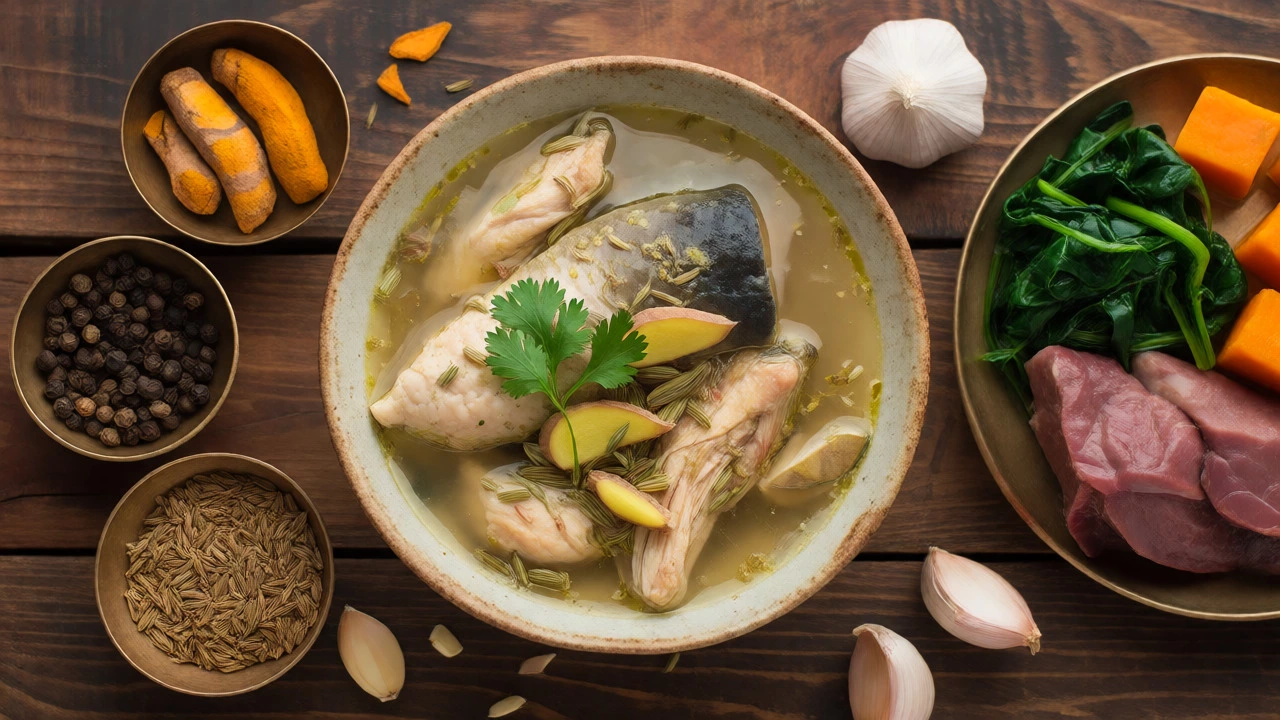
- Use Digestive Spices: Always pair meat with ginger, garlic, black pepper, turmeric, and cumin. These spices stimulate Agni and help break down proteins. Never eat meat bland.
- Cook Thoroughly: Undercooked meat is difficult to digest and increases Ama. Stews, curries, and soups are superior to grilled or fried options because the moisture aids digestion.
- Avoid Heavy Combinations: Don’t combine meat with milk, yogurt, or heavy cheeses. This is a classic incompatible food combination (Viruddha Ahara). Pair meat with vegetables like spinach, carrots, or pumpkin instead.
- Portion Control: Meat should occupy no more than 1/4 of your plate. Fill half with cooked vegetables and a quarter with grains or legumes. Overeating meat suppresses the digestive fire.
I’ve seen clients in Bangalore try to go vegan overnight because they heard it was "holistic." Within three months, they developed anxiety, brittle nails, and constant fatigue. Their Vata was skyrocketing. Once we introduced small amounts of bone broth or egg yolk, their energy stabilized. That’s the power of listening to your body rather than following dogma.
Who Should Avoid Meat Completely?
While meat is permitted, it’s not for everyone. Certain groups thrive better on plant-based diets:
- Kapha Dominant Individuals: If you naturally carry extra weight, have oily skin, and feel lethargic after meals, meat will likely make you heavier and slower.
- Pitta Types with Liver Issues: Red meat generates heat. If you suffer from acid reflux, acne, or anger issues, stick to plant proteins like lentils and tofu.
- Those with Autoimmune Conditions: Some inflammatory conditions worsen with arachidonic acid found in animal fats. Plant-based anti-inflammatory diets often yield better results here.
- Spiritual Practitioners: If your goal is deep meditation or pranayama, lighter foods help keep the mind clear. Meat requires significant energy to digest, which can pull focus inward toward the gut rather than upward toward consciousness.

Modern Context: Quality Over Quantity
Ancient Ayurveda assumed animals were raised on grass and lived stress-free lives. Today, factory-farmed meat is loaded with antibiotics, hormones, and pesticides. From an Ayurvedic perspective, these contaminants add toxicity (Visha) to the food. Even if your constitution allows meat, eating low-quality chicken might do more harm than good.
If you choose to eat meat, prioritize organic, free-range, or locally sourced options. In India, look for mutton from local herders or fish from clean rivers. The principle of Desha (location) suggests eating what grows or lives near you. Coastal communities eating fish daily is natural; landlocked populations forcing themselves to eat seafood may face digestive mismatches.
Alternatives to Meat for Protein
If you’re unsure about meat, or prefer plants, you can still build strong tissues (Dhatu). Ayurveda recognizes several high-protein plant sources:
- Lentils (Dal): Moong dal is easiest to digest. Masoor dal builds strength. Use ghee to enhance absorption.
- Paneer: Fresh cottage cheese is excellent for Vata and Pitta, provided it’s fresh and not aged heavily.
- Nuts and Seeds: Almonds, walnuts, and flaxseeds provide healthy fats and protein, especially when soaked overnight to reduce phytic acid.
- Quinoa and Amaranth: While not traditional Indian grains, they are complete proteins and fit well into modern Ayurvedic diets for those needing amino acids.
The key is variety. No single plant food provides all essential amino acids. Combining grains with legumes creates a complete profile, mimicking the completeness of animal protein without the heaviness.
Final Verdict: Listen to Your Body
So, do you eat meat in Ayurveda? It’s not a yes/no question. It’s a diagnostic one. Ask yourself:
- Is my digestion strong?
- Am I underweight or frail?
- Do I feel heavy and sluggish after eating meat?
- Does my skin look radiant or dull after consuming it?
If you feel light, clear, and energized, meat might not be necessary. If you feel grounded, strong, and satisfied, it might be exactly what you need. Ayurveda never asks you to force a diet. It asks you to observe the effects of food on your body and adjust accordingly. Whether you’re a carnivore or a vegan, the goal remains the same: balance, vitality, and awareness.
Is beef prohibited in Ayurveda?
Classical Ayurveda does not explicitly ban beef, but it considers cow's milk and ghee far more beneficial than the meat itself. Cow meat is considered heavy and hard to digest. Most modern Ayurvedic practitioners advise against beef due to its difficulty in digestion and potential to increase Pitta and Kapha imbalances, preferring goat or chicken instead.
Can vegetarians get enough protein on an Ayurvedic diet?
Yes, absolutely. By combining different plant sources like lentils, dairy (paneer/milk), nuts, seeds, and whole grains, vegetarians can meet all protein requirements. Proper digestion is key; using spices like cumin and ginger ensures that plant proteins are absorbed effectively without creating gas or bloating.
Are eggs considered vegetarian in Ayurveda?
Traditionally, eggs are classified as non-vegetarian because they come from animals. However, many contemporary Ayurvedic doctors consider unfertilized eggs acceptable for most doshas, especially Vata types, as they are easy to digest and nutrient-dense. Fertilized eggs are generally avoided.
What is the best meat for weight loss according to Ayurveda?
For Kapha types trying to lose weight, lean meats like chicken breast, turkey, or freshwater fish are best. They should be cooked lightly with minimal oil and spicy herbs to boost metabolism. Heavy red meats and fatty cuts should be avoided as they increase Kapha and slow digestion.
Does eating meat affect mental clarity?
It depends on the individual. For sensitive minds or those practicing deep meditation, meat can sometimes induce Tamasic qualities like drowsiness or aggression. However, for people with weak nerves or anxiety (high Vata), moderate meat consumption can stabilize mood and improve focus by providing essential B vitamins and grounding nutrients.